
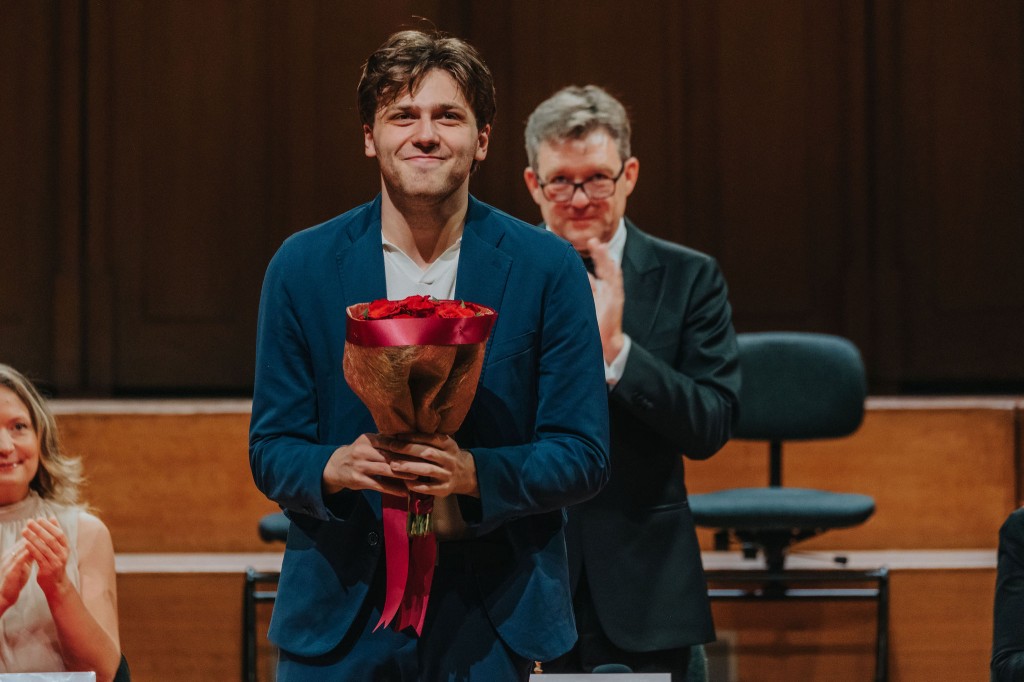
The morning after the late announcement of his victory in the Queen Elisabeth Competition Cello 2026, Italian cellist Ettore Pagano was already wide awake and gave a long series of interviews to the media. Casually dressed in a white T-shirt and jeans, he looked just as confident as on the podium during the final, but now he was more relaxed. The competition was over and the next phase of his career was about to begin.
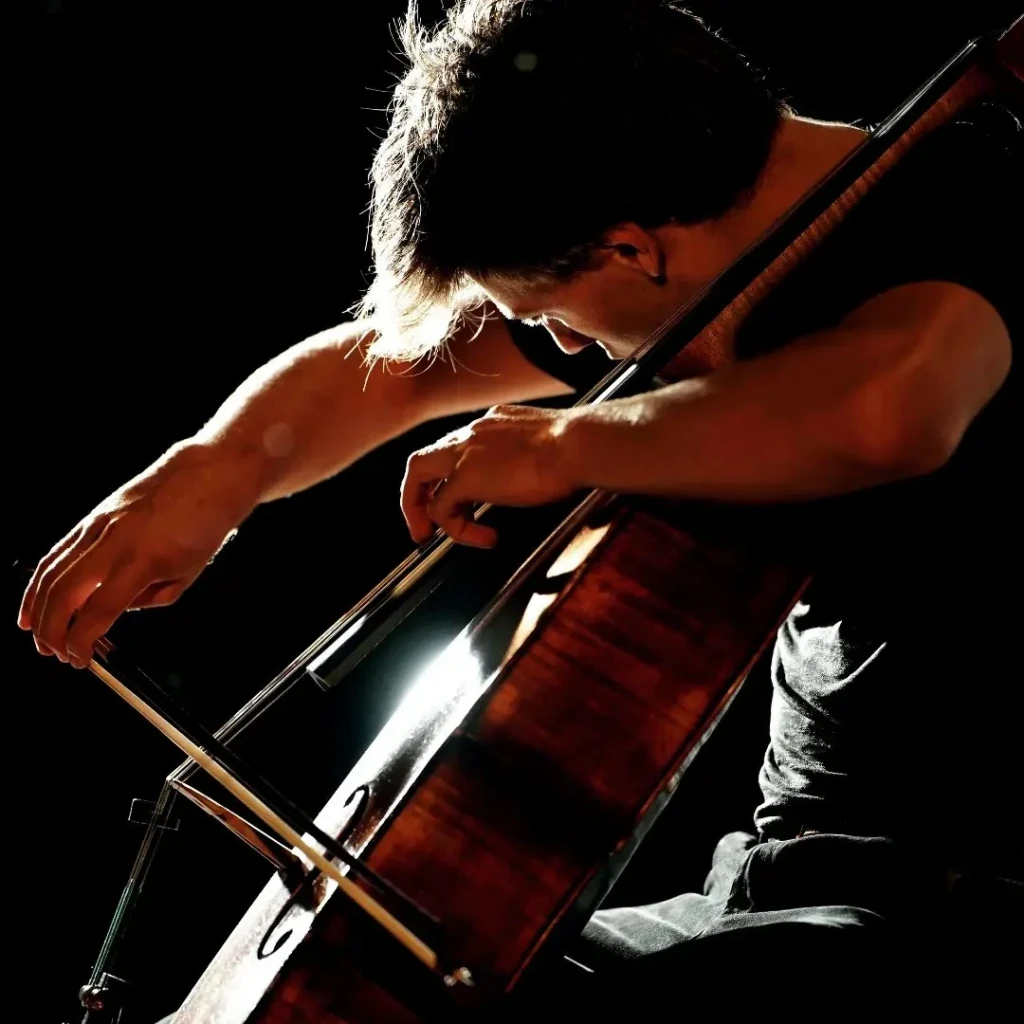 Winner's Reflections on Queen Elisabeth Competition Success and Self-Criticism
He said he was surprised by the victory, given the high level of competition, but preparation for this competition had begun long ago. "I printed the rules in a book two years ago and read them a thousand times, just to make sure I know every rule by heart," Pagano told Klassiek Centraal.
Winning this competition was his childhood dream, he said, but it is not the starting point. To be mentally prepared, you must have experience with other competitions and performances. "You have to, especially for this competition, be very experienced and mentally stable and not stressed," he said. "Of course there is always stress, but you have to approach that stress in a positive way."
He shared part of his strategy to win: "It is a long competition. You have to perform well for an entire month. It is therefore very important to stay at the same level constantly." "Some competitors excel at the beginning, but lose their energy later," he said and continued: "It is a competition that rewards both endurance and musicality."
Even after his success, Pagano was critical of his own performance. "Everyone now says I deserved it, but I am always too critical of myself. In the second round, both performances, in the first round, in the pre-selection video, in every performance I do, I am always critical of myself – perhaps too much." He concluded cheerfully: "That's just the way I am and that's how I try to get the best out of myself."
Friends for Long
Pagano became very close friends with the eleven other finalists during the joint isolation period at the Queen Elisabeth Music Chapel. With only one week to learn the mandatory work for the final, Fang Man's 'Four Odes to the Flower Message', they shared ideas about fingering, dynamics and interpretation. "We were really friends, so it was a great environment," he said.
His own approach to the mandatory piece was shaped by the decision to emphasize the most virtuosic sections. Finalists were allowed to play the four movements, which correspond to the four seasons, in any order. Pagano chose to start with Winter, and then play Summer, Autumn and Spring: "I wanted to start with a cadenza, end with a cadenza and get my nerves out at the beginning with this loud and expressive cadenza."
The Mandatory Work and Pagano's 'Why'
He studied the score carefully and reflected on the composers who had influenced Fang Man. "You can certainly learn a lot from Bach and Messiaen, those are the sources of inspiration, but the concept is also the same as Vivaldi's Four Seasons. And in a way, I am Italian, so it does lie a bit close to my heart, doesn't it?" He found it helpful to listen to the composer's explanation of the meaning of her piece, whose movement titles connect the seasons to flowers associated with them in Chinese tradition.
Italian Prokofiev
His choice for the second work for the final, Sergei Prokofiev's Sinfonia Concertante, Op. 125, was both strategic and a reflection of his own interest in the repertoire. "I love Prokofiev," he says. "He has a lot of Italian style in him, more than other Russian composers, but he also has, you know... You can learn a lot from Romeo and Juliet, for example, which is in some ways very Italian."
"The way he shapes some phrases is very elegant, full of pride, sometimes very dark, also very humorous, very sarcastic, full of different emotions and characters. It's as if you have to constantly change masks on stage."
 Wide Horizons
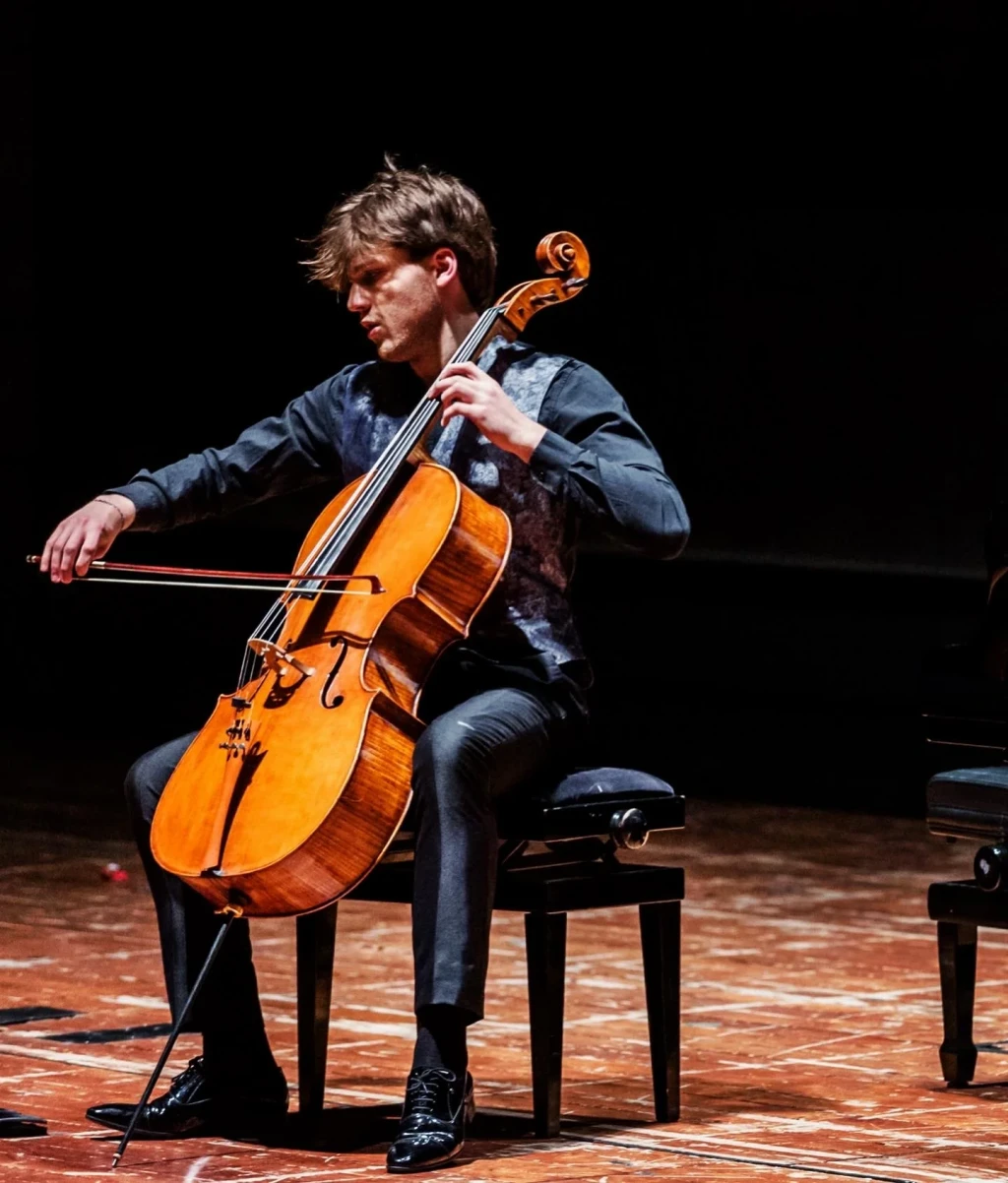
Pagano looks forward to the concerts that will take him to distant places like a whirlwind. "I am very much looking forward to playing for people I have never played for before, on different continents, in different cities, in different countries, in places I have never been."
He is interested in broadening his horizons in the long term and sees himself becoming a conductor in about thirty years. "You have to be a great maestro to conduct and you have to have a great personality," he said. "You also have to study for years. It's as if you start all over again, perhaps not completely, but almost."
Now that his own career is taking flight, he has some advice for young people just starting out. He said it's important to have fun, but also to make room for boredom, by putting your phone and video games aside for a while. "You have to be bored, so that your creativity comes back to life and you start playing and having fun again". "You come up with great ideas and you start to appreciate something that isn't popular these days".
Government support for the arts and becoming creative again
He emphasized the importance of institutional support for the arts. "I really think that my country – Italy is a very important country for music – doesn't invest enough in culture and music. We have a lot of talent, but the talents that come from Italy stand alone. It's neither the policy nor the education system that produces them".
"So I really hope that this victory can change something in my country and inspire many children not to waste their time on phones and video games, but to do something creative – not just playing cello or music, but also visual art, sports, anything. It's important to do something creative".