
Passion Sunday, April 6, 2025. While we in Belgium are treated to pleasant spring weather, I stroll heavily bundled up through the deserted streets of Leipzig. Actually, I had expected all the bells of the music metropolis to ring, because something special was supposed to happen this morning: Herbert Blomstedt conducts his Gewandhausorchester in the Seventh Symphony of Anton Bruckner.
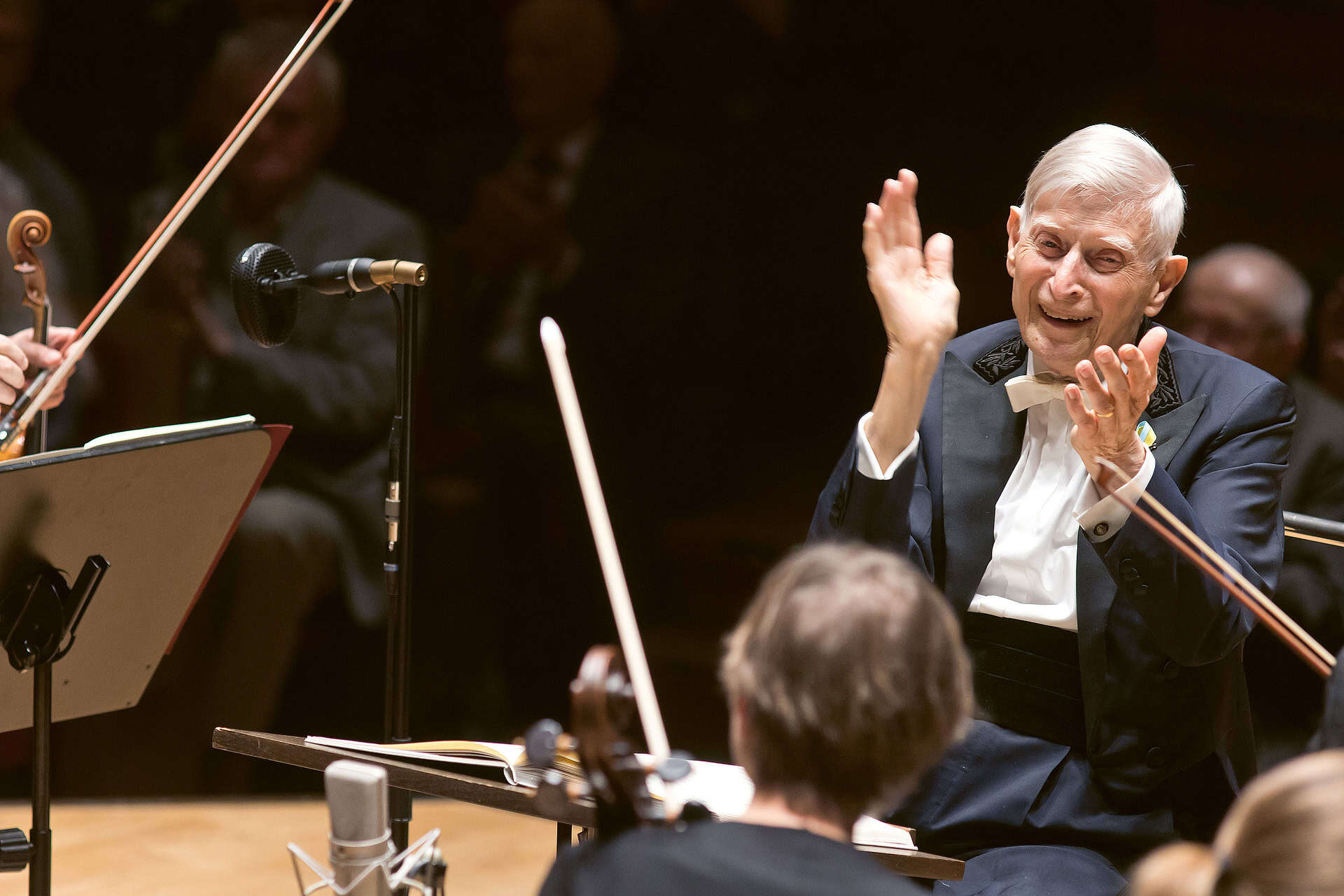
When I arrive at Augustusplatz, people stream in. In the Gewandhaus, filled to the rafters, there is a certain atmosphere; everyone looks forward to the concert with great anticipation. The orchestra members take to the stage on the dot of 11:00. Concertmaster Sebastian Breuninger has the orchestra tune and then disappears. Subsequently, he comes onto the stage with Herbert Blomstedt on his arm. The entire hall rises to its feet and warm applause rings out. When Blomstedt reaches the conductor's podium and sits down, he clearly signals that the audience should also be seated. He wants to make music…
From behind the orchestra you see the old man undergo a metamorphosis. A smile appears on his face, his eyes light up, he nods to the orchestra. You feel that something is about to happen. The music begins. As a listener and observer you are swept along in a story, where Blomstedt repeatedly finds the right balance in the feelings that Bruckner expresses in his music. Blomstedt himself says about this: "Mahler documents his crises in his music, Bruckner overcomes them."
For the seasoned Bruckner enthusiast, however, there is another surprise. Blomstedt has done further research into the various editions that exist of this symphony. He sets aside those of Haas, Nowak and Gutmann and consciously chooses the new edition by Hawkshaw from 2024. At 97 years of age, he has mastered a score with different tempo changes and the notorious cymbal clash. For decades he has always refused to play this, but now he does, because Hawkshaw has provided convincing evidence of Bruckner's approval of it.
If a government were to oblige every orchestra to perform only one piece, the Gewandhausorchester would certainly choose Bruckner's Seventh Symphony. After the orchestra had given the world premiere of this work in 1885, it remained their signature piece. You notice how every musician breathes, thinks and feels along with the visibly rejuvenated Blomstedt. Here, on this morning, a true symbiosis came about. Nothing sounds forced, artificial, no, everything sounds clear, loving, lyrical and when necessary also rough and hard, but always carefully balanced.
Playing a Bruckner symphony is, for a musician, something like running a marathon. This morning you saw no fatigue on the faces of the musicians, but for 75 minutes a smile. After the final note had sounded, there was more than a minute of silence before deafening applause broke loose. "At the end of a Bruckner Symphony we experience a sense of perfection, a feeling of having lived through everything," said Sergiu Celibidache. You could not better describe the concert experience of this morning for musicians and listener…