
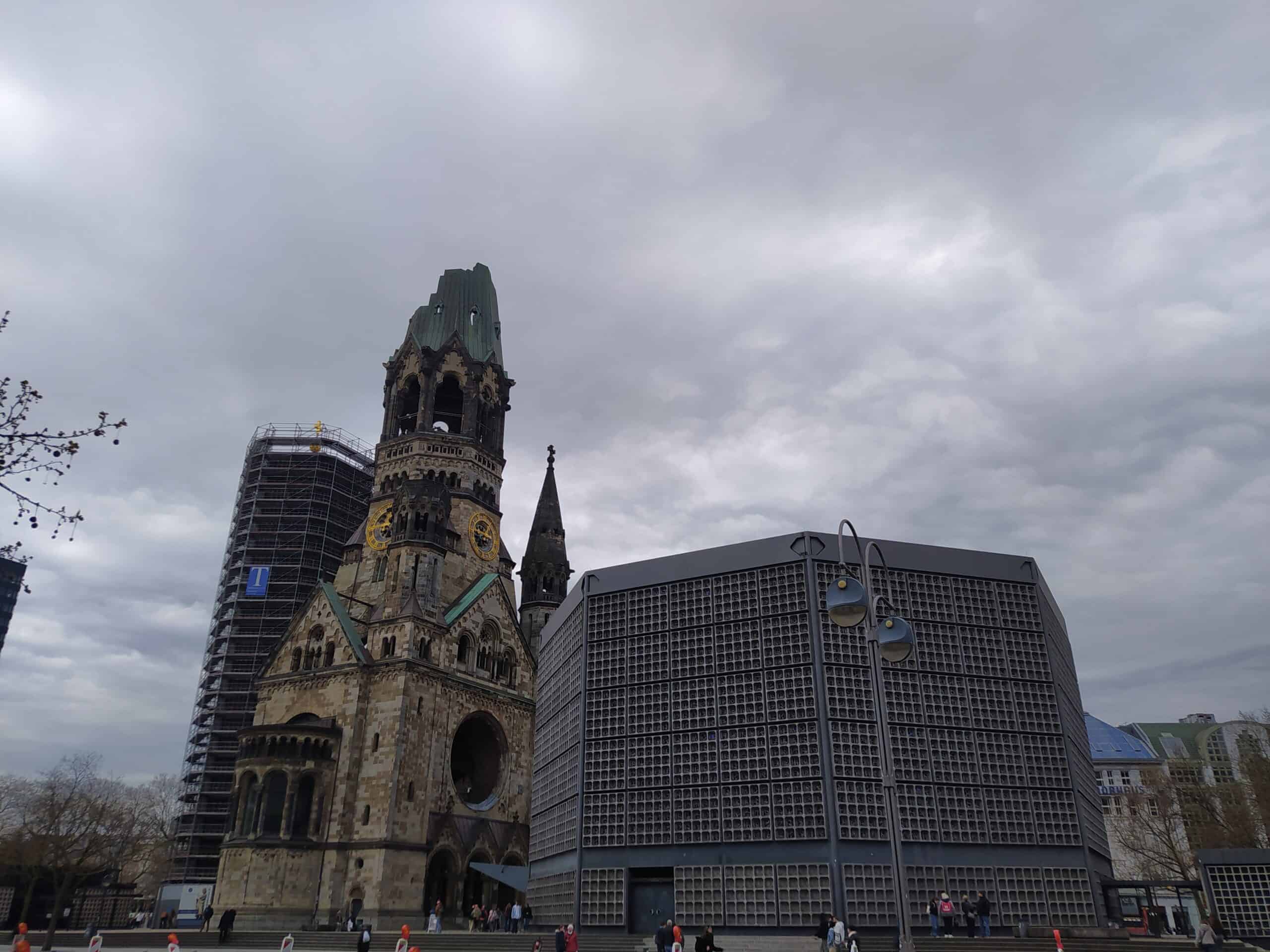
 Anyone seeing the Kaiser-Wilhelm-Gedächtniskirche for the first time immediately understands: this is no ordinary concert venue. The damaged tower, remaining after the bombings of World War II, stands as a visible memory in the city. Not a reconstruction, but a deliberate choice for the unfinished and the broken.
Those who then enter the church do not step into a classical concert hall but into an architectural memorial landscape. The destroyed tower next to the modern new building by Egon Eiermann (1904-1970) tells the story of a city that does not hide its scars but integrates them into its daily existence. Inside, that story continues to be translated into light, concrete and sound.
During an Orgelführung, that hidden world becomes tangible. The organ here is not an instrument on the margins, but an integral part of the architecture.
The Schuke organ: a hybrid giant
Above the heads of visitors is the organ by Karl Schuke Berliner Orgelbauwerkstatt, an instrument subtly integrated into the architecture.
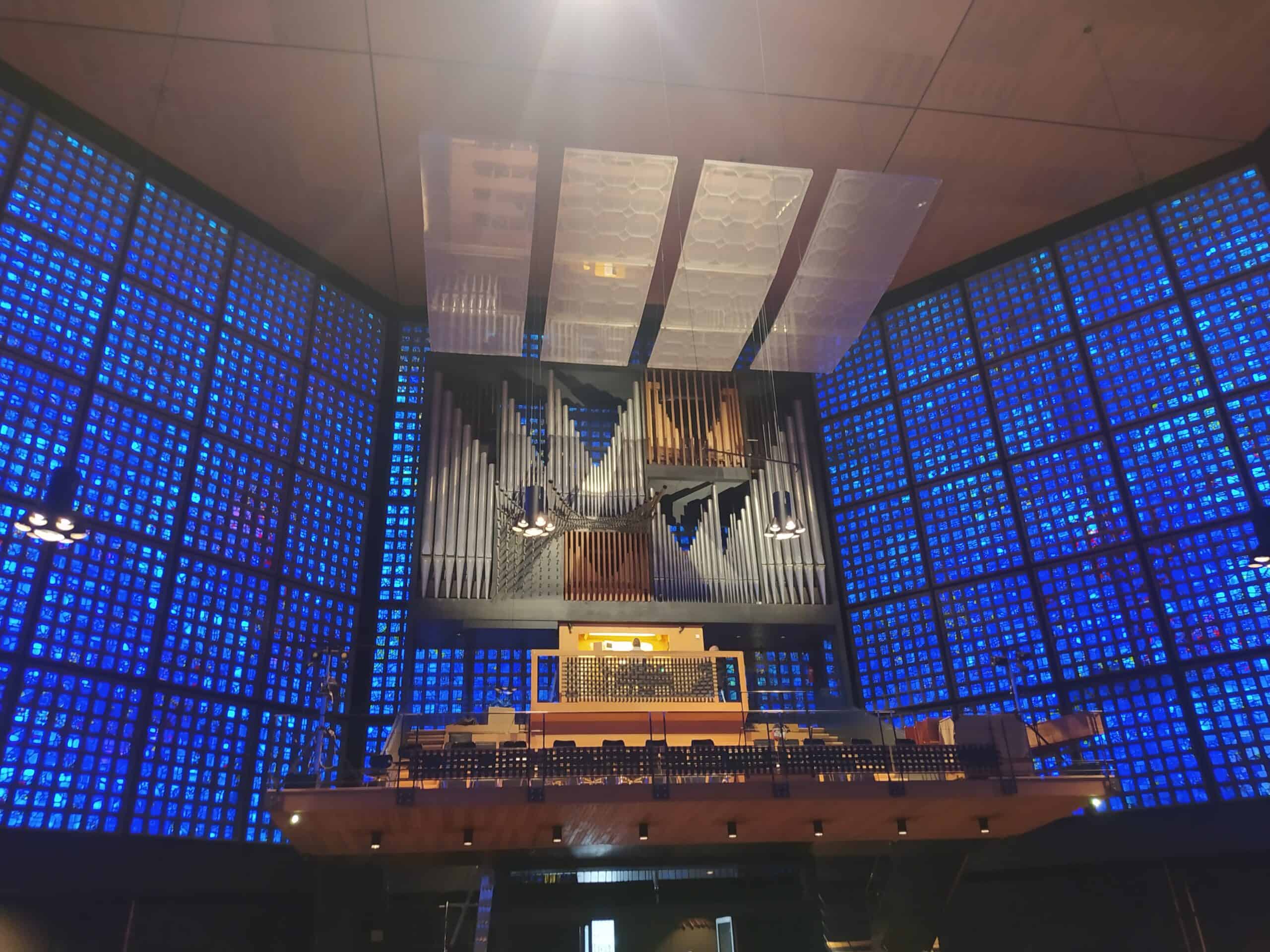 The organ has three manuals and pedal and contains 63 registers, with a broad sound spectrum: from whispering flutes to powerful reed work that fills the space. The pipework comprises thousands of pipes, from small register pipes to specimens several meters high, including Spanish trumpets.
The instrument does not present itself as one front. The various departments are distributed throughout the space, partly visible and partly hidden in the architecture. The sound thus does not originate from one place but surrounds the listener as a moving soundfield.
A later expansion added a digital organ section with more than 30 registers. This makes sounds possible that are difficult to achieve with pipework alone, especially in the extreme low register, where physical pipe length presents a limitation. The result is a hybrid instrument in which tradition and technology work together functionally.
But numbers and technical specifications tell only part of the story.
Light, space and sound in blue
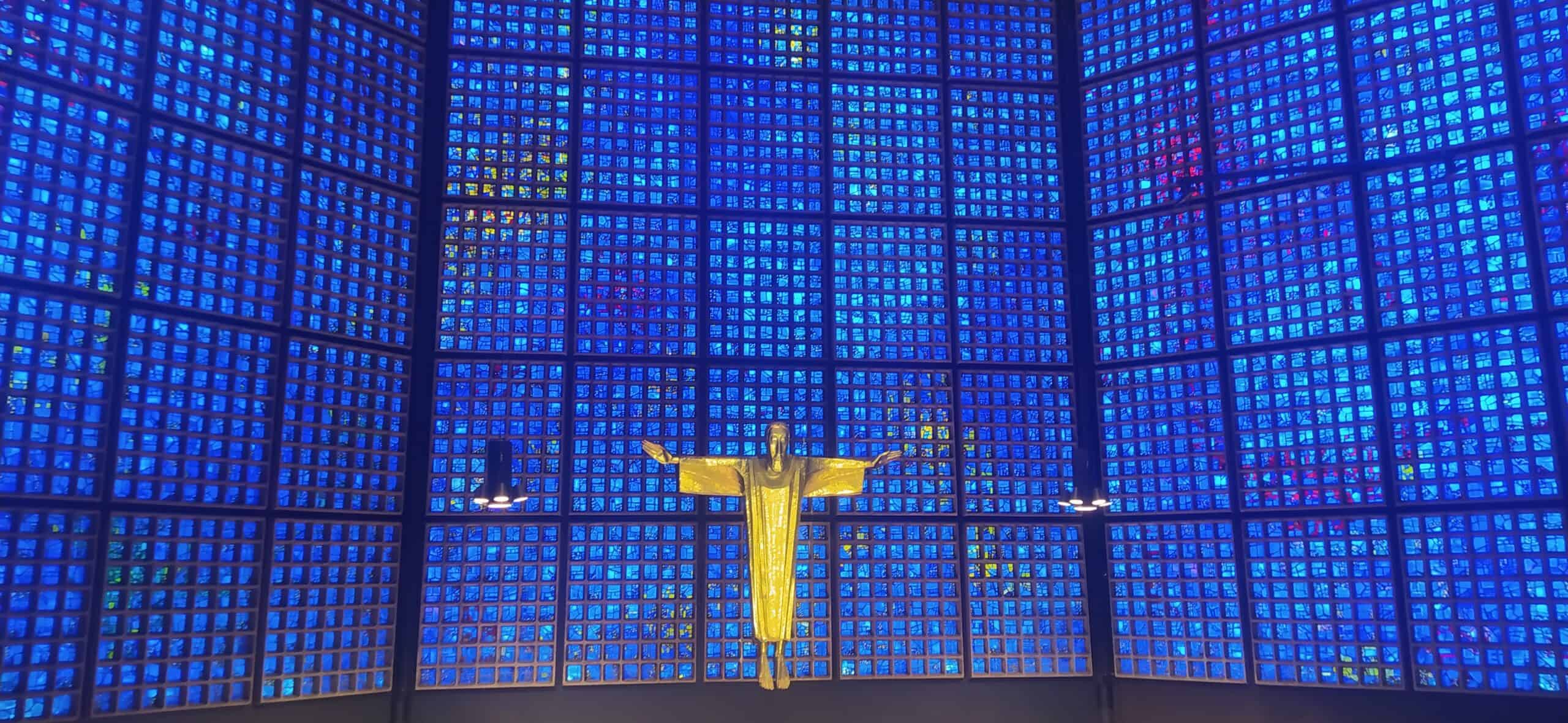
The church space is moreover dominated by the stained glass of Gabriel Loire (1904-1996). The deep blue that falls through the windows is more than decoration: it forms an atmospheric layer that colors the space optically and acoustically. Everything in the interior seems to breathe in subdued light.
In that context, the organ sound takes on special meaning. It is not only heard, but also experienced in the way it moves through the space, settles in the concrete and dissolves again in glass and light.
Helmuth Hoeft: guide between technique and imagination
The Orgelführung on Friday, April 10 was led by Helmuth Hoeft, long associated with the Gedächtniskirche and for 41 years a pivotal figure in the musical life of the parish. Even after his retirement, he remains active as a guide and storyteller of "his" instrument.
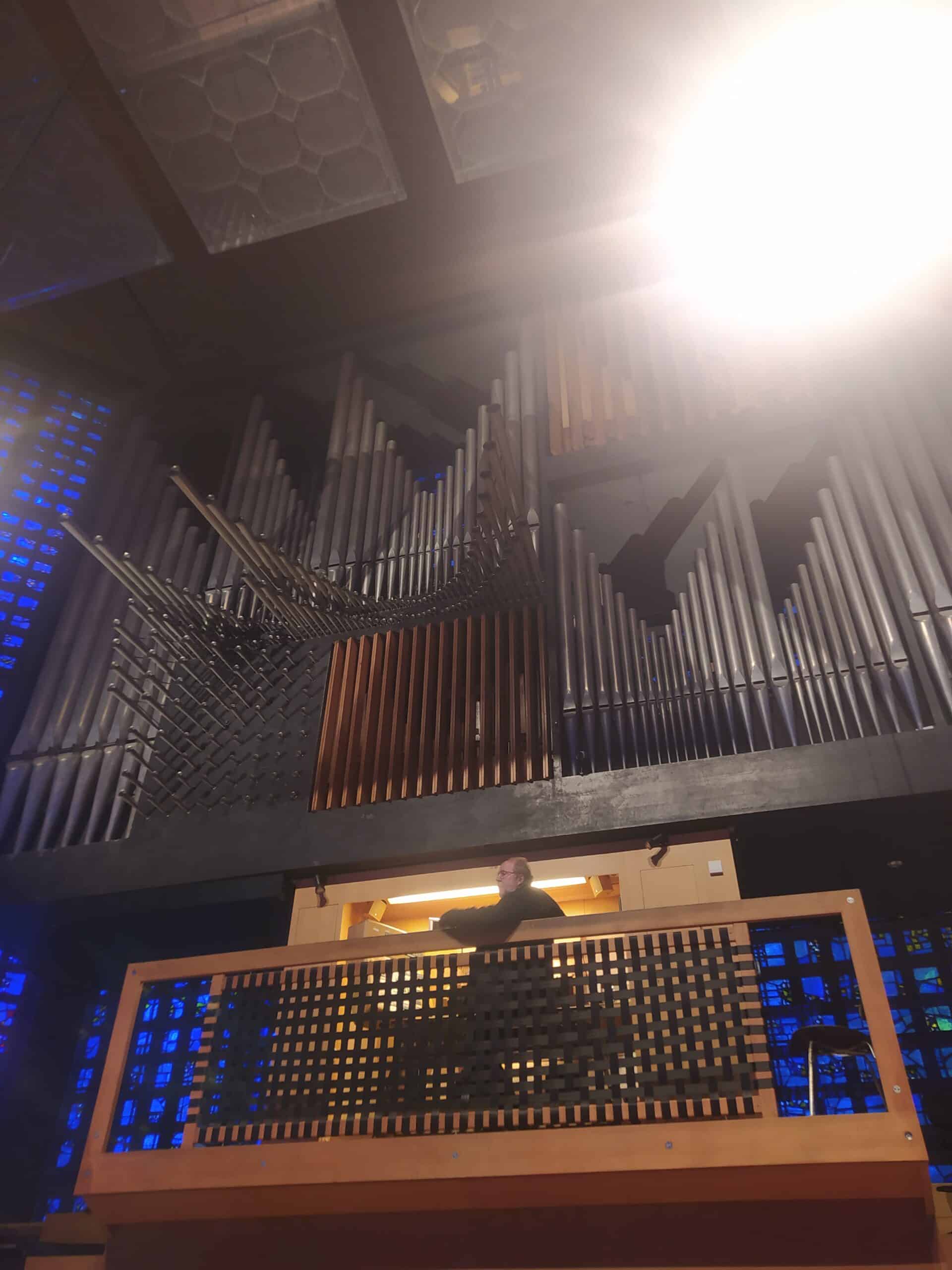 His approach is calm and clear, but at the same time focused on making sound audible rather than on explanation alone. He does not limit himself to technical commentary but lets the organ speak through sound examples, brief improvisations and register combinations that gradually unfold.
Hoeft is organist, composer and teacher. He consistently approaches the organ as a living medium, embedded in liturgy, space and expression.
The Orgelführung made clear that the visitor not only comes physically closer to the instrument but is also invited to a different way of listening. The organ is not an object but a network of relationships: between air and pipe, human and machine, space and memory.
In the Gedächtniskirche, this is not an abstract idea but a tangible reality. Every note carries something of the history of the place with it – from the destruction of the old church and the war history to the later reinterpretation of the site.
Vibrating light
When the tour ends and the last sounds fade away in the blue light, a silence remains that is not empty. No concert in the classical sense, but a concentrated form of listening to a space that itself functions as an instrument.
The Kaiser-Wilhelm-Gedächtniskirche thus remains what it is: not a completed monument, but a living dialogue between past and present. And the organ – under the hands of people like Helmuth Hoeft – is not the final piece in that regard, but the voice that makes that dialogue audible.