
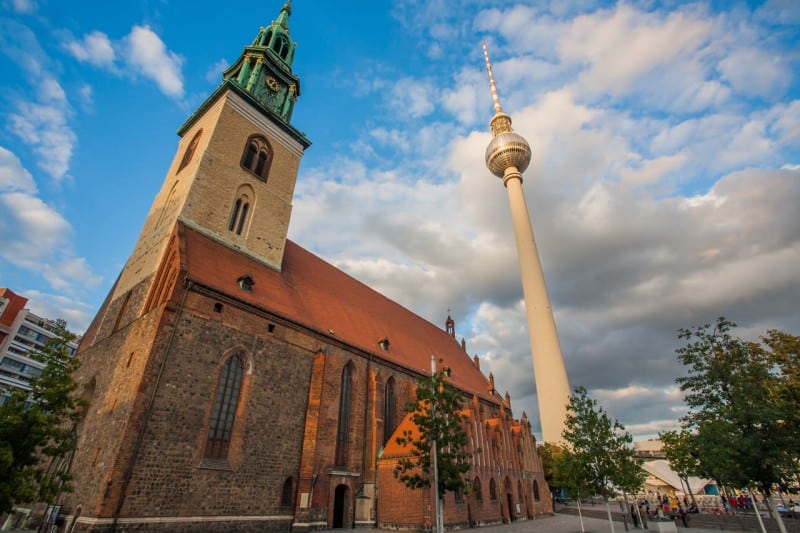
 In the heart of the bustling center of Berlin, a stone's throw from the Alexanderplatz, lies a place where time behaves differently: the St. Marienkirche. Whoever enters leaves the noise of the city behind and finds themselves in a space where history becomes not only visible, but also audible.
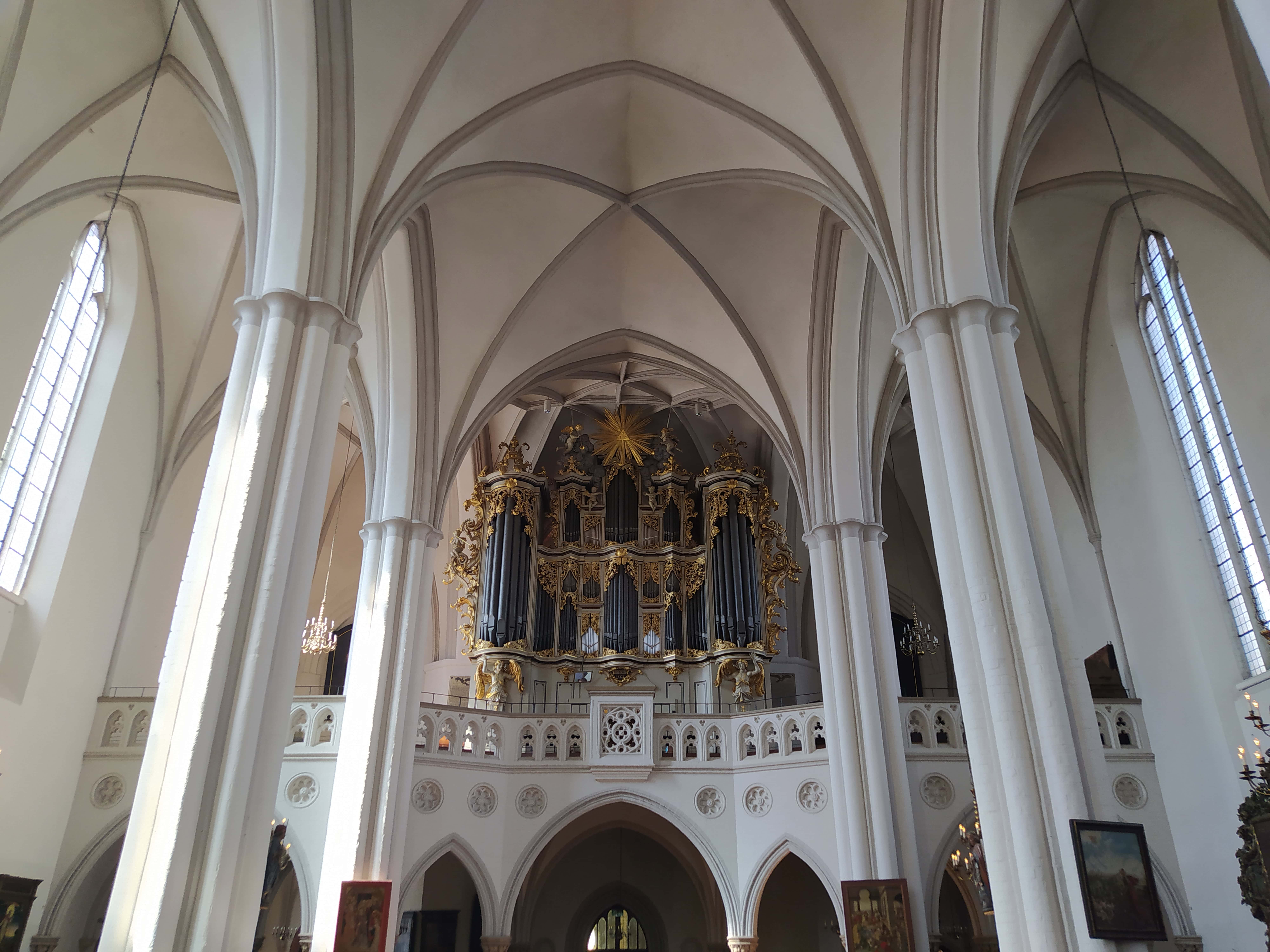
Central to it stands the organ – an instrument that, as is so often the case with historic organs, is more than a collection of pipes and keys. It is a sound archive of three centuries.
A Baroque instrument with restored scars
The organ of the Marienkirche was built in the early 18th century by Joachim Wagner (1690-1749), a student in the tradition of the great Northern German organ building. What he delivered was a typical Baroque instrument: clear, layered and designed to both support congregational singing and bring virtuosic music to life.
But as is so often the case with historic organs, it was not spared from alterations. Over the course of the 19th century, the organ was adapted to the taste of the time. Registers disappeared, others took their place, and with each intervention the sound image shifted further away from its original balance. Baroque clarity was partly replaced by Romantic fullness. What was once a carefully balanced sound image was gradually rewritten.
And yet – perhaps precisely because of this – the organ today tells a richer story. It bears the marks of change, of misunderstandings at times, but also of revaluation.
That revaluation came definitively in 2002, when the organ was thoroughly restored with one goal: to return to the spirit of organ builder Wagner. Not a museum reconstruction, but a living instrument that was allowed to let its Baroque voice be heard again.
Orgelführung: understanding what you hear
Anyone who really wants to get to know the organ would do well to attend an Orgelführung. It is a formula that works surprisingly well: not a distant concert, but a combination of explanation and demonstration.
Every Thursday at 12:00 noon, visitors can register for such a tour. Together with Marienorganist Xaver Schult, the public goes to the gallery, from where you not only have a nice view of the church nave, but can also discover the organ up close – and even from within. From the gallery you suddenly find yourself face to face with the ranks of pipes, and you hear up close how the mechanics gently come into motion.
Since 2020, Schult has been associated with the church, and he proves to be a guide who knows exactly how to take his audience along. His explanations are calm and accessible, yet at the same time enthusiastic, with a touch of humor here and there.
On Thursday, April 9, he explained what happens when you press a key, how sound is created and why a flute stop sounds different from a trumpet stop. In doing so, he often drew on the musical background of his audience: an oboe, a vox humana – suddenly they became recognizable voices within the whole.
Step by step the organ was broken down – not technically dry, but made audible. A single voice sounded, then a combination, and suddenly music emerged. What first seemed a massive sound fell apart into colors and layers.
With its more than 3,000 pipes and 45 registers, the organ proves to be a sound world with an impressive palette. The dark pipes, which still come from the original instrument, carry a history that is not only visible, but also audible.
Particularly striking was the moment when visitors were also allowed to look into the inner workings. There it became clear how complex – and at the same time ingenious – the instrument is. Registration, air currents, pipes that came to life: the organ revealed itself here in all its fragile mechanics.
What made this Orgelführung so special for me was the fact that it never felt like a chore. It invited a different way of looking and listening – a rediscovery of what is not for nothing called the "queen of instruments."
Anyone who gets to know the organ so intimately listens differently afterwards. This became clear during one of the short afternoon concerts.
Listening with attention
 During "20 Minuten Orgelmusik" – a tradition of free organ concerts dating back to 1895 and held regularly on Mondays at 2:30 pm since 2020 – I put the matter to the test on Monday, April 13. Gunter Kennel (b.1961), organist and composer of contemporary church music, presented a program that fit with Easter, with works by Johann Sebastian Bach (1685–1750) and by himself.
As befits such a concert, it opened with the patriarch Bach. The festive Praeludium in D (BWV 532.1) immediately set the tone: clear, radiant and full of conviction. The church space filled with sound that seemed to flow naturally from the instrument – music that is not only written for the organ, but is as it were born from it.
This was followed by Kennel's arrangement of Mit Freuden zart, a hushed, sustained reflection in a Baroque-like idiom, rooted in the familiar evangelical hymn. With Bach's Christ lag in Todesbanden (BWV 625), the mood shifted once again: more solemn, more restrained, with an almost meditative depth.
A special moment was formed by Kennels Toccata Paschalis, in which he brought together various Easter hymns – including Christus is verrezen, known from Catholic Easter liturgy – in a powerful and inventive way. Here the composer sounded not only as a craftsman, but also as a storyteller, someone who brings tradition and current events into conversation with each other. As a finale came Bach's Fuga in D (BWV 532.2), a logical and impressive ending that rounded the circle.
In those brief organ moments, which pause time every Monday afternoon, listening takes on a different meaning. A chorale, a prelude – they are no longer isolated pieces, but dialogues between voices, between past and present. You hear how a melody detaches itself from the accompaniment, how the space of the church resonates along with it, how silence and sound balance each other.
In that interplay of instrument and space, the essence of the organ reveals itself: it is not an instrument that one merely listens to, but an experience that addresses not only the ear, but the whole presence of the listener.
A church that speaks along
The organ also does not stand alone. The St. Marienkirche is a layered space in which different times exist side by side.
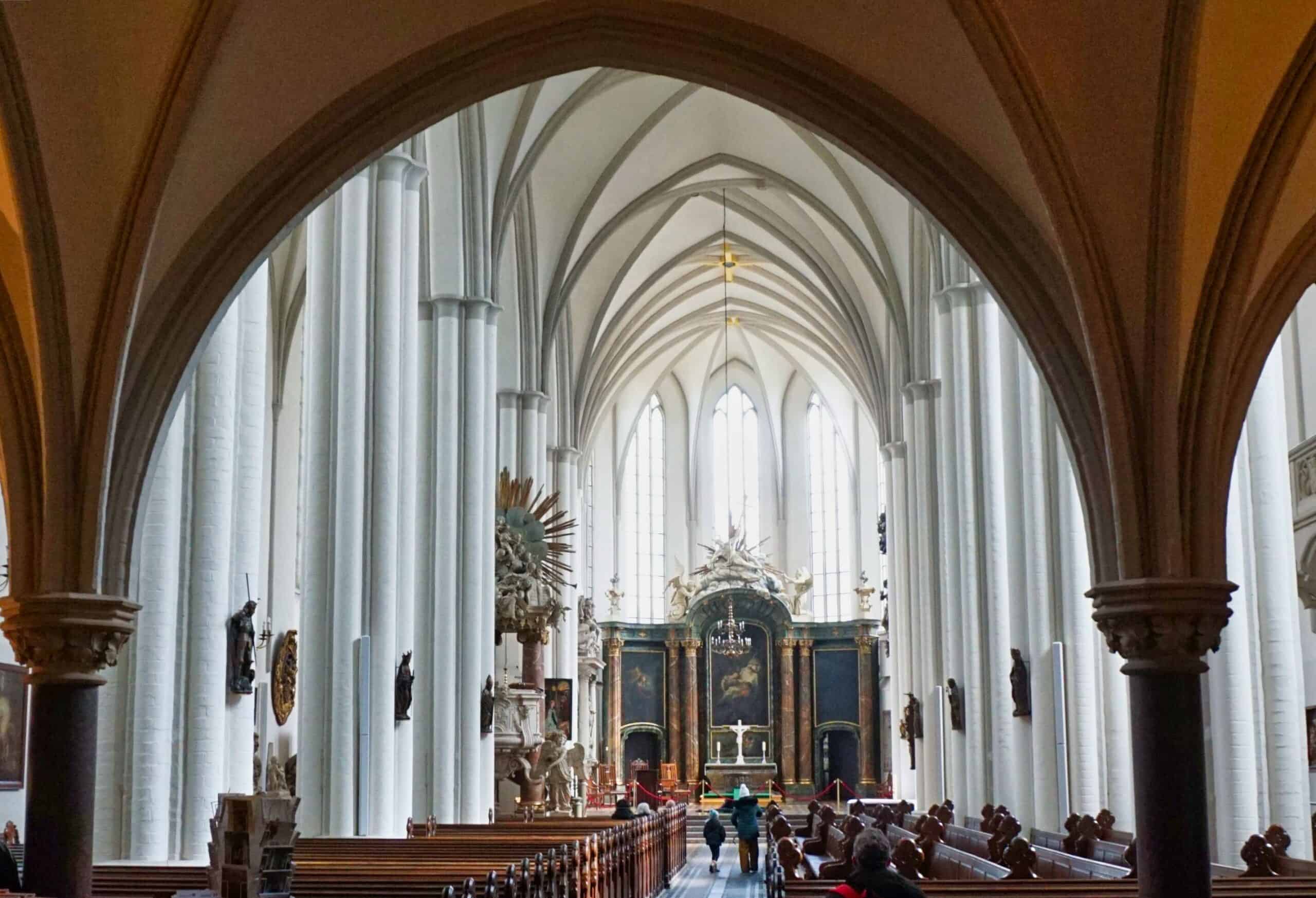
There is the Gothic architecture, austere and uplifting. There are Baroque additions that bring warmth and movement. And there is the famous danse macabre, a striking medieval fresco that reminds us of the transience of life.
In that context, the organ takes on an extra dimension. It is not only a musical instrument, but also a voice within a larger whole – a dialogue between art, architecture and time.
Postlude
Whoever visits the Marienkirche should allow themselves the luxury of sitting for a moment. Not just looking in haste, but taking in the space and listening. Because here it becomes clear what music can be: the organ of the Marienkirche is not a backdrop, not a background, but a form of remembrance. Here the past sounds in the present time.
https://marienkirche-berlin.de/musik/hoerproben-wagner-orgel/