
J.S. Bach, D. Scarlatti, Händel, W.A. Mozart and Chopin were not only masters of composition, but also notorious for their virtuosic improvisations at the keyboard. In their time, improvisation was the norm, but gradually this art form slowly fell into oblivion. Fortunately, there have always been institutions and musicians who tried to keep the tradition alive. Thanks to jazz, improvisation has experienced a strong revival in recent decades. Historical improvisation based on partimento is also experiencing a renaissance, partly due to the influential publications of Robert O. Gjerdingen (Music in the Galant Style, 2007) and Giorgio Sanguinetti (The Art of Partimento, 2012). Pianist and improviser John J. Mortensen is considered a pioneer of this movement. With his books The Pianist's Guide to Historic Improvisation and Improvising Fugue, he shows a new generation of pianists how they can embrace this art anew.
Why does aversion to improvisation still exist? Is it the association with jazz, or the fear of the unknown? In the Western classical tradition, especially from the 18th century onwards, music was almost exclusively notated in scores, with the exception of free cadenzas. But even those were increasingly written out in the Romantic era. Jazz helped break this stigma in the 20th century. In other musical cultures, such as Arabic music, improvisation remained the norm for much longer. There, music is rich in ornaments that are applied on the spot. Instrumental improvisations (taqsims) and vocal improvisations – think of the golden age with stars like singer Umm Kulthum – formed an essential part of the practice. Yet authors such as Johnny Farraj and Sami Abu Shumays (Inside Arabic Music) point out that this tradition too is slowly fading.
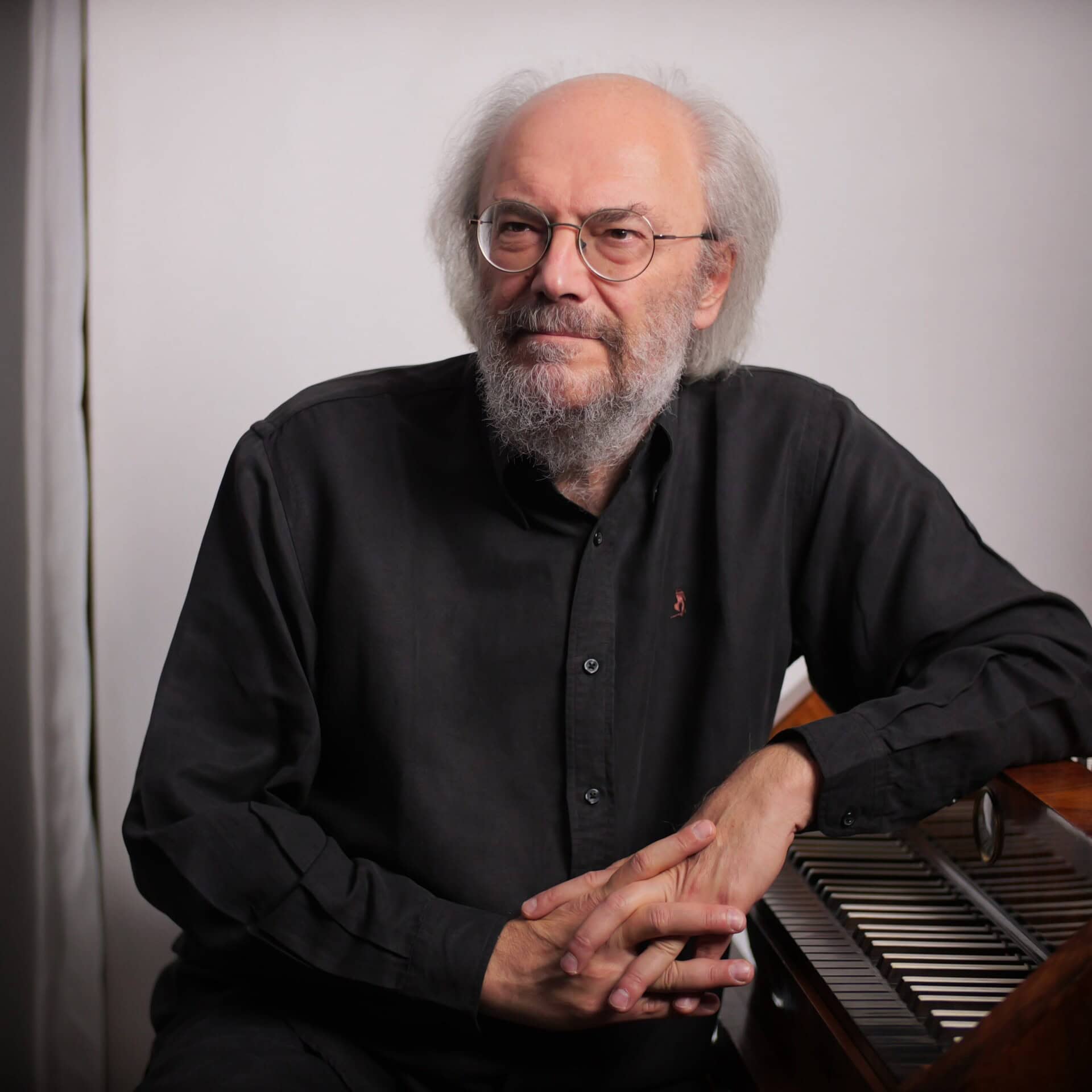
It is daring doers like Boyan Vodenitcharov who break the stigmas surrounding classical improvisation. Vodenitcharov, third laureate of the Queen Elisabeth Competition in 1983, is a Bulgarian pianist and teacher at the Royal Conservatory of Brussels, where he teaches classical improvisation, among other things. For him, improvisation was an obvious curiosity from his first piano lessons: a drive to discover material himself at the keyboard. Despite resistance from his teachers, he persevered – an inspiring example of staying true to your intuition and musical feeling.
Improvising is composing in real time. Composition and improvisation are inextricably linked and mutually influence each other. "To improvise well, you must achieve the same freedom as when playing repertoire," says Maarten Lingier, a student of Vodenitcharov. It requires years of training and discipline, honing intuition and knowledge of musical structures to apply them immediately.
On December 16, Boyan Vodenitcharov gave a piano recital at the Miry hall in Gent, entirely dedicated to the art of improvisation. The concert consisted of two parts. In the first part, he worked with distilled scores based on harmonic frameworks from Schumann's oeuvre. The audience was not initially informed of this, however. It seemed as if Vodenitcharov was playing from the score, yet everyone knew this was not the case – what we heard were Schumann-esque sentence structures colored with jazz ornaments and Vodenitcharov's own colors. The music sounded accessible because of its distilled point of departure. For the pianist, however, it is an extreme challenge to keep sentences and ideas strung together in a convincing manner. And he does this incredibly. Sometimes he contrasted block chords with virtuosic arpeggios and scales that continuously transformed and dialogued with each other. Another recurring technique is an ostinato in one hand combined with melodic freedom in the other.
In the second part, Vodenitcharov drew on motifs from Debussy. With delicate technique, he made the keys wave like water. Well-known works, such as La Fille aux Cheveux de Lin, received a completely new guise: recognizable, yet at the same time a fresh and personal reinterpretation.
Boyan Vodenitcharov enchants his audience with improvised poetry at the piano. His recital shows how improvisation can not only revive a forgotten tradition, but also conquer new hearts. Hopefully this art form will continue to grow and reclaim its place within the classical music world.