
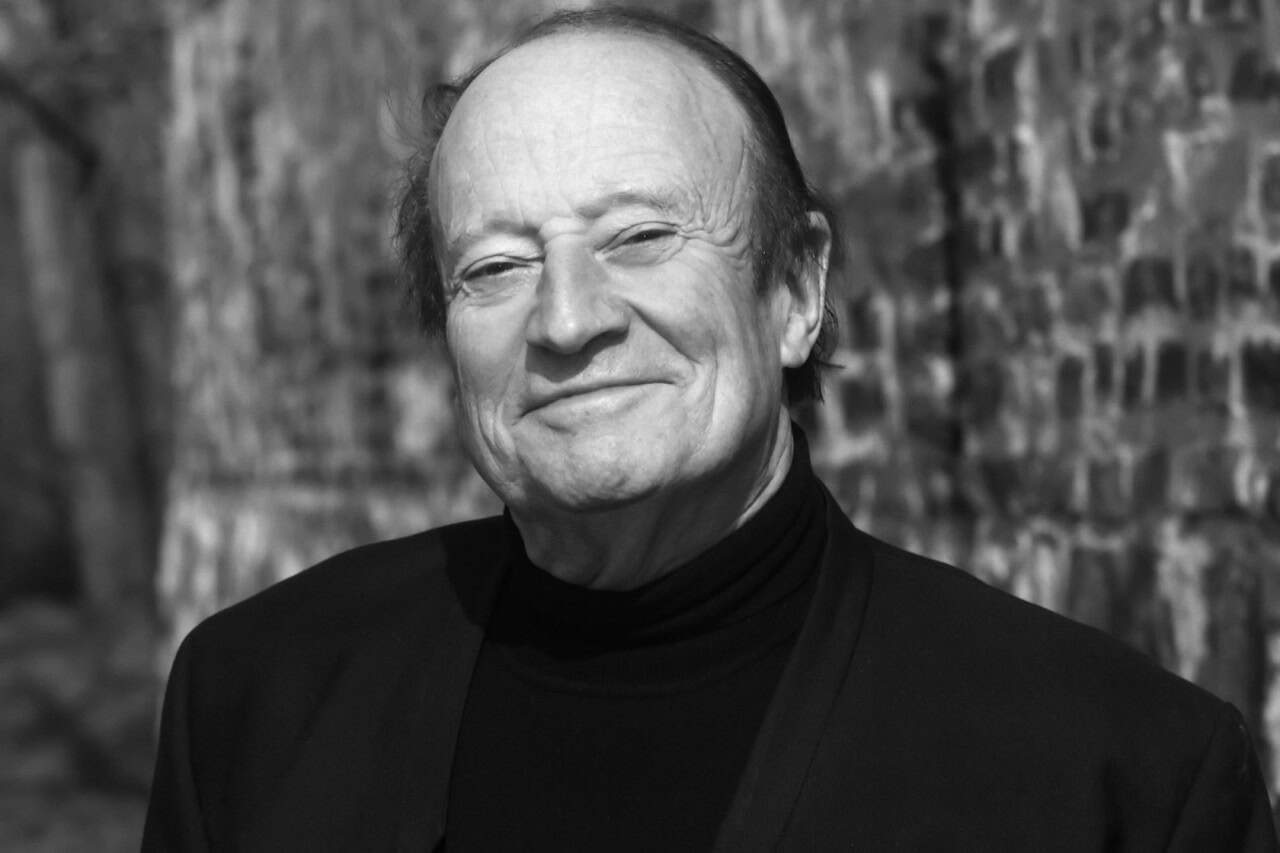
Belgian composer, concert pianist and conductor François Glorieux has passed away. The versatile Kortrijk native left his mark across diverse musical genres, from jazz to classical, from pop to world music. His oeuvre comprises more than 300 magnificent compositions, and for his invaluable contribution to Belgian musical heritage, Glorieux was honored with the title of knight. We honor his lasting influence on the musical world and remember his legacy with gratitude. In commemoration of his passing, we republish the overview of his achievements.
François Glorieux (°1932) began his musical journey at a young age. As a small boy, he quickly found his way to the piano. He improvised on the instrument and wrote his first compositions. At seventeen years old, Glorieux left his birthplace Kortrijk and moved to Gent to continue his musical studies at the Conservatorium. There he studied piano with Marcel Gazelle and composition with George Lonque.
Both on national and international stages, Glorieux made a name for himself as a concert pianist. He enjoyed the support of among others Belgian conductor André Cluytens as well as the respect of other pianists such as Arthur Rubinstein and Yves Nat.
Glorieux' compositional style was strongly influenced by his chance encounter with American big band pioneer Stan Kenton. After their meeting, Glorieux was fascinated by the warm sound of brass instruments. As a concert pianist, he traveled the world and came into contact with various musical cultures. Latin American and Caribbean music particularly sparked his interest. Additionally, Glorieux studied works by among others Paul Hindemith, Igor Stravinsky and Ralph Vaughan Williams. All these influences Glorieux assimilated into what translated as his distinctive rich musical language.
Various of his works are therefore characterized by non-classical styles. Thus Manhattan Op. 20 (1974) shows influences of jazz, his Hello Mister Joplin (1982) incorporates ragtime elements and The Legend of Bruce Lee (1982) makes use of Chinese instruments.
But with all these different influences, Glorieux did not forget his Belgian background. Thus he used instruments such as the vibraphone and the glockenspiel to give voice to the Belgian coast in The Ostend Fisherman Wharf by Night (1988). His most recent work Antwerp Hymn (2021) for string ensemble was also an ode to the city where he has resided since 1965. The work premiered during Klassiek aan de Schelde and was performed by Great Globe Orchestra under the direction of Robert Groslot.
Throughout his career, Glorieux worked on a regular basis with dance companies and choreographers. Among others the Royal Ballet of Flanders (now Opera Ballet Vlaanderen), the Nederlands Danstheater in Den Haag and the National Ballet in Amsterdam are some of the production houses with which Glorieux collaborated. His first collaboration was the expressionistic Mouvements – Contrastes pour piano, cuivres et percussion (1962) together with the Ballet van de XXste Eeuw.
Glorieux also collaborated with pop and jazz artists. His best-known collaboration was perhaps that with Michael Jackson. In 1989, Glorieux went to Los Angeles to record symphonic versions of MJ hits together with Jackson. One of Glorieux' most successful recordings was his album François Glorieux plays the Beatles in which he improvised on well-known Beatles tunes. With the LP he achieved gold status in Japan.
Furthermore, Glorieux committed himself to inspiring younger generations for different genres of music. Since 1977 he has been a chamber music teacher at the Royal Conservatorium of Gent. In addition, Glorieux gave school concerts in Europe, America and Japan, was visiting professor at Yale University for a short period and gave numerous masterclasses.
François Glorieux's contributions to classical music were recognized and rewarded multiple times. He is honorary citizen of Kortrijk, Zoersel and Stabroek. In 2012 he received the prize "Give Soul to Europe" awarded by the European Commission. As a final touch, he was made knight of the Order of Leopold II in 2015.