
Table of Contents
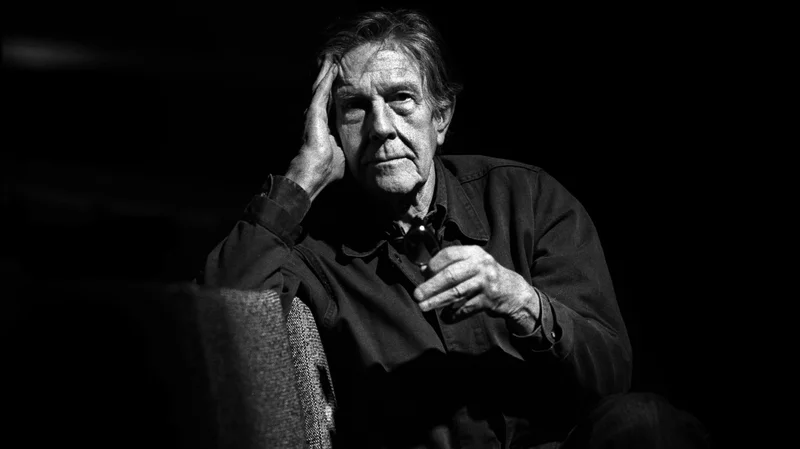
Today marks thirty years since John Cage passed away. Cheerful existentialist, professional enfant terrible, innocent boy scout - Cage was everything. And if that hadn't been enough, he would have invented it anyway.John Cage (1912 - 1992) was a composer, draftsman, painter, poet, Zen Buddhist, inventor and mushroom expert (mycologist). A cultural and intellectual omnivore who lived from day to day. He did not regard music as entertainment or amusement, but as a journey of discovery into sounds from his immediate surroundings, free from interpretation and manipulation. He wanted to let sounds exist in their own right. He drew much of his curiosity from Zen Buddhism, focused on simplicity, everyday life, freedom and peace of mind. Wonder came naturally to him; his father was an inventor of underwater vessels, his mother a journalist.
World of the Everyday
After studying music with Henry Cowell and Arnold Schönberg, Cage began his career in the mid-1930s at the University of California as a composer in the dance department. Here he developed a keen eye for the breadth of the artistic landscape. Dance gave Cage his first insights into combinations of rhythm, structure and collaboration. In the late 1930s he took a position at the Cornish College of the Arts in Seattle. There he was strongly influenced by the dancer and choreographer Merce Cunningham, who would later become his life partner. Cage called Cunningham's work "certainly no example of the specialized and fragmented art world but rather of the open and unpredictable world of everyday life". Both saw the world as multiple, undetermined and changeable. The two relied heavily on the use of chance methods to prevent themselves as artists from imposing their personal interpretations on the audience.
Chance Operations
In the 1940s, Cage settled in New York. There he had much contact with visual artists such as Max Ernst, Piet Mondrian, André Breton, Jackson Pollock, Marcel Duchamp and Mark Tobey. Cage was impressed by the way Tobey used chance in his painting and drawing. But the composer Christian Wolff showed Cage how he could use the element of chance concretely. According to the Chinese classical work I Ching, the inquirer must flip three coins six times and formulate an answer according to the sequence that the final flip produces. "I use chance procedures to prevent the outcome from being influenced by my personal preference," Cage said, "this enables me to pursue new paths that I myself would never have thought possible." The relevance of this approach depends on the quality of the question asked. In his major piano work Music of Changes (1951), for example, the question was which key he should use, on the assumption that only white keys could be employed. But in Etudes Australes (1974-75), the chance operations were applied to the question of which case individual stars or groups should be coupled to certain keys. From 1951 onwards, Cage would use the methods described in I Ching for most of both his music and his visual art.
Silence to Listen
That the use of chance does not always require a method is demonstrated by the composition 4'33" (1952), a three-part piece of indeed just over four and a half minutes for piano (or orchestra). During this piece, the musician will not press the keys of the keyboard. The pianist thus produces no music. "Absolutely ridiculous", "stupid", "cheap trick", "the emperor's new clothes". These were initial reactions, ones that still come up regularly today. They are commentaries on a piece that takes the element of silence to the extreme but aims to make the audience listen. Cage on the premiere: "Absolute silence does not exist. During the first part you could hear the wind playing outside. In the second part, the rain began to tap on the roof. And in the third part, the audience made all sorts of interesting sounds as they talked to each other or walked outside". With this composition, Cage inadvertently introduced the concept of framing by grouping unpredictable ambient sounds into a specific time period. And really, he wanted to show that all sounds have sufficient potential in themselves to be music.
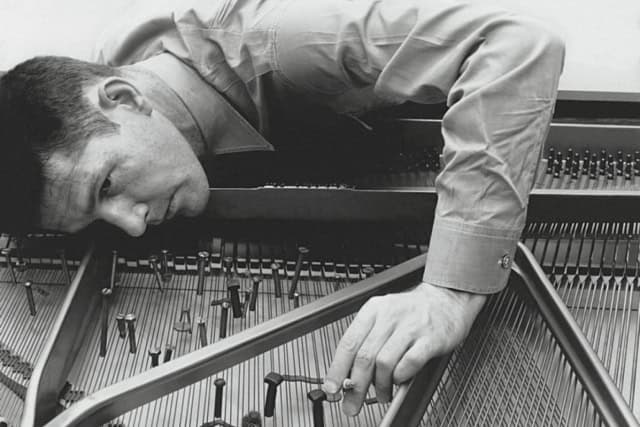
As an inventor, he became especially known for the concept of the prepared piano. Here the inside of the instrument is drastically rebuilt. Hammers are fitted with nails, rubbers, thumbtacks and strings are connected to each other by elastic bands, or adjusted with matchsticks respectively. Thus Cage transformed the piano into a percussion instrument - his old love. His Sonatas and Interludes (1946-48) is a classic in the genre.
More Intonation, Less Melody
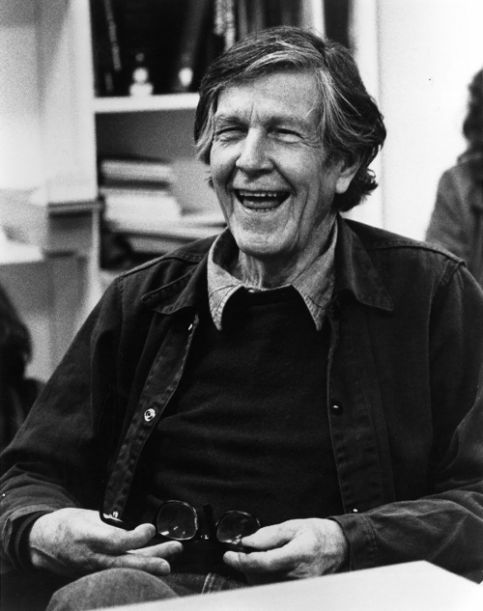
Since recently, his Number Pieces, approximately 40 pieces written between 1987 and 1992, are experiencing a revival. The numbering of these meditative explorations refers to the amount of musicians each piece requires. What is new is that the musicians themselves can determine how long they want to play, albeit within certain limits. The melodic lines in this series are deliberately restrained, they tend more towards intonation. Cage did not want to impose himself. There is space, which musicians and audiences are allowed to fill.
Cage avoided nothing to push the boundaries of sound art. Cacti, radios, rusty pan lids - he used everything to pull music as an art form out of its technical, craftsmanlike and detached biotope. Cage paved the way for a more inclusive performance practice that has stretched and enriched the listening experience. Whether we like it or not, we are not rid of Cage for the time being.
Listening tips:
- Music of Changes - David Tudor, piano. Label: hat[now]ART 133
- Etudes Australes - Sabine Liebner, piano. Label: WERGO (4 CD box)
- Sonatas and interludes - Kate Boyd, piano. Label: Navona records
- Number Pieces - Apartment House. Label: Another Timbre (4 CD box)
- In a landscape - Kate Boyd, piano. Label: Navona records
Our partner JPC has a large selection of CDs and DVDs of and with works by john Cage,
Viewing tips:
Do-it-yourself:
The app John Cage Prepared Piano for iPhone, iPad and Android. Compose pieces yourself on prepared piano and share on social media.
There is also an app 4'33" (iPhone only), on which the user can play the piece themselves, record ambient sounds and share them.