
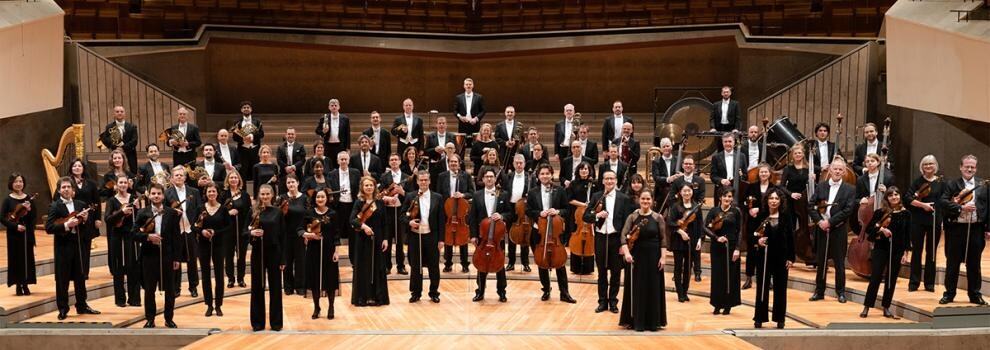
On Sunday, November 2, 2025, the Deutsches Symphonie-Orchester Berlin filled the Henry Le Bœuf Hall at BOZAR with a program that sounded like a journey through time, emotion and timbre, in which contemporary rhythms, lyrical poetry and counterpoint found each other in a balanced dialogue. Under the baton of Marin Alsop, an evening unfolded in which present and past met each other: the contemporary Fate Now Conquers by Carlos Simon (born 1986), the First Piano Concerto by Frédéric Chopin (1810-1849) and the monumental Fourth Symphony by Johannes Brahms (1833-1897). Hayato Sumino, young, digitally known but musically mature, took the stage with a naturalness that breathed both virtuosity and poetic sensitivity.
Contemporary energy, classical foundation
Fate Now Conquers – Carlos Simon's opening work immediately drew the audience into his sound world. The lower strings pulsed like a heartbeat, the woodwinds glided fleetingly past, and brass and percussion set sharp accents – a carefully constructed arc of tension that captivated from the first measures. Simon's title refers to a quotation from Beethoven, and that sense of struggle and surrender resonated palpably through every measure. Simon transformed classical rhythms into a modern tonal language in which staccato attacks flowed into cloud-like arpeggios. Pizzicato strings and subtle cluster chords in the woodwinds added extra color to the contemporary sound palette. The work unfolded as a continuous interplay of layers and motifs, with fragile lines echoing in the lower strings and percussive impulses adding subtle energy. Alsop led this complex tapestry with precision and clarity, so that every nuance remained audible.
Dynamics and texture shifted continuously: whisper-soft passages contrasted with sharp eruptions of brass and percussion, with each transition bringing a new emotional color. The intellectual and the physical merged into an experience that was simultaneously earthy and cerebral, with a drive that was irresistible. With this work, Simon proves that contemporary music can be rigorous and expressive. The performance by the DSO Berlin under Alsop's direction made that palpable: intense yet controlled, with a sustained tension that completely swept the audience into a contemporary heartbeat full of imagination. An ideal overture that prepared the stage for the lyrical and virtuosic continuation.
From whisper to virtuosity: Chopin brought to life
The orchestra opened the Allegro maestoso with a broad, majestic introduction, in which the themes unfolded like waves and the tension slowly spread through the hall. When Hayato Sumino struck his first notes, time seemed to stand still in the hall for a moment: every ear attentive, every heart listening. Quick passages rolled lightly across the keyboard, while the orchestra responded as a breathing organism – the strings softly supporting, the woodwinds like echoes of the piano line. The interplay breathed, each phrase carefully following, each color subtly enhanced. Thus a lively conversation emerged between soloist and ensemble in which technique was never an end in itself, but a means to let melody and expression breathe.
In the second movement, Romance – Larghetto, Sumino let the long, singing lines of the piano flow quietly, like a soft voice whispering stories, while the orchestra spread an almost tangible tapestry of harmony. Motifs slipped gently between the woodwinds and strings, and even the silences were charged with emotion. Chopin sounded here like a living voice that touched the audience directly – an intimate dialogue between pianist, orchestra and hall.
The finale, Rondo – Vivace, sparkled with rhythmic energy and clear interplay. Sumino played with virtuosic elegance and playful lightness with the orchestra as an equal partner in a flowing musical conversation. Quick passages glided effortlessly past, while brass and strings offered short motifs that complemented and reinforced the piano line. Alsop maintained the balance flawlessly, so that soloist and orchestra formed one breathing whole.
Hayato Sumino, born in Japan in 1998 and known as the 'Pianist of the Internet', managed to combine flawless classical technique with a fresh, personal flair. In this performance, virtuosity and lyricism merged seamlessly: a sparkling interpretation in which the sounds seemed to dance through the hall. Initially, I was somewhat hesitant because of his online reputation, but Sumino played wonderfully and maturely: restrained, controlled, always finding the right tone and fully in service of the music. Without a trace of effect-seeking – only pure musicality.
As an encore, he improvised on a theme from the concerto, which playfully transitioned into I Got Rhythm by George Gershwin (1898-1937) – a sparkling finale that underlined his versatility and natural flair once more. At a next concert, I will return without hesitation: a fascinating discovery of a musician who reaches far beyond his online reputation.
Monumental depth
After the intermission, Brahms' Fourth Symphony unfolded as a majestic narrative full of tension, introspection and triumph. In the first movement, Allegro non troppo, Brahms wove his motifs into a contrapuntal network in which each voice acquired its own personality. The strings carried the theme with flowing breath, the brass provided lustre and power, and the woodwinds enveloped the melody as shadowy counter-voices – an unparalleled dialogue of lines and colours. Alsop led the orchestra with precision and lyrical tension, merging counterpoint, drama and refinement into a gripping opening that immediately drew the audience into Brahms' world.
The second movement, Andante moderato, breathed an intimate, almost chamber-music atmosphere. Motifs glided gently between woodwinds and strings; the dynamics remained restrained, the phrasing subtle. Here sounded Brahms' contemplative side: each note gained weight, each silence meaning. The orchestra breathed along in an atmosphere of tenderness and closeness, allowing the movement to drift through the hall like a gentle breath.
In the third movement, Allegro giocoso, lightness returned. The woodwinds sparkled, the strings danced rhythmically and elegantly, and the percussion provided subtle energy. The lively figures and playful dialogues created a moment of relief that simultaneously built tension towards the finale.
The finale, Allegro energico e passionato, a monumental passacaglia of thirty variations on an eight-bar theme, was a tour de force of Brahms' contrapuntal art. Under Alsop's controlled yet intensive direction, the variations unfolded each with its own character – from restrained lyricism to dramatic eruption. The conclusion, dark and impressive, united tragedy and triumph into an overwhelming climax that left the hall breathless.
Brahms' Fourth is a work one thinks to know from countless recordings, but rarely experiences so intensely in the concert hall. There are many approaches – from pure drama to sonic beauty – and Alsop's reading found a convincing balance between the two. Perhaps not my 'ideal' Brahms (that remains Furtwängler, 1943), but rather a deeply felt, organically constructed interpretation full of inner tension. The slow movement was beautiful, though set somewhat too loudly – as Alsop's facial expression also seemed to betray – but the retards were thoughtful and worked wonderfully. The third movement had a brisk tempo; only the horns could have sounded somewhat more prominent at the end of the first movement and the conclusion could have been a touch more demonic for my taste, but this undoubtedly remained the finest live performance of Brahms' Fourth I have heard to date.
As an encore, Alsop performed a Hungarian Dance by Brahms, indicating with a smile where the audience was allowed to applaud. She effortlessly won over the last hearts of those she had not yet convinced. The audience rightly went wild after this magnificent evening that DSO Berlin had provided them.
An evening of heartbeat, breath and triumph
Marin Alsop proved once again her versatility: rhythmically sharp in Simon, subtle and supportive in Chopin, gripping and lyrical in Brahms. Her exceptional musicality and humanity on the podium were heartwarming. Her experience as a competition coach was audible and visible: she felt, thought and breathed with Sumino. The way she looked at Sumino, following every nuance, testified to genuine musical partnership. In the other works too, she kept the orchestra perfectly balanced and the entire concert radiated confidence. During the final applause, she even walked into the orchestra to personally thank the woodwinds – a rare warm gesture that perfectly summed up her involvement.
Pianist Hayato Sumino united virtuosity with poetic sensitivity; his playing breathed and spoke in a continuous dialogue with the orchestra. DSO Berlin sounded homogeneous and energetic, with a clear individual character that not only followed the musical narrative, but masterfully reinforced it. The audience left the hall with the feeling that music that evening not only sounded, but also breathed, spoke and told stories.
Disturbing dissonance
Finally, a small but not to be overlooked observation: the first – and partly also the second – movement was audibly disrupted by the shrill sound of a poorly adjusted hearing aid. An ironic dissonance in an otherwise impeccable evening. Such disturbances are not only annoying for the musicians – the slight irritation Alsop showed after the first movement of the piano concerto spoke volumes – but can also undermine the concentration of listeners. In a hall of this calibre, such disturbances should be avoided in the future, or at least be better monitored.