
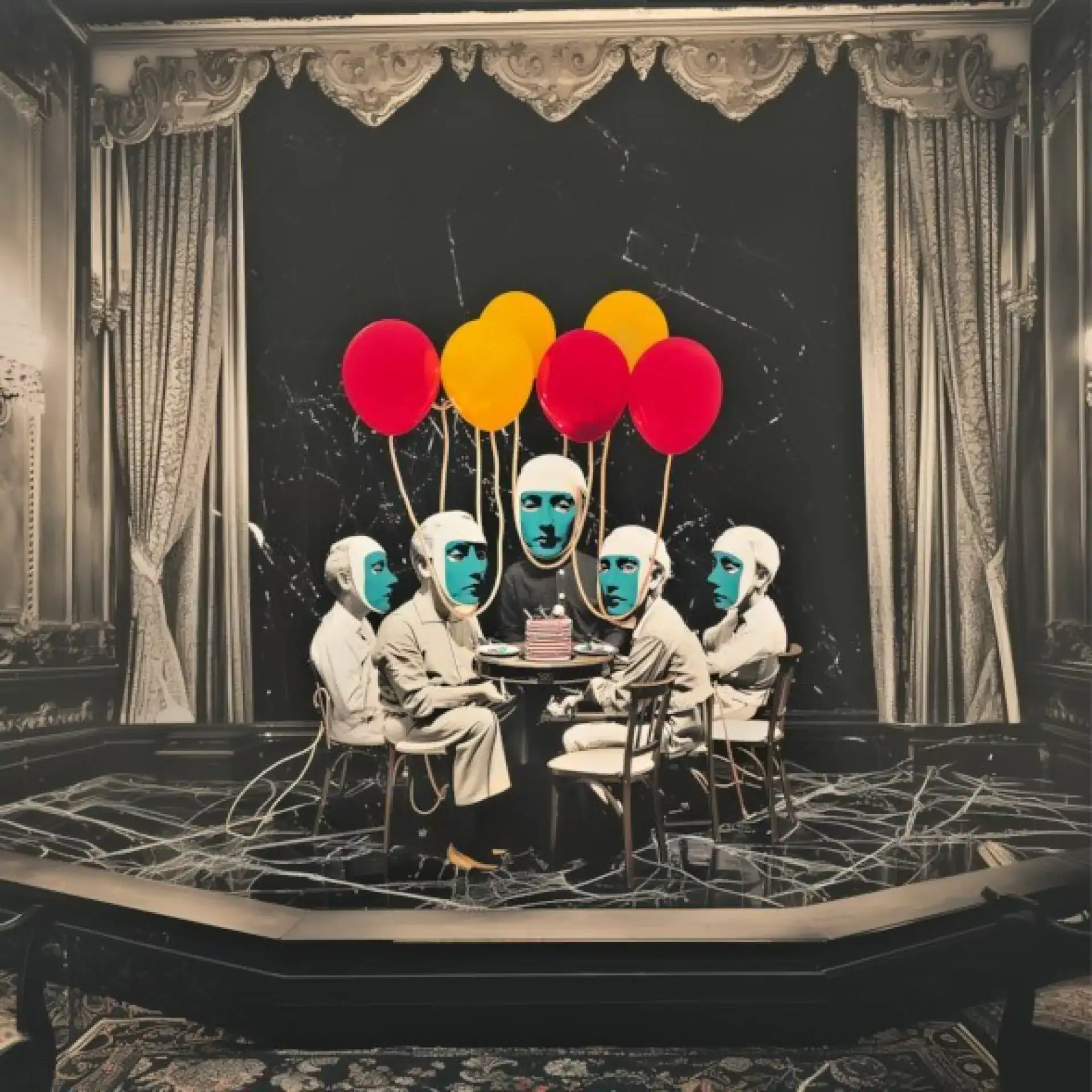
Eighteen actors together form a new participatory project 'STAMPPOT' in Mechelen. Director Maja Westerfeld is the driving force.
Writer and theater maker Maja Westerfeld (1985) is fascinated by individuals, eccentrics and in particular by the perfectly ordinary. For her, it is not only about beautiful intentions with which the world is full. She has been arguing for years against the illusion of appearances. What characterizes her is action and entrepreneurial spirit. Poverty and social exclusion undermine people's self-image. According to Italian artist Michelangelo Pistoletto (he situates art and the artist in social reality) an artist stands at the top of the social pyramid: that gives him enormous freedom, but precisely for that reason he cannot escape his responsibility.Catalyst
As resident artist at kunstencentrum nona, these are not empty words for her. Looking beyond the façade is important. It's not just about financial poverty, but also about spiritual poverty. STAMPPOT is a refuge, a place where beauty, rest and support can be found. Culture is the binding factor. Director Maja Westerfeld stimulates and questions them. She draws them out of their comfort zone, has them act, move, which results in heartwarming performances. With STAMPPOT these people develop an artistic language. Not just art for the elite, but also for the masses, the people. Keeping Mauriac's saying in mind: "Travail, opium unique" applies here: they can do something, matter by tapping into their artistic and creative gene. People seen at their most beautiful and most raw on stage. The magic of theater. It remains a fascinating medium. Not much is needed to be captivated. On stage stand Ann, Chris, Daan, Erik, Guy, Lei, Leo, Miek, Nataliia, Roksolyana, Roos, Stijn, Susan and Tom. Some had already met each other, others knew each other not at all. There is also respect towards one another. On stage they blossom, guided by care coordinators Marthe Vandervorst and Maya Versteele and by director Maja Westerfeld. We have some questions for her:- What you're doing here is somewhat in the footsteps of Tutti Fratelli (Reinhilde Decleir) in Antwerpen? M. W.: Yes and no, in the sense that I like to make theater with non-professional actors. They do that too, but I can only do it in my own way. The performances look different from those of Tutti Fratelli.
- The people you work with didn't come to you on their own initiative. How did that come about? M.W.: Actually it goes back a long time. Ten years ago I made a performance for the first time with amateurs in Mechelen. It was called 'Miserie' with about twenty people. Actually a group of actors came out of that and they participated in a subsequent project.
- How does Maja Westerfeld actually stand in life? M.W.: Well! Well, what's happening in the world at the moment is not normal, it's exciting. It calls for a certain alertness.
- The people you work with come from diverse backgrounds. M.W.: In recent years I've been searching in Mechelen for people who wanted to participate in a performance. Then I went through adult education and indeed also poverty organizations. A lot of actors emerged from there. We started an operation. I've always done it ad hoc. Because it was sporadic at the time, you couldn't guarantee continuity. If you rehearse for a year, a social safety net grows. There arose the desire to start a social operation that could continue that safety net. To expand the group of actors, we have a different partner each year. This year it's De Loods. That's an arts center connected to a psychiatric hospital. People with psychological vulnerability can come there. We launched a call for actors in their network. So a few people were recruited there too.
- 'Prova Nostra' means 'Our rehearsal'. You're intruding on a rehearsal of the Toneelkring Prova Nostra. Pure theater without cross-media gimmicks. M.W.: Above all, pleasure is paramount.
- Was it worked from a script or from improvisation. M.W.: I start with an idea. Because people like to do theater, I thought: I'll make a performance about people who do theater because it's very close to their pleasure. What we did was improvise on the floor for a year. While improvising, I keep linking everything back to the original idea. The material emerges from that. There's an interaction between what I like to see and what they show. There's enormous pleasure being made. Pleasure in experiencing something also gives mental peace.
- Was it difficult to teach them concepts like narrative, character, dramatic structure, conflicts, catharsis? M.W.: Some have experience, others are on stage for the first time but are all very receptive to suggestions.
- Can they easily handle constructive criticism and discipline? M.W.: That's not directly my focus. What's paramount is making a beautiful performance. That's hard work for me and for them. It's not very different from working with professional actors.
- You've managed to put together a fantastic cast, it seems. M.W.: I have two colleagues with a care background. They're responsible for the care of the actors off the floor, which they do very consistently. So there's a back-up.
- A social-artistic workshop stands for learning, making and showing. It's a vital art experience. M.W.: All true and don't forget: having fun. The ambition is always artistic. They have a lot to digest. It's a very close and warm group. A resilient collective that supports each other through thick and thin.
- We usually don't stop to think how far poverty, illness can reach. How socially isolated people can become. Did you notice a change during the rehearsal process: we matter, are seen! M.W.: The easiest thing is that I don't know what their background or diagnosis is. My colleagues in this project know that of course. When people feel they don't count in society, that stings. Now that they come here twice a week to rehearse, it's a reason for them to still go to the hairdresser, to eat. It's an incidental benefit, not the focus of this project. But it is a consequence of this project and a very important one.
- Our society lacks love, compassion, intelligence, honesty and ethics! Inclusive theater pounds against that! M.W.: I hope so. There is socio-artistic work and I have great respect for it. But I don't start with people's stories. I deliberately don't do that. During rehearsals there's plenty of space for their stories. They come up spontaneously. We listen to that too. They help each other. Care for each other mutually. We have actors ranging from 17 to 74. Very diverse too.
- An intergenerational cast. What they enjoy so much: we finally get to play a role. They can leave themselves for a while. We close the door, the curtain opens, the theater spotlight comes on and they enter a new world. They don't have to relate to the outside world for a moment. To immerse in the moment, to play together and enjoy. They feel lifted. Participating in this project is actually caring for these people. I hope to contribute a little to a better world with it.