
Pioneer of Timbre and Imagination
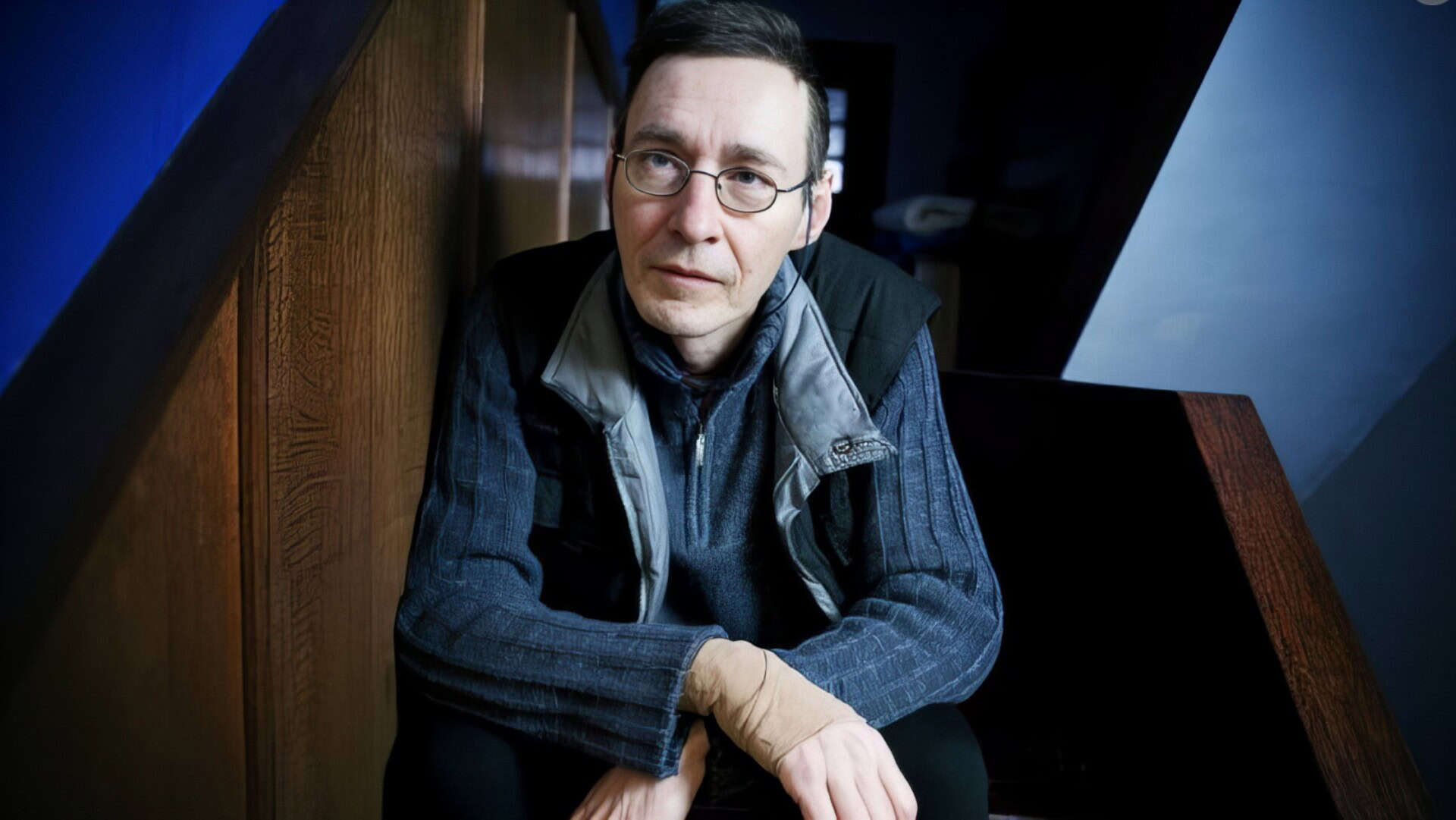
Time shows no mercy, it has already been ten years since Luc Brewaeys was taken from us on December 18 after a prolonged illness. No one could break him, but unfortunately nature could, and far too soon. Luc celebrated Life in his own remarkably idiosyncratic way. He would not agree with a memorial year where too many tears are shed. He would celebrate it himself, with his broad infectious laugh, and he would offer everyone a glass of the finest whisky. Because oh yes, Luc knew not only everything, but truly absolutely everything about music, he also knew much about that Scottish divine drink and about cigars.Luc Brewaeys (1959–2015) was a remarkable, idiosyncratic, particularly colorful composer and person with international yet too little national recognition. His music is characterized by a profound exploration of timbre, structure and space. Spectral music was undeniably his forte, which he perfected. Luc did more than compose, he breathed music, he ate music, he drank music. He talked about it with enthusiasm and also wrote about it. This is how he spontaneously offered himself as a volunteer, the very first one, no less!, of Klassiek Centraal. It was end of December 2008. Later he would make an unforgettable impression when we visited my home and discussed far more than (then still momentarily) 'my' website. He and no one else knew how to persuade me to finally open an ear to 'contemporary' classical music "I also think that's a wrong concept with a lot of rubbish mixed in, gosh still not!" to listen to and try to understand.
His Early Years and Musical Training
Luc Brewaeys was born on August 25, 1959 in Mortsel. His higher musical education began at the Royal Conservatoire of Brussels, where he studied composition with André Laporte. His quest for new sound worlds led him to Italy, where he took lessons with Franco Donatoni in Siena. In Darmstadt he came into contact with Brian Ferneyhough, an important figure in contemporary music. From 1980 to 1984 he maintained intensive contact with Iannis Xenakis in Paris, which further enriched his musical language.
Besides his composition studies, Brewaeys was also active as a pianist, conductor and sound technician at the VRT. This versatility enabled him to bring his musical ideas to life both in the studio and on stage. How could it be otherwise that a man with perfect pitch, an extremely rare musical memory and great genius in more than just musical ways, would not give his absolute best? He had to, he could not do otherwise. And yet such a person still falls away too early, or perhaps not? Was he, like other great musical geniuses who passed away too young, in some way spiritually exhausted in a way that we ordinary mortals cannot perceive, even if he claimed to be full of ideas?
Breakthrough and International Recognition
In 1985, Brewaeys won the European Competition for Young Composers with his First Symphony, titled ".., e poi c'era ...". The following year he received the first prize from UNESCO for youth composers. These early successes established his name within the international music world. His Second Symphony, "Komm! Hebe dich...", had its premiere in 1987 and was praised for its complex structure and rich sound palette. In the years that followed, Brewaeys wrote a series of orchestral works that further strengthened his reputation as a master of the contemporary symphony. Works such as Talisker (1993) and Laphroaig – Symphony No. 5 (1993) demonstrated his ability to combine traditional forms with innovative sound concepts. All that without even mentioning 'Fasten seat belts'... That last one is a legend in itself and the title of this orchestral work immediately became the title of a book that was launched at the start of the celebration year – not a memorial year, oh no – would be launched. More about that book in our book reviews section.
Talisker is whisky and also a composition...
The orchestra, for Luc, was not merely a collection of instruments, but an extensive sound laboratory that could be expanded and adapted in every possible and impossible way, and that could transcend the known orchestral sounds to the furthest reaches. He experimented with texture, dynamics and space and created compositions that were both visually and aurally impressive. Electronics were never far away. He sounded the limits of the human ear. Avant-gardism and other peculiarities he knew how to cast into forms that were somehow a reflection of his own being.
His work Talisker is an example of his innovative approach, in which he used the orchestra to create a rich, layered sound world. It was the opening work of Antwerp '93 (cultural capital of Europe) in the beautiful Antwerp station building. Yes, of course!, "Talisker that's another whisky. Haha, that's one of those nice delicacies and uhm, there's nothing more to look for there". We immediately learn that you should savor single malt and look, that is exactly what you also have to do with Luc's music. Absolutely not too much, in moderation, limited and taste, savor, let yourself be overwhelmed and inspired. You have to try to enjoy it or learn to like it, of course. Right Luc?
In 2005, Brewaeys began re-orchestrating Claude Debussy's Préludes. This ambition led to two books of orchestrations, which were performed by the Antwerp Symphony Orchestra under the direction of Daniele Callegari. These works were praised for their respectful yet at the same time innovative approach to the original piano work. It is even the case that Luc Brewaeys greatly enhanced the quality of the original works, yet another proof of his versatility and genius. He completed the piano pieces, as it were, by turning them into beautiful orchestral works. With this, he proved himself to be absolutely greater than Debussy.
Opera, illness and late works
In 2007, Brewaeys completed his first and only opera, L'uomo dal fiore in bocca, based on the play by Luigi Pirandello. The opera premiered at De Munt in Brussels and was praised for its intense drama and musical depth. The work tells the story of a man suffering from oral and throat cancer and his conversations with a chance passerby. A week after the premiere, Luc learned that he was afflicted with the same cancer that would prove fatal. In the meantime, he retained his sense of humor by saying: "I have a lot of tumor"… He laughed off the illness.
In the final years of his life, Brewaeys continued to compose despite his illness. Works such as Eppur si muove (2014) and On a day (2015) testify to his continuous search for new musical expression. His Eighth Symphony remained unfinished, but the fragments that have been preserved offer insight into his final musical ideas. It is the composer Annelies Van Parys who has the honor of completing the work, or rather perfecting it in a way that Luc would certainly appreciate. It is difficult to imagine anyone who could do it better than Annelies.
Queen Elisabeth Competition rejects his composition commission
For the Singing edition of the Queen Elisabeth Competition 2011, he was assigned the composition commission. For this, Luc composed 'Speechless Song', a specimen of contemporary yet classical work, unique in its kind and in which the talent of the singer comes to full expression. However, the jury found the work "too difficult to study in a short time". It was the only QEC without an imposed work. Imagine that. It was a pure scandal, a real shame for the QEC. Rightly, Luc Brewaeys was deeply offended. We talked, emailed and called about it for a long time, and I still regret that we didn't have it performed at the Golden Labels Awards ceremony that year, even though you couldn't be there, best Luc... The 'too difficult work' has since been performed many times in countless halls large and small, and at the celebration performance that year, soprano Lieselot De Wilde brought it exactly as Luc would have wanted to hear it. It is not a simple work, not an easy melodic thing, it is a summary of 1,000 years of art song with an opening to what else may still come. And oh yes, for a competition that wants to be the best in the world, this work is precisely the cleverest imposed work imaginable.
Professor of composition - finally (but not in Flanders...)
Overjoyed was the eloquent polyglot when he, finally!, was appointed professor of composition at the Rotterdam Conservatory. Unfortunately, his illness struck relentlessly, forcing him to drop out far too soon. It would have been the crowning achievement of his, unfortunately, unfinished work as an exceptional teacher. Previously, he taught at the Ghent Conservatory from 1998 to 2000. He was a guest lecturer and gave masterclasses in numerous countries including Canada, the Netherlands, Croatia, Bulgaria and others. For his students, actually for everyone, Luc was a driven fellow full of witty, sometimes dark humor that so characterized him and gave the lessons an extra appeal.
Luc and Klassiek Centraal
He worked actively for a short time due to his illness, but remained intensely involved. He received ample recognition for this. Wim Henderickx (1962-2022) and Lucrèce Maeckelberg presented him at home with the certificate of editor-in-chief of Klassiek Centraal (2011) because he was too ill to receive it at the celebration of Five Years Klassiek Centraal in the town hall of Brussels. His involvement with Klassiek Centraal was an extension of his passion for music and his desire to give contemporary music a platform. He strongly believed in the power of communication and documentation to increase appreciation for new music and he wanted to add an extra dimension to this through our web magazine.Luc Brewaeys Foundation with festival year
Luc Brewaeys passed away on December 18, 2015, but his musical legacy lives on. The Luc Brewaeys Foundation plays an active role in preserving and promoting his oeuvre and organizes events and performances in memory of the composer. 2026 will be a year full of activities in which the composer is celebrated. At the official presentation of the celebration year held on November 3, '25 in the foyer of Antwerp's opera house with a tasteful speech by his childhood friend Jan Raes – now director of Opera Ballet Vlaanderen – and Chantal Pattyn, network manager of Klara, we learned that the broadcaster will record and broadcast all concerts within the framework of the celebration. December 18, 2025, the day marking exactly ten years since Luc's death, the broadcaster will devote four hours, in the afternoon broadcast, to placing Luc Brewaeys at the center and broadcast only his work.Culture Minister Caroline Gennez admitted she had not known Luc, but her husband did know him and certainly enjoyed his music. In a speech rich with beautiful words, she honored not only the composer, the artist, but especially the human being he was and, despite budget cuts, she demonstrated her pleasure at having awarded a project subsidy for this special celebration year. Maarten Beirens gave an overview of what the celebration year has in store and on the soprano saxophone Maarten Vergauwen performed the ear-defying 'Dirge for Dina'. Melissa Portaels of Matrix, the Center for New Music, provided some information about the memorial book or is it a thank you book.
Luc's widow, musicologist Birgit Van Cleemput, received the first copies of the complete edition of Luc's compositions from Davo van Peursen, director of publishing house Donemus.
Humor
Let's end with a typical Luc: "There aren't many jokes about composers – sadly – but there is one, it's a play on words and it only works in Dutch anyway, quite crazy, because that's how most jokes and wordplay work poorly in Dutch, but this one does and in no other language. So two composers meet each other. One says to the other "Hello, how are you?", to which the other replies: "Ah I wouldn't say anything else, you don't do it any differently either".
Viewing and listening tips
To gain a deeper insight into the work and personality of Luc Brewaeys, here are some recommended videos. They offer valuable supplementation for those who want to know more about the life and work of Luc Brewaeys.
- Canvas Klassiek: Luc Brewaeys. Straight
A compelling TV portrait that offers a glimpse into Brewaeys' creative process.
- The Whisky Tour - A tribute to Luc Brewaeys
A documentary that explores his "whisky cycle" and shows performances of his works.
- L'uomo dal fiore in bocca – Excerpt from the opera
A fragment from his only opera, performed by Opera Ballet Vlaanderen.
- Talisker – Live performance
A performance of his orchestral work Talisker, which illustrates his innovative approach to sound.