
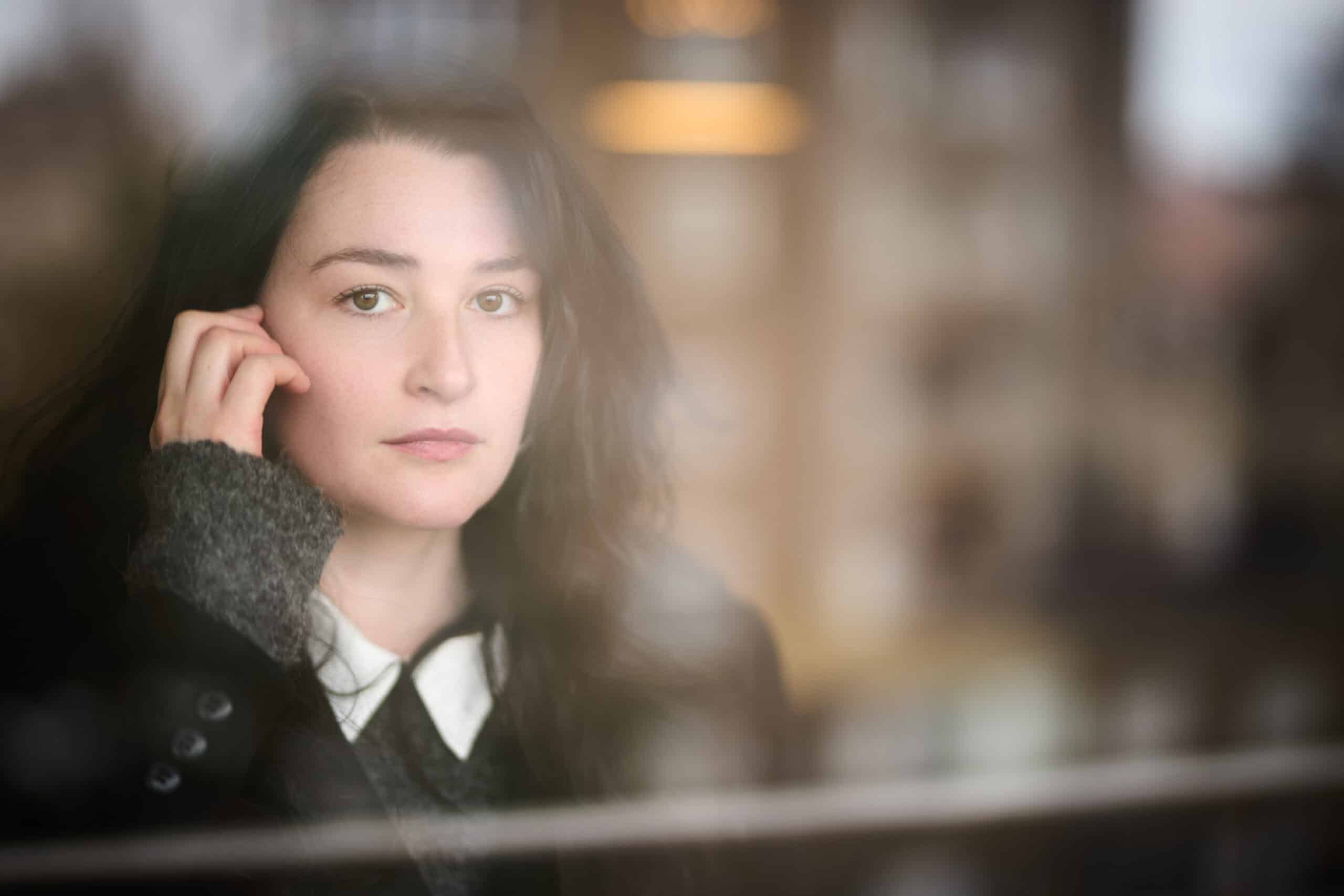
Pianist Marie François brings Le Carnaval des Animaux by Camille Saint-Saëns (1835-1921) to life on Saturday 21 and Sunday 22 February in Schouwburg De Kern in Wilrijk (https://www.schouwburgdekern.be/voorstellingen/marie-francois-presenteert-t7zm). Together with a select group of top musicians and actor Koen De Bouw as narrator, she invites young and old on an imaginative journey through a world of animals and music. In connection with this concert, we spoke with her about how music comes to life in live performances, about listening, interpretation and the encounter between performer and audience.
The room breathes along
Live music does not come into being in a vacuum. "For me, a concert starts with authentic music-making, the experience in space: the vibrations, the energy, the atmosphere, the story, the craft, the exchange between musician, music, instrument and audience. That makes every moment unique," says Marie François. At the same time, she notes how different this is from what we hear nowadays via social media or streaming. "Everything there is so processed and reworked that it often stands far from the live event. Yet most people have developed a kind of ear for perfection through this – an ideal that is not realistic. That tension is part of live music and makes communication fragile and alive."
During a concert, François experiences that communication in moments of shared concentration: when the energy in the room shifts noticeably and a subtle attunement emerges between her, the music, the instrument and the audience. "That happens at an almost pre-verbal level," she explains, "where it is less about explanation or interpretation and more about resonance — sound, vibrations, breathing and attention."
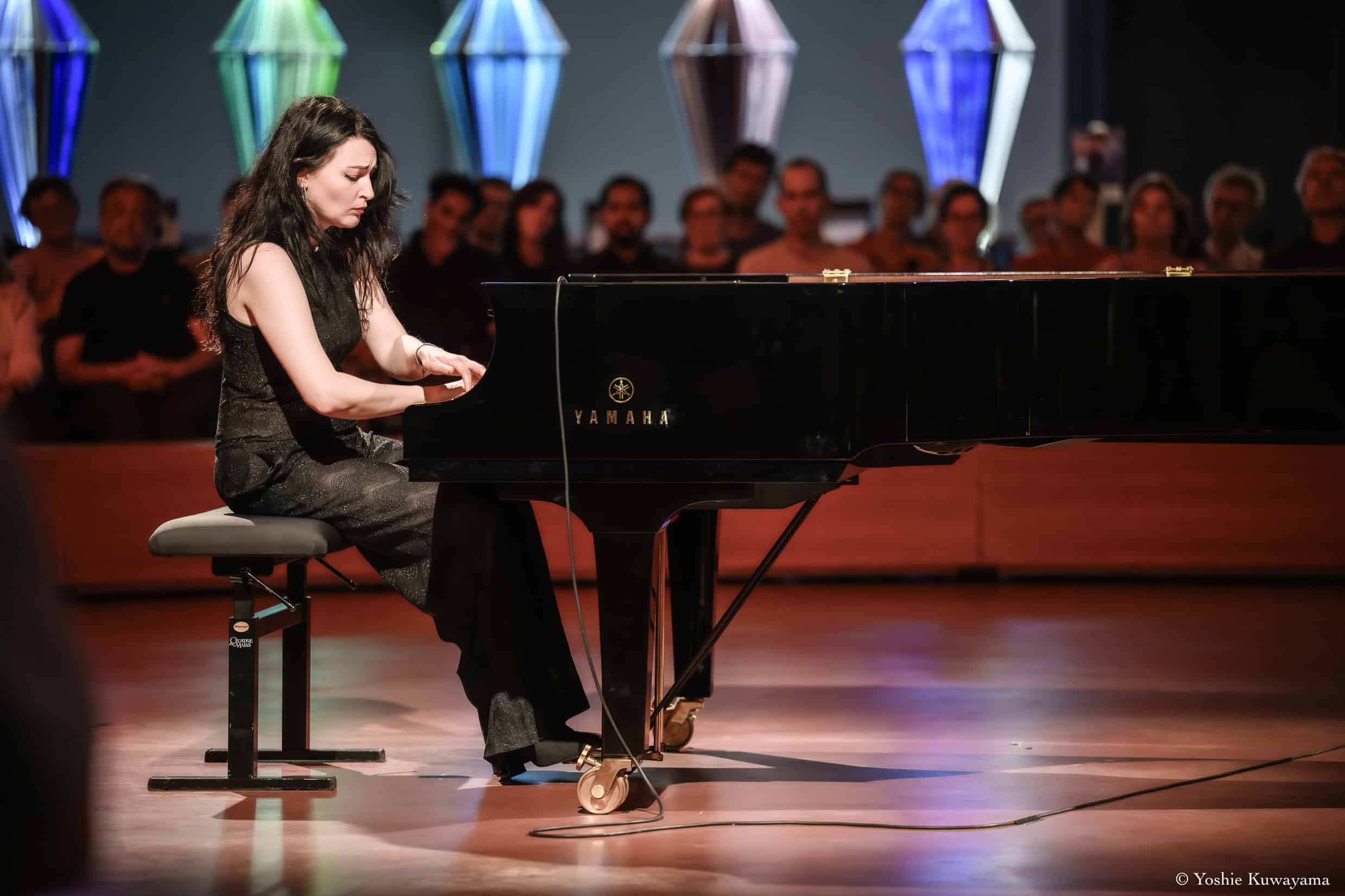 She refers to Mihály Csíkszentmihályi's Flow: the moment when focus, action and perception converge. Sometimes it is a collective experience, sometimes an intimate dialogue between musician, instrument and music. "A room full of people who don't know each other, with diverse backgrounds, who listen together in silence, without distraction, remains something exceptional and almost magical. Where do you find places like that today? It is an almost rare experience in which performer and audience reach a shared flow."
Body and sound in dialogue
That shared flow is not only mental, but also physical. Music comes into being for her in the interplay of ear, breath, weight and touch. The body functions as a silent mediator between score and sound, between intention and reality. "My hands, ears and breath form one whole. It is a conversation with the instrument that constantly responds," she says. Thus listening becomes not only a mental exercise, but also a physical practice that deepens both the playing and the interaction with the audience.
Communication is further strengthened by the dialogue with the audience. Not as an extra, but as an integral part of her musicianship. By saying something about the works, she invites listeners into her world of thought and that of the composer. "By putting into words what occupies me, I remain sharp, I keep thinking and prevent myself from stagnating," says François. "It also allows me to take risks without pleasing, and shows who I am behind the piano: curious, enthusiastic and full of love for this repertoire."
Repertoire as narrative
Her repertoire choices start from the same thought. A programme is never merely an aesthetic enumeration, but a dramaturgical whole. François compares it to a carefully composed menu: not only the quality of each individual dish matters, but especially the coherence, the dramatic arcs and the breathing space. "I ask myself questions like: how do the pieces relate to each other in terms of form and harmony, and how does one work lead the ear to the next? The palette is never fixed; it moves along with who I am at that moment." Because the piano repertoire is so rich, she feels a responsibility to make choices that tell something – about a period, an idea, an inner journey.
Freedom, fidelity and interpretation
For François, there is no 'definitive' interpretation. Every performance is temporary, bound to a moment, a room, an audience and to who she is as a musician at that point in time. "It is a constant weighing: fidelity to the score, but also fidelity to the moment and who I am as a performer. When freedom becomes divorced from necessity, it feels pointless. When fidelity becomes dogma, it stifles the music." "I always try to find a balance: freedom must never become gratuitous, and fidelity must never feel suffocating."
Context as inspiration, freedom as guide
This vision was recently strengthened by her work around Frédéric Chopin (1810-1849). A period in Warsaw brought her literally and figuratively closer to his world. She visited the Chopin Institute, studied facsimiles, saw his last piano and worked with pedagogue Ewa Pobłocka. "I absorbed as many impressions and stories as possible, like a sponge, and let them work musically as inspiration. It also motivated me to study further, which is sometimes a solitary activity," she tells us. "At the same time, you have to detach yourself as a performer from nostalgia or excessive glorification; historical knowledge nourishes the imagination, but must not fix your playing."
Chopin's music is often associated with melancholy and introspection, but according to François, that emotional charge imposes itself naturally as soon as you truly listen to voice leading and harmony. What she deliberately avoids is effect-oriented playing and mere virtuosity. "Chopin's strength lies less in the extroverted than in the narrative and vocal character of his music. It's about nuance, intimacy and a freedom that is never without strings attached, but always in service of the music. By not forcing the spectacular, there remains room for belcanto, poetry and intimacy." "The Nocturnes are often branded as 'intimate salon music', but I don't regard that as a limitation; it's precisely a key to their power."
Lightness and depth in chamber music
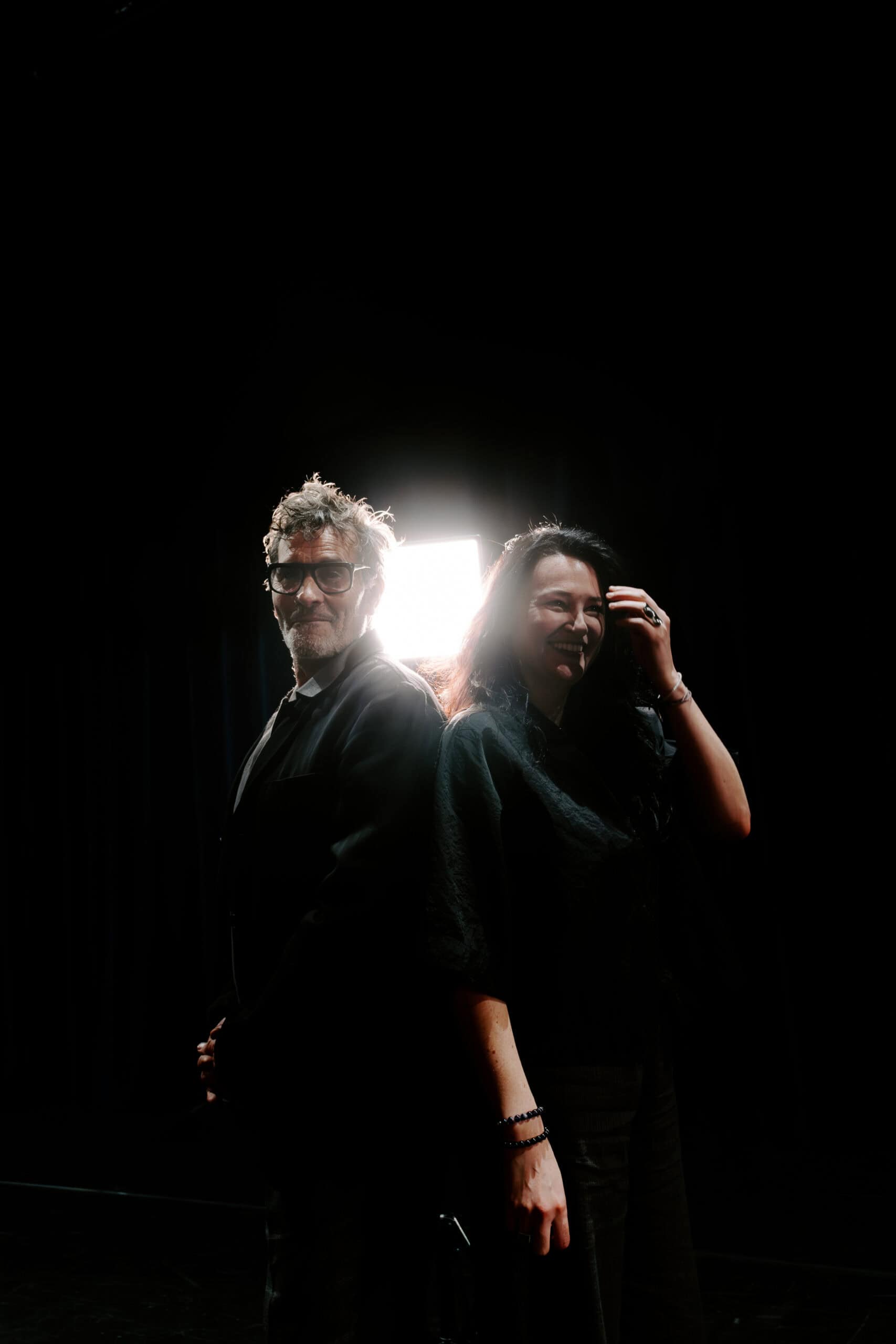
That same attitude characterizes her projects outside the traditional recital. In Le Carnaval des animaux by Saint-Saëns, presented in a theatrical context, François sees no contradiction between entertainment and depth. "Collaborating with top musicians from different families means constantly listening, responding and breathing. The piano can be engine, color or support — and many decisions arise on the spot. The work is chamber music in its purest sense: one voice in a colorful whole, not hierarchically led."
The balance between entertainment and depth lies in taking that lightness seriously: by playing precisely, transparently and without seeking effects, the music remains accessible and rich. "The role of the piano shifts constantly: sometimes engine, sometimes color, sometimes support. The interplay requires trust and attention to timing and sound, and many decisions arise on the spot."
Breathing, vulnerability, letting go
François speaks with nuance about accessibility. She resists the idea that classical music is only for the initiated. "The threshold rarely lies with the music itself. I don't simplify the music, I simplify the threshold. By providing context, by sharing why a work moves me, and by showing where you may breathe and where you must not, listening is deepened, not flattened. The starting point is always respect: for the music and for the audience."
Vulnerability also plays a role in her vision of perfection. She experiences the greatest pressure mainly from herself. Doubt and searching are part of taking music-making seriously. "Horowitz once said: 'When I practice, I practice for perfection. When I perform, I let it go.' Perfection as preparation is essential; on stage I let it go. That tension between preparation and letting go is the core of music-making." "The fear of falling silent or repeating myself is present daily, but I regard it as part of the process."
In a world of acceleration and polarization, François sees classical music as more than aesthetics. A concert demands sustained attention and offers a different experience of time. "The moment after the final note, before the applause begins, is also part of the music for me. It's a subtle transition, a breathing space, a collective awareness." "I hope that after a concert, listeners take something with them of their own breath, attention and capacity for nuance — not just the notes."
The question that has guided her for years is radically simple: is it worth continuing? For her, continuing doesn't mean keep running, but choosing more slowly, more honestly and more selectively. "I've always asked that question, and my answer has remained the same, though I now feel gentler with myself and stricter about everything that isn't essential. Continuing means choosing selectively, taking less part in the noise, and focusing on projects that truly nourish the music."
New project: The Seasons
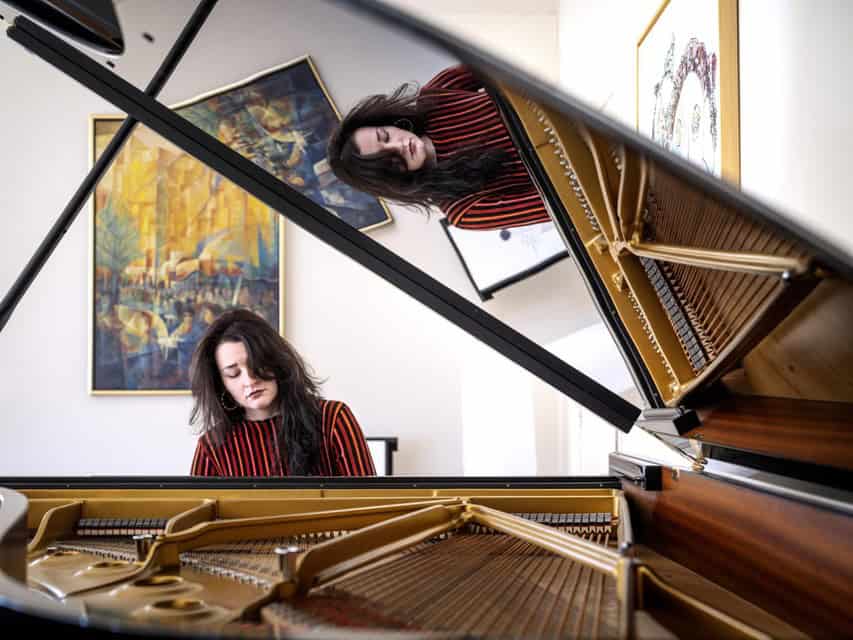 Marie François is currently working on an ambitious project called The Seasons, in which music by Peter Tchaikovsky (1840-1893), time and imagination come together in a special way. Rather than a traditional, rounded recital, this work unfolds month by month, allowing the audience to experience a rhythmic, cyclical experience. François explains how that approach influences her way of preparing, playing and listening: "Because The Seasons unfolds step by step, I prepare not towards one peak moment, but towards a rhythm. Each month asks for a different concentration and color, and what I discover in month one resonates back later. That cyclical quality makes it more intimate and less 'finished' than a traditional recital."
The project (https://www.eprclassic.eu/de-seizoenen) aligns seamlessly with her conviction to choose selectively for works that truly nourish the music. On the choice for The Seasons she says: "It felt like a project that truly nourishes the music, because it's not about 'more', but about deeper. It connects repertoire with meaning, with time, with other voices — and with the audience. I felt: this is exactly what I want to build now. And that's mainly a gut feeling. Once I truly feel something, I go for it."
Freedom between the notes
"Every concert is a new beginning," she says. "The notes disappear, but the breath, the attention and the presence linger. That is the most beautiful gift: a shared space in which everyone feels, listens and breathes with the music."
In those moments, classical music becomes an exercise in vulnerability and freedom. Not as an escape, but as a place to return to nuance, to breath, to the tension between preparation and letting go. In the silence after the final note lies the promise of beginning again and again – a shared stream, fragile and precious, that never ceases to exist. "Freedom and loyalty, vulnerability, time, silence and sharing my process: these are the core points I want to pass on."
Music never begins and ends with the notes themselves. For François, it is a stream that constantly unfolds anew, a space in which performer and audience meet each other, in which sound transforms into experience and silence into meaning.