Musical journalism.
Andrea Voets studied philosophy in Amsterdam and harp at the Hanns Eisler Conservatorium in Berlin. Thinking deeply about things comes more naturally to her than standing on stage, where stage fright was her companion until she made her first documentary concert. She experiences the concert circuit as a rat race where performers rush from production to production, with far too little time to create something new together. With musical journalism she combines original music with her own journalistic research. The focus is always on some kind of emotional blind spot in society: a theme that concerns many people, but which they cannot quite put their finger on. For each project, she goes through a very thorough research process, which can take years. While We Live came about thanks to the help and support of 150 Greeks. There is reading and reflection, music-making, interviewing and filming, after which the findings ultimately converge in a documentary concert that moves fluidly back and forth between the projection screen, musicians in Greece and the set of international live musicians.[caption id="attachment_30074" align="alignleft" width="196"]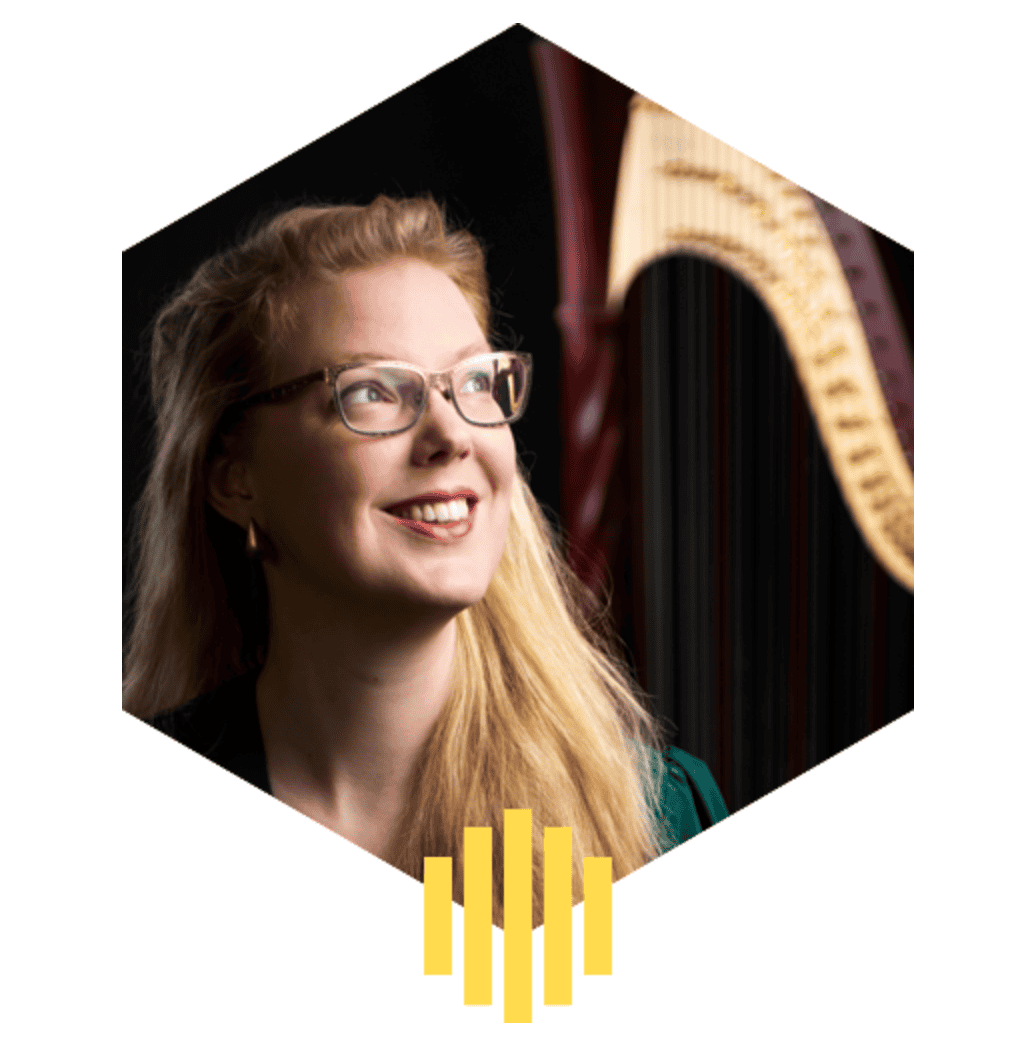 © Claudia Hansen[/caption]
Meanwhile, Andrea Voets teaches her brainchild musical journalism and delights when the unpatented genre finds followers. She firmly believes in journalism that uses music as an ally. It is not just filler between two interviews, according to this journalist music works directly on the subconscious of the listener and viewer. After Xenitia (2016) about migration and Wings and Roots (2018) about third culture generations, While We Live (2021) is the third production by Resonate Productions and Andrea Voets.
Minister of Loneliness.
The disturbing statistics of depression and suicide in Europe point, according to Andrea Voets, to great hidden loneliness in our society. We talk a lot about 'connection' but how? By becoming everyone's best friend? By fighting loneliness as if it were a lifestyle choice? Loneliness is a dark theme that many people prefer to steer clear of, as if it's just part of life. Every publication on the theme of loneliness that she could get her hands on, she has read, and since she was 16, Voets has known that she has to do something with this theme. The answer will not come from the government, like Margaret Thatcher's attempt to establish a Ministry of Loneliness (after the murder of Member of Parliament Jo Cox). However well-intentioned, a buddy from the municipality who comes to have coffee with you once a week will not solve your loneliness. How is it that I always feel more at home and welcome in Greece than in Belgium or the Netherlands? In search of keys to escape loneliness, Andrea Voets travelled to three Greek locations: the metropolis of Athens, the mountains of Epiros in the north, and the unassuming island of Lipsi, near the Turkish coast. She films with a (far too small) budget from the theatre world. Time and attention, cleverness and authenticity are her most important production resources. According to her own account, her documentary fits within the SILENCE element of the Lunalia festival 2022 in this way.
A social road trip.
Greece is far from an easy country to live in. The toxic traces of the Greek Civil War (1945-1949) and of the colonels' regime (1967–1974) have not been entirely erased. Since the economic crisis of 2010, people have been working themselves to exhaustion just to avoid sinking. Nothing is taken for granted, life is unpredictable and chaotic. In this climate, Andrea Voets spends countless hours with old and new friends, café owners, musicians ... to analyse Greek social logic together with them. Greeks are by nature a political people with a strong debate culture. No matter how dire their situation, they take a stand and there is plenty of disagreement, says Andrea Voets. In all meaningful conversations she encounters three key concepts.
Φιλότιμο. Filotimo appears already in Pindar, Plato and Aristotle. The words filos (friend of) and timè (honour) form an ancient, indefinable concept that bundles virtuous qualities such as honour, dignity, responsibility. There is always unconditionally involved, you do something for another because it is simply 'right' and because you want to, not because the law prescribes it or to get something in return. In 2021, Greek authorities used sound cannons to deter migrants, while some citizens jumped into the water to rescue the drowning. You could say that these latter acted from filotimo. The pre-Socratic philosopher Thales of Miletus (ca. 624 BCE - 545 BCE) said that filotimo for a Greek is like breathing, a human being cannot exist without it. Without it you might as well be dead.
Φιλοξενία. Filoxenia, literally love for the stranger, the unknown, is translated as hospitality, but has little to do with the ouzo that the restaurant offers you for free. At the heart of hospitality lies a hidden fear, explains philosopher and musician Iannis. It is human to feel uncomfortable with the unknown, the stranger, the other culture. Why this plays less of a role with a Ukrainian than with a Syrian or an Afghan is an interesting question for us to ask ourselves today. In essence, filoxenia presupposes that we give a stranger what a human desperately needs and what we ourselves would want to receive if we were in need, not only to help the other, but also to ward off our fear. Asking him or her questions is another way to become less afraid.
Γλέντι. A glendi is not the same as 'let's throw a party' where everything is neatly planned and prepared. At a glendi you don't need an invitation, it arises almost spontaneously from a kind of intuitive joy of life. As we know from Irish pubs, musicians can set a glendi in motion. Andrea Voets finds it significant that according to the Greek language you don't sing a song, you say a song. As if music is a constant, natural form of expression that is accessible to everyone. People feel less inhibited, but sing what they have to say.
Half of the interviewed conversation partners in While We Live are musicians, people who are rarely asked about their social or political convictions. Which is a pity. Becoming a musician is choosing not to become a doctor, accountant or banker. Choosing a financially uncertain existence, because you want to sail by your own compass. You can't not do it. Devoting your life to music is a political act, says Andrea Voets.
The music in While We Live consists of improvisation, arrangements and composed pieces by Andrea Voets (harp), Sarah Jeffery (recorders) and Evi Filippou (percussion).
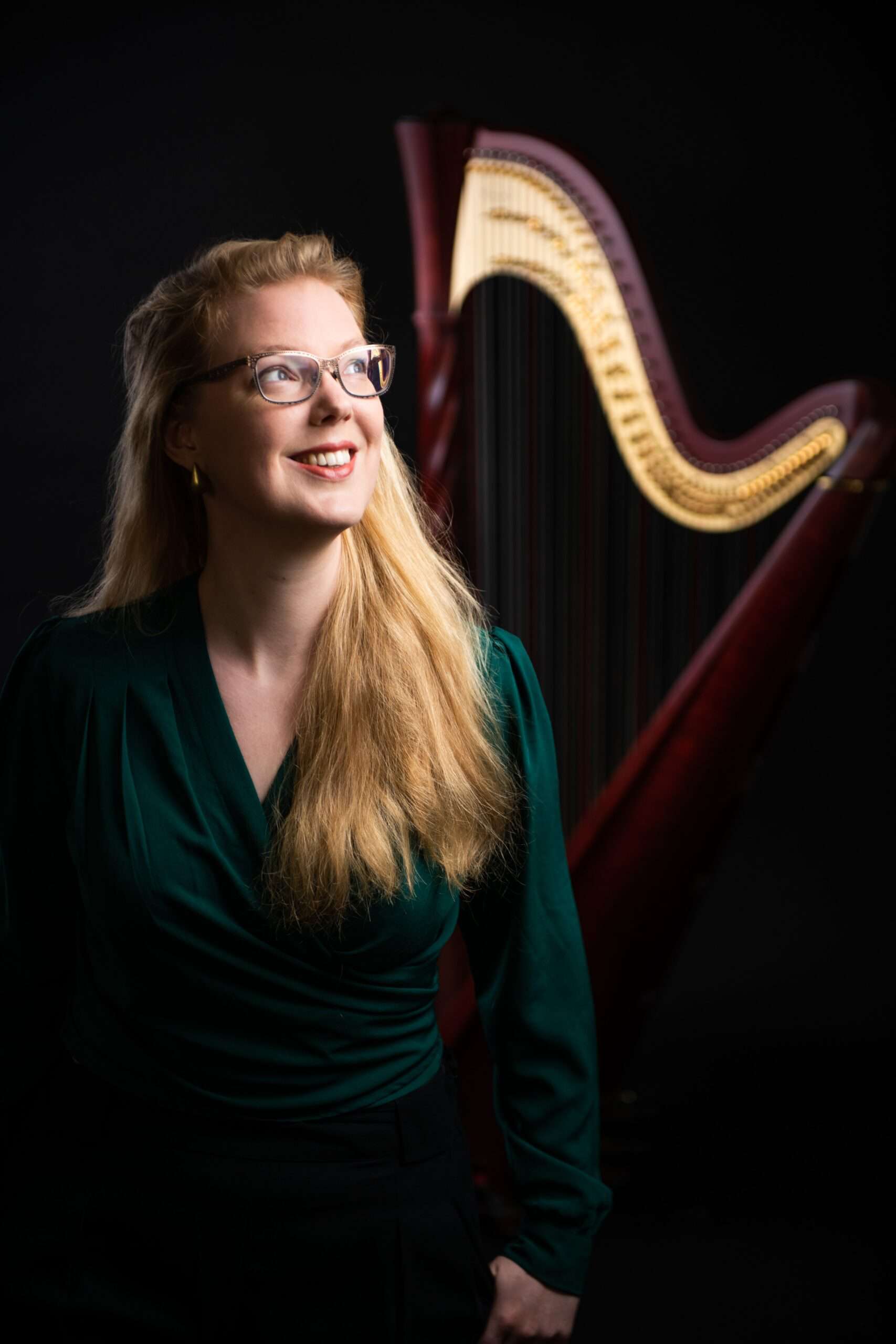
Andrea Voets lives in Amsterdam, has Dutch parents but grew up in Brugge. Was an oddity on the playground because she never assimilated the 'Flemish' accent. Her music teachers constantly told her she was not musical. Speaks six languages fluently, including modern Greek and Farsi. Is artistic director of Resonate Productions. Has been working since 2018 from debate centre De Balie in Amsterdam. Invented the genre musical journalism. For this she received a Fastforward grant from the Dutch government in 2022 to conduct research on 'how to feel safe'. In the future she will come to Mechelen more often to work on commission for the festival Lunalia. The NRC included the documentary-concert While We Live in the list of best classical music 2020, the film version won various international awards.
www.resonate-productions.com ||
Festival van Vlaanderen Mechelen LUNALIA
De Rest is Stilte, in the framework of Zinderende Stilte
from 23 April to 8 May in Mechelen
While We Live - a compass to connection.
2 May 2022 Kunstencentrum nona, Gouden Zaal at 20:15.