
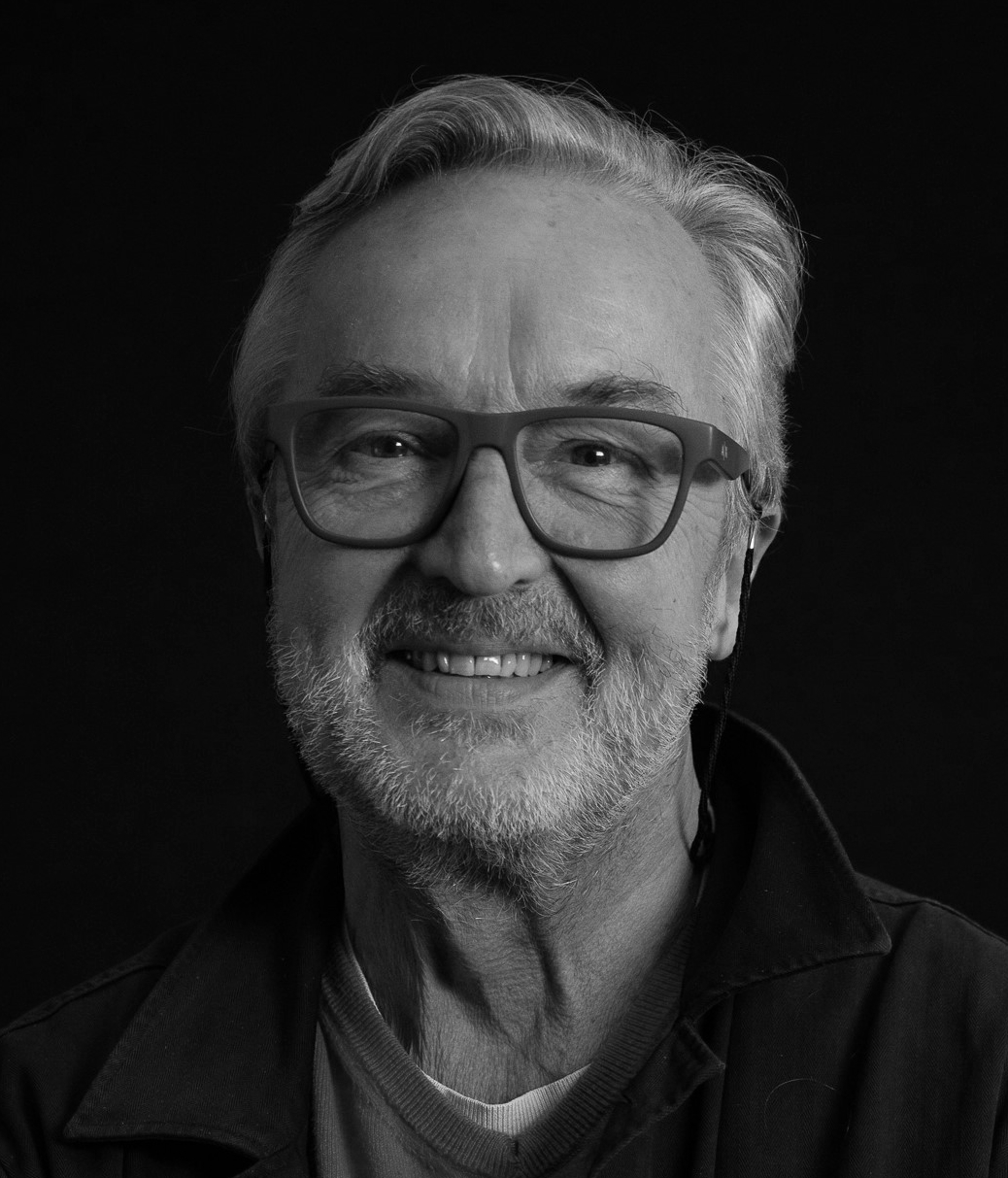
From a deeply felt musical experience, music pedagogue and philosopher Lukas Pairon promotes a new approach to life. The summary is contained in the title of his new book, written in English and translated into French: The Art of Positive Fatalism / L'art du fatalisme positif.
A few years ago, the author published Music saved them, they say. It was his doctorate at Ghent University. It was an impressive account of his musicological and anthropological fieldwork that he conducted on young people in Kinshasa who, by making music together, managed to "save" themselves from their precarious social situation of poverty and violence in which they had found themselves. It involved participatory research with a brass band and a traditional Congolese drum band. During that social music project, they got to know themselves better and, despite the limited possibilities, took the reins back into their own hands to reorganize their lives.
Now Pairon goes a step further and, as a philosopher, draws from that descriptive research what struck him most in Kinshasa. He came to know firsthand the driving and enduring strength of those young people to survive positively, their art of experiencing fatalism positively. That doesn't mean simply submitting to your fate and resigning yourself to it, but neither does it mean displaying boundless optimism.
You understand it completely when you read the anecdote with which the book opens. The author is stuck in a massive traffic jam in downtown Kinshasa, after a downpour. He watches, listens and experiences what happens around him. He sees overloaded cars, minibuses bursting with people, motorcycles with three passengers, struggling pedestrians, everything moving at a snail's pace. And what else does he see: people making jokes, commenting, laughing, occasionally shouting, but there is no anger to be detected. That's how it is there. Everything with a certain calm in the midst of that "blocked reality", people with little room to maneuver, who necessarily accept limits to their freedom of action. It is these lessons from Kinshasa that have also led him to develop the concept of "positive fatalism".
It is that same positive fatalism that he experienced in his earlier "participatory fieldwork" during those social music projects. Building on that further, philosophizing, he develops those experiences: how people together and in solidarity can accomplish much even when their means are limited.
With passion he describes in seven short chapters that life lesson and ultimately also his approach to life and philosophy. First and foremost, of course, from his first ethnographic work, those social music projects with those young people in Kinshasa, where music and poverty are overwhelmingly present. Because those experiences form the basis of his conceptual thinking. His theory is anchored in the context of that daily life that he himself experienced over two periods. At the same time, he draws a heartbreaking but also almost poetic portrait of that city, where you don't need money to sing, a plastic bucket is sufficient as a percussion instrument and where you can survive the unbearable with humor. He also tells with love about the musicians and their music groups he met there, then as teenagers, now as young adults, some truly successful as artists, others who dropped out. Their lives revolve around making compromises, improvising, managing shortages. Music gave them visibility and dignity. All to be read in frankly moving portraits of, among others, percussionist Claudel from the ensemble Beta Mbonda, once a "small criminal", trumpet player Nathalie, saxophonist Mando and the former "witch child" now bass guitarist Esther…
It is precisely those stories and experiences that prompt Pairon to name that way of life, to name that approach to life, to draw a lesson from that precarious life situation, even to develop a philosophy: their music teaches them to adopt a specific 'Sitz im Leben", to accept uncertainties but without falling into passivity. That music gives them enough strength to rediscover themselves in their relationships with others and their world. Even though "today" is no guarantee for "tomorrow", it is about "the art of positive fatalism". Pairon's own experiences in Gaza play a role in that concept. It is not about resigning yourself to so much injustice, but about remaining dignified and being able to live in those circumstances, even if the future turns out to be "merely" a compromise.
As he goes along, he describes his philosophical-anthropological theory and also finds kindred spirits. He refers to a similar mindset in the work of, among others, Erich Fromm, Hannah Arendt, Hans Achterhuis, Paolo Freire and others. They too accept limits to reality but certainly do not give up all possibilities. They advocate for action without the illusion of controlling everything, they embrace life in the now. That's what they do in Kinshasa and above all: they continue. Pairon likes to call it: "habiter le présent" and that is precisely what gives them a future.
What daily life looks like in Kinshasa, what the practice of that positive fatalism is, he then tries to capture in a few extremely remarkable paragraphs. About living with a limited horizon, about resourceful improvisation, about small solidarity and discreet help, yet being able to save in precarious circumstances, about living with dignity amidst waste, about faith and religion (omnipresent), about forgiveness and especially about living with uncertainty.
The book confronts the Westerner with a culture of life that must seem foreign to him, but wishes to acquaint us with it. Casting that culture into a wise life philosophy, into a "positive fatalism" is the very great merit of Lukas Pairon. At times his approach reminds one of concepts such as "la petite bonté" of Lévinas or the books of Dirk Dewachter, certainly his latest with the title 'Wachten' or even the Stoics. But Pairon always emphasizes that it is not about a life without resistance, resignation to the facts, passivity is not an option. In an afterword he even lets the critical voice be heard of the Congolese philosopher Philémon Mukendi who does not want to hear of what he calls a "paralyzing fatalism", reproaching his compatriots for giving in too easily to what their rulers inflict upon them.
Pairon draws more than just lessons from his Congolese anthropological and ethnographic adventure. That omnipresence of music and poverty and how it is dealt with in Kinshasa have guided him step by step to that original and remarkable concept of "positive fatalism". Remember from this book that this should not be a "contradictio in terminis", for some even a necessary art of living.