
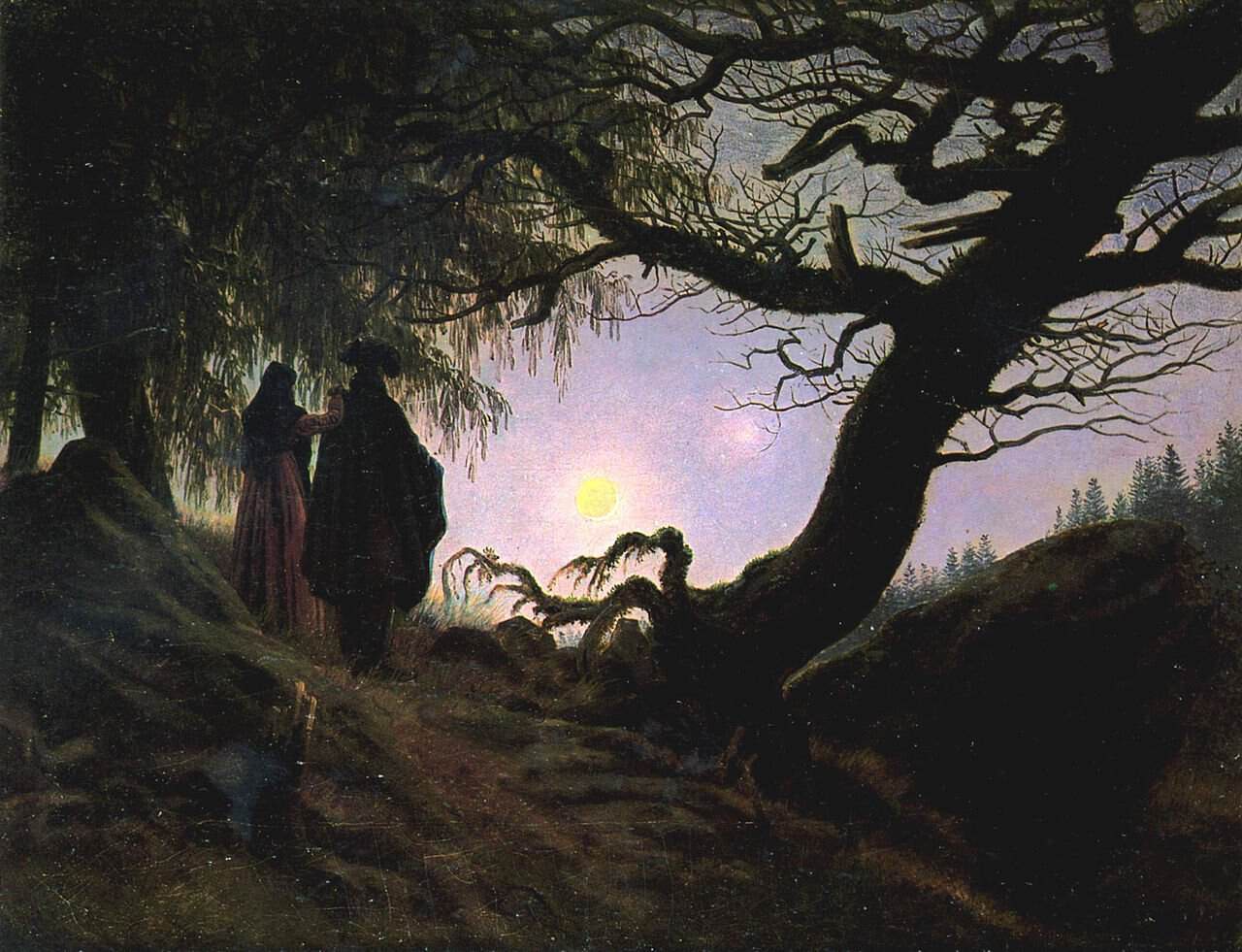
There are concerts that don't impose themselves, but unfold slowly like an inner landscape. "Mondnacht", the programme of Martina Gedeck – known to us as an actress from Das Leben der Anderen, among others – and Xavier de Maistre, a world-renowned harpist, belonged to that rare category: a literary-musical evening for the connoisseur, in which word and sound merged in carefully balanced dramaturgy. Despite the size of the nearly sold-out hall, the direction managed to create a remarkable intimacy – a concentrated listening space in which every detail gained meaning.
This focus began already in the scenography: a sober arrangement with table, chair and harp, combined with a refined lighting that through subtle colour shifts – from cool white to warm red, from deep blue to a suggestive moon – underscored the emotional contours of the programme. A feather in the cap for the technicians. The appearance of both performers, in restrained black, also contributed to this concentration: all attention went to the spoken word and the musical line, which came into their own optimally in the clear acoustics of the hall.
 The dramaturgical structure of the programme testified to great coherence. The opening with the Erste Elegie from the Duineser Elegien by Rainer Maria Rilke (1875–1926) was delivered by Gedeck in a restrained manner and without conspicuous drama, as if the text were forming itself on the spot. That approach found a natural counterpart in Arabesque nr. 1 by Claude Debussy (1862–1918), in a harp transcription by De Maistre, in which the music unfolded in flowing, almost weightless phrasings. It immediately became clear that this evening was not about illustration, but about resonance: word and sound as parallel tracks within the same emotional space.
With Phantasie by Else Lasker-Schüler (1869–1945) and the narrative Die Nachtigall und die Rose by Oscar Wilde (1854–1900), the programme gained a more pronounced narrative dimension. Gedeck gave these texts a warm, deeply felt intensity, without ever falling into conspicuous theatrical profiling. De Maistre joined in with Le Rossignol by Franz Liszt (1811–1886), in the refined version by Henriette Renié (1875–1956), in which the harp developed an almost vocal expressiveness.
The central section, with a selection from the Buch der Lieder by Heinrich Heine (1797–1856) – including Ich hab' im Traum geweinet and Allnächtlich im Traume seh' ich dich – brought a hushed quality that became almost tangible. Gedeck reduced her performance to a fragile, introspective line, while De Maistre, with Recuerdos de la Alhambra by Francisco Tárrega (1852–1909), in his own transcription, evoked a hypnotic timelessness through delicate tremolo's.
After the interval, the narrative arc was somewhat disrupted by persistent coughing in the hall, which made the listening concentration less self-evident. A pity, because in the first part one could, so to speak, hear a pin drop. Yet the performers managed to pick up the thread again. With Licht und Schatten by Albert Camus (1913–1960), the perspective shifted towards a more existential reflection, while Granada from the Suite española by Isaac Albéniz (1860–1909) revealed a warm, richly nuanced sonority, in which the harp developed an almost palpable sensuality.
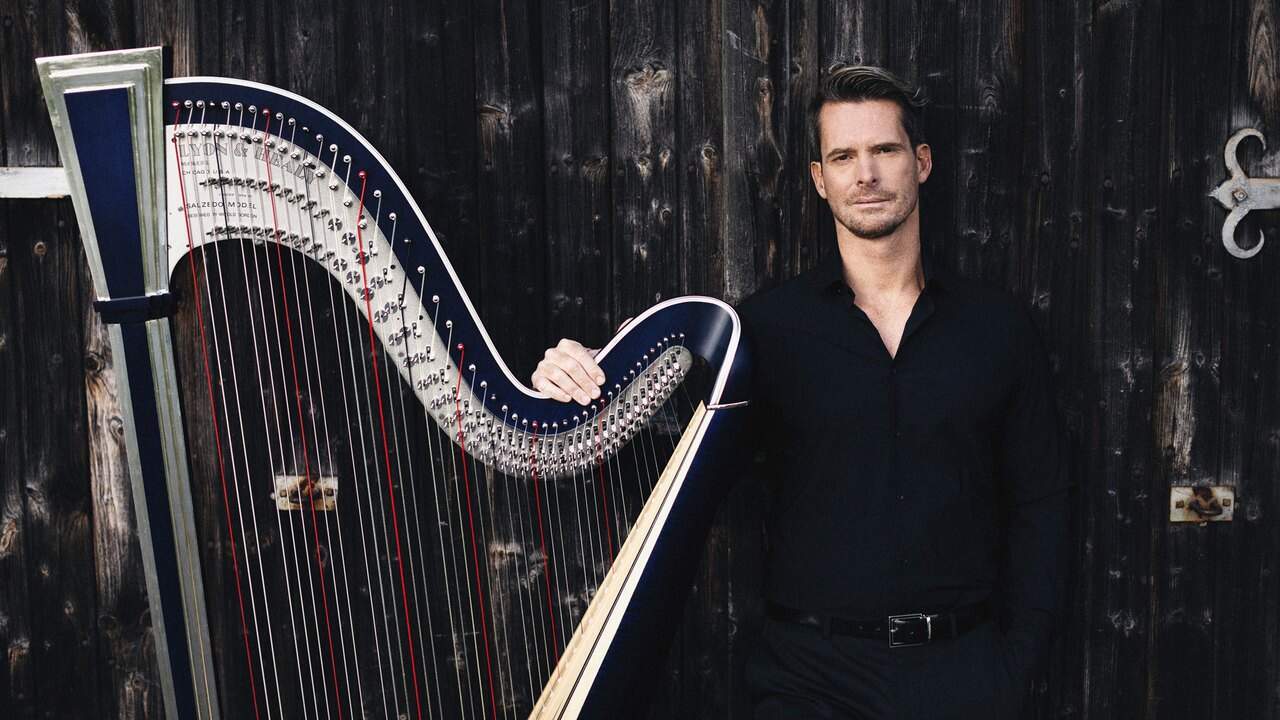 Mondnacht by Joseph von Eichendorff (1788–1857) brought hushed quality and synthesis and thus formed the poetic focal point of the evening, delivered by Gedeck soberly and without pathos. In Clair de Lune by Claude Debussy (1862–1918), De Maistre achieved an impressive intensity: the tone was broad, yet remained transparent and breathing at the same time.
In the concluding combination of Die Elfen by Charles-Marie Leconte de Lisle (1818–1894) – which was reminiscent of Goethe's Erlkönig – and Légende sur les Elfes by Henriette Renié (1875–1956), the programme gained a more mythical dimension. De Maistre accompanied the text first subtly with thematic fragments, then – as a natural apotheosis – culminated in an impressive interpretation of Renié's actual piece. It was a pleasure to watch his hands moving over the strings and to hear such a rich palette of colours and moods emerge.
What made this evening special was not only the high level of performance, but especially the coherence of the whole. Text and music complemented each other wonderfully. Gedeck and De Maistre created no loose moments, but a continuous narrative arc in which every detail – from light to silence, from word to sound – was employed functionally.
"Mondnacht" thus became an evening in which the boundary between listening and experiencing blurred – a refined dialogue of word and harp, which discreetly yet intensely nestled itself in the imagination.