
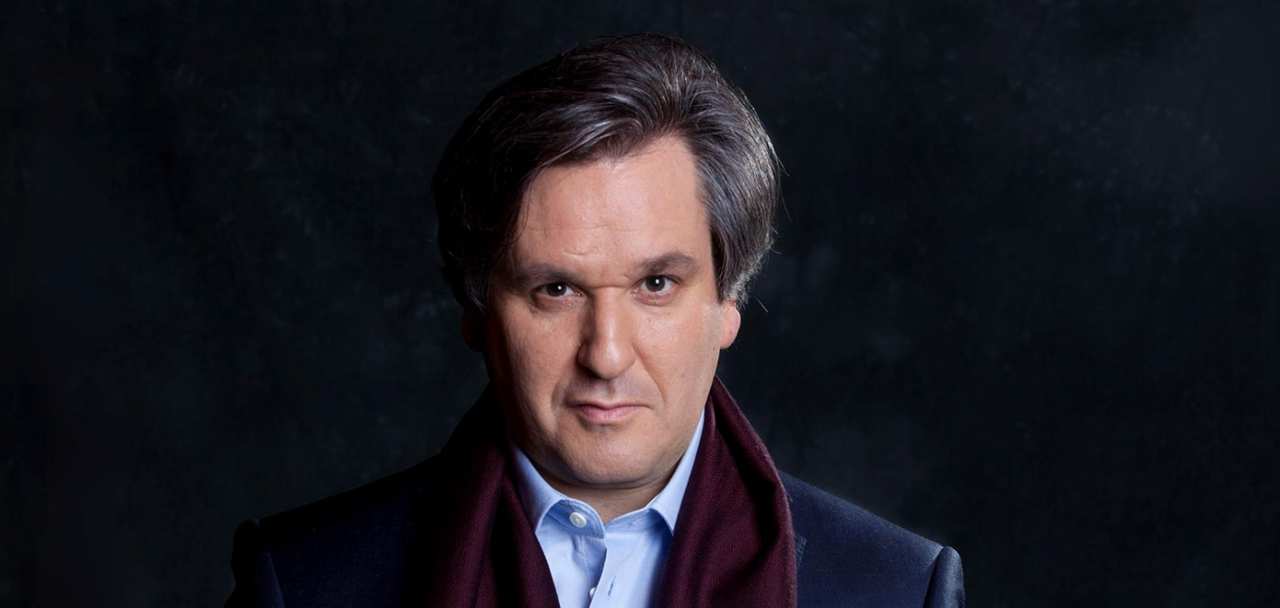
The rarely performed requiem by Hector Berlioz naturally fits in the commemoration of the 150th anniversary of the death of the composer from French Romanticism. To fully enjoy it, a performance with an excellent orchestra such as that of the Concertgebouw Amsterdam is an absolute requirement. Moreover, it requires a huge choir, and this requirement was also met with quality: the Groot Omroepkoor was supplemented with the Choir of the Accademia Nazionale di Santa Cecilia. With conductor Antonio Pappano, the requirement of high-quality standards is also immediately fulfilled.
Berlioz composed his Requiem in 1837 as a commission from French minister Adrien Gasparin as a commemoration of the victims of the July Revolution of 1830. Berlioz composes the work in a very short time for a huge ensemble, with among other things four fanfares. In the performance at the Concertgebouw, Antonio Pappano chose to distribute that enormous brass ensemble throughout the hall: consequently, trombones, trumpets and tubas can be heard both from the top of the stairs that in the Concertgebouw run from the stage upwards and from the side balconies. It creates an impressive spatial and especially overwhelming sound. The ten timpanists and the bass drum also create tremendous effects. The Dies Irae section thus becomes a literally apocalyptic scene. That Dies Irae also begins with exclusively deep strings (cellos and double basses) which in any case already provide a chilling passage. The verses in Quantus terror ist futurus receive a staccato rhythm that is driven into a climax in a rushed crescendo.
Literal realization
The Last Judgment is set overwhelmingly and frighteningly in sound. When then at Tuba mirum the extra brass sounds from the balcony, the words from the requiem text "the trumpet spreading a strange sound" receive a very literal realization! The legion of timpani and the bass drum intensify the frightening atmosphere with the thundering male choir, which then suddenly falls fittingly to restraint at the verses Mors stupebit ("Death and life shall be silent"), with the female choir also joining in. It is just one example of a passage like the whole requiem in this performance is played full of layers of meaning. Drama predominates, of course. And it is sometimes even audible in a single word. Such as in the way the male choir sings "Rex" (in Rex tremendae majestatis) as a drawn-out apocalyptic word of terror. But where appropriate there is also rest (resignation?) (Quid sum miser) or room for genuine faith at the entry of the Offertorium and certainly at the resigned Amen at the ultimate end of the Agnus Dei. The soloist has a limited role, namely only in the Sanctus. Tenor, Javier Camarena, was a clear beautiful voice with high timbre, beautifully dialoguing with the violins and flute. In its melodious beauty, the Sanctus distances itself from the atmosphere of fear and evokes paradise for a moment.
A magnificent performance with, as expected with Antonio Pappano, intense text interpretation, also with this hallowed text of a requiem. The nuancing in the huge sound mass that the conductor realizes with this orchestra of the highest level protects this dramatic work from banal liturgical pathos. A performance that can scarcely be more gripping for this Grande Messe des Morts by Hector Berlioz, for which every superlative seems too minimal! The hall rightly rose up in admiration and appreciation after a few appropriate minutes of silent reverent respect.
- WHAT: Hector Berlioz (1803-1869) | Grande Messe des Morts (Requiem), opus 5
- WHO: Royal Concertgebouw Orchestra Amsterdam, Groot Omroepkoor and Choir of the Accademia Nazionale di Santa Cecilia conducted by Antonio Pappano, Javier Camarena (tenor)
- WHERE: Royal Concertgebouw, Amsterdam
- WHEN: Saturday, May 4, 2019
- PHOTO: © Musacchio Ianniello