
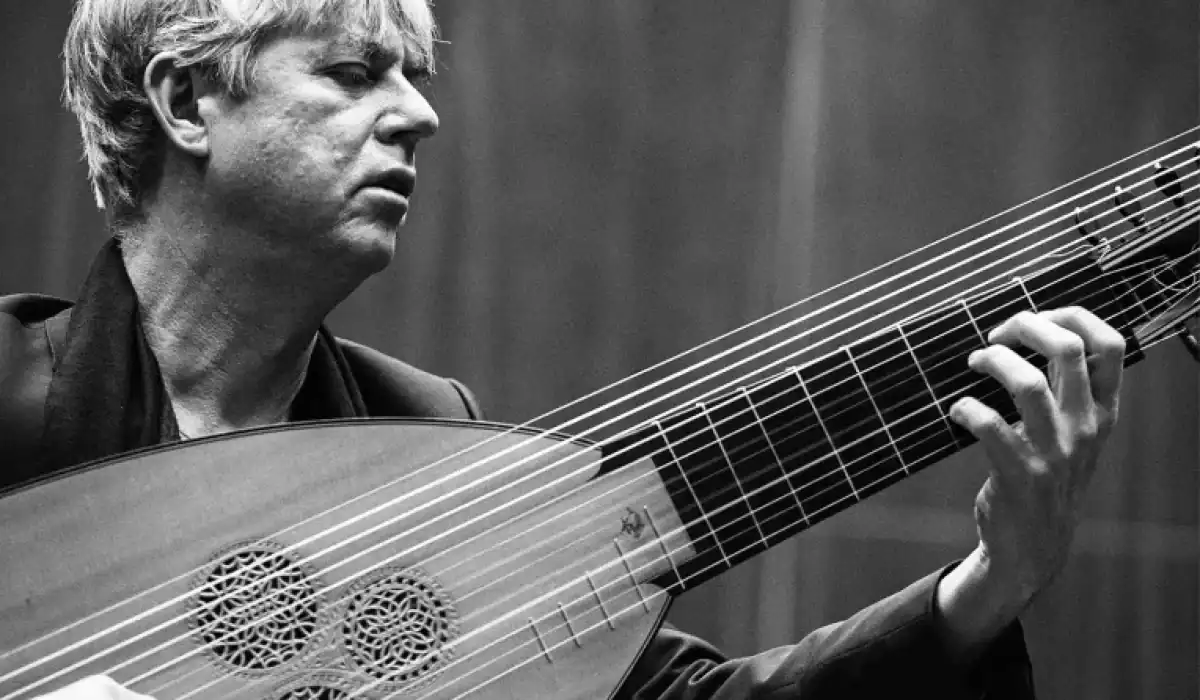
In Libro primo (ECM) redefines the boundaries of historically informed performance practice, Norwegian lutenist Rolf Lislevand. By approaching the scores of 17th-century masters such as Kapsberger and Foscarini as dynamic blueprints, he interweaves Baroque traditions with a contemporary, almost avant-garde aesthetic.
The core of this album lies in the deliberate break with classical "authenticity rules". Lislevand uses the scores as a framework for extensive improvisations. While purists might regard this as anachronism, the performance argues that this freedom precisely formed the essence of the Baroque spirit. The rhythmic propulsion and addition of contemporary phrasing ensure that the compositions do not sound like static museum pieces, but as living music.
The selection on this album highlights the transition to the early Baroque, a period in which composers such as Johann Hieronymus Kapsberger and Giovanni Paolo Foscarini explored the boundaries of harmony. Kapsberger was known for his extravagant style and unpredictable rhythmics. Lislevand exploits this historical unpredictability; he sees in Kapsberger's toccatas not fixed texts, but an invitation to the stylus phantasticus. The influence of Diego Ortiz, whose Trattado de Glosas was fundamental to the art of variation, is also seized by Lislevand to open up the compositions of Bernardo Gianoncelli with virtuosic embellishments that accentuate the original structure. In particular, his own composition, Passacaglia al modo mio, he draws out the improvisation and enters into dialogue with the Baroque composers.
What stands out in the programme as a whole are the dynamic differences. The sound intensity varies from whisper-quiet, melancholic passages to powerful, percussive attacks. The balance between this melancholic slowness and virtuosic passages is cleverly conceived; nowhere does the lutenist lapse into pure outward display. Musician, venue and engineer work sublimely together for this. In the recording there is a kind of symbiosis. The archlute and chitarrone are captured with extreme clarity, the acoustics of the space playing an almost active role in the composition as a whole.
Lislevand succeeds in bringing the listener into a state of 'active contemplation'. The album is not merely a collection of separate pieces, but a coherent sound exploration of the emotional power of the Baroque. Not imitation but artistic risks—risks that were inherent in the original improvisation culture resonate anew in a contemporary interpretation. By focusing on the "sound" and emotional resonance rather than merely historical correctness, Lislevand unlocks this repertoire for a broader audience. In short, an album that challenges the definition of "early music" and still sounds great!