
That the Alamire Foundation stands for early music is something almost everyone knows by now, and that they are housed on that beautiful site of the Louvain Parkabdij as well. But that this interest in that polyphonic heritage is supported by thorough scientific research is much less known. It is an essential part of their work. And in 2024 even more new projects and collaborations are coming to spread that heritage internationally as well. Since Belgium takes over the EU presidency for six months from January, that offers extra opportunities. And a man like Bart Demuyt, director of the foundation, doesn't let those slip away. He wants to be strikingly present during that period with that Franco-Flemish musical heritage. Already on January 6, the Foundation can help give the official kickoff in Mechelen's Sint Rombouts cathedral with a very special three-dimensional artwork. An installation where you can experience seven-part music spatially and in sound and image, of course of polyPhonist Petrus Alamire and performed by the Huelgas Ensemble.
When that Belgian EU presidency ends, Alamire wants to go along to Hungary, which then takes over EU leadership. Why? Because the polyphonic heritage of Central Europe has remained largely unexplored. With all their knowledge and experience, Alamire can unleash their high-tech Digital Lab there as well. Cataloguing and digitizing Eastern European musical heritage is the goal. Partnerships are already coming with Budapest, Bratislava, Prague, Krakow… Just as has already happened with the disclosure of all those manuscripts that lay hidden in the Vatican.
Cataloguing is fine, but not enough. It is only through digitization that you can make those documents accessible to the public worldwide. What you can now consult on the website www.alamire.be and even more so on www.alamire.tv is actually overwhelming. On this video platform you can now find more than 20 film productions and docu-concerts about that Low Countries music. Especially during the COVID period, the idea of offering all that virtually and being able to communicate better with the outside world received a tremendous boost. For the disclosure of old sources, the Integrated Database for Early Music was recently renewed, the Alamire Foundation Editions partners with label Passacaille for the distribution of its CDs, to be able to communicate their audiovisual content even more efficiently they became a member of the International Music Centre IMZ, an organization for the cultural film industry and there is even an agreement with Brussels Airlines to offer Franco-Flemish polyphony on their 'Inflight Entertainment Program" during long-haul flights…
With unflagging dedication and success, that is how you can describe the trajectory of the Alamire Foundation. From the mind of director Bart Demuyt seem to spring inexhaustible sources of inspiration and initiatives.
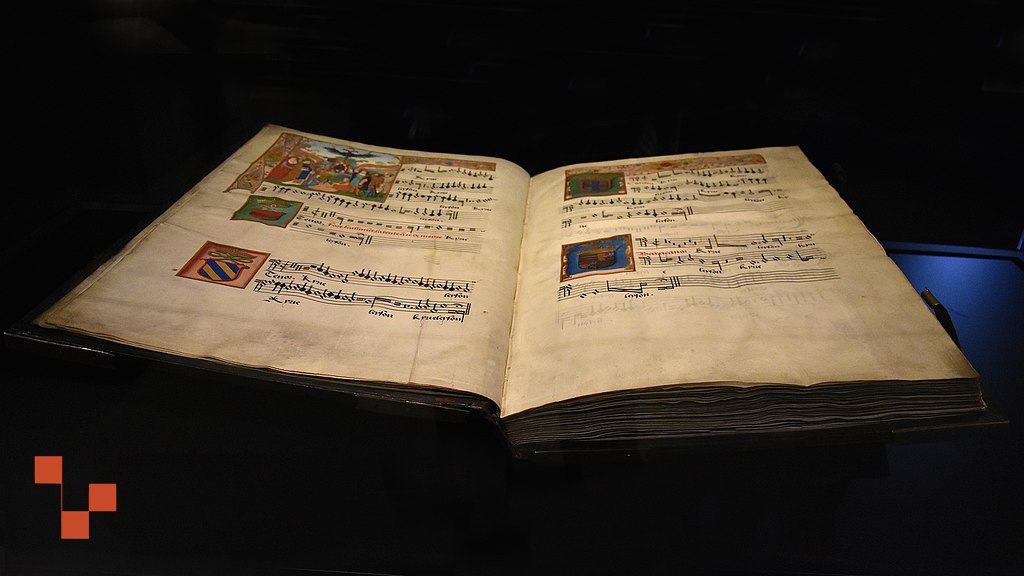
And what about the financing of all that? How do you raise money for 45 employees, musicologists, performers, that state-of-the-art high-tech sound lab, those digital and physical libraries, their music practice……"If you have good ideas, you find money" Bart Demuyt answers briefly. But of course there is more to it. They sit at the intersection of culture and science. Raising subsidies for music is not easy, and certainly not for the early music sector. But for scientific research it is different. And at Alamire, fundamental scientific research is being conducted. That is absolutely an advantage for them in the search for funding. With that approach you can raise money domestically, European and internationally for innovative projects. And if a result obligation has to be attached to it, Alamire can certainly present itself brilliantly with results. Just think of the thousands of images you can now view from all over the world and in detail: all those beautifully illuminated miniatures from musical manuscripts and the margin decorations from choir books and not only from the workshop of that wondrous Petrus Alamire. The foundation does its name honour.