
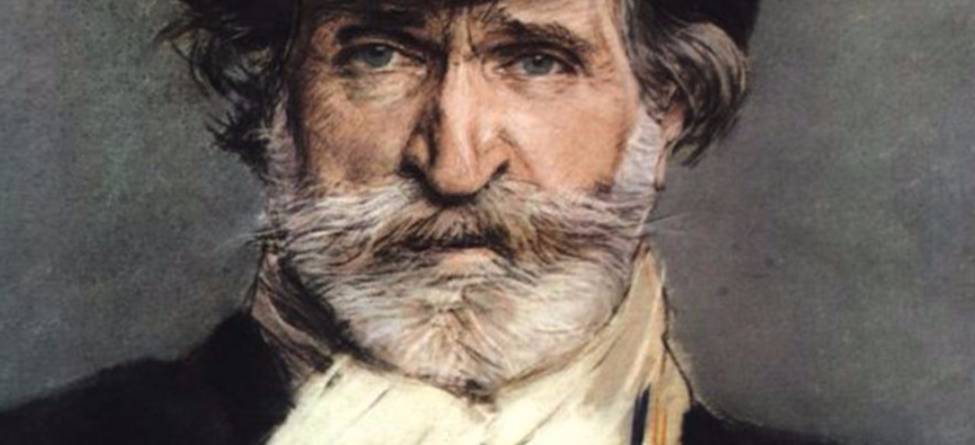
This year Giuseppe Verdi was the chosen composer to whom deSingel dedicated an extensive day programme. The undisputed highlights were the opening and closing concert of the day, each featuring a religiously tinged composition.
Like his fairly limited song repertoire, the Quattro pezzi sacri by Giuseppe Verdi are little known. Verdi composed the four pieces at different times in the last years of his life. It was not really his intention that they would be performed together, but he did have them published together. Ave Maria and Laude alla Vergine Maria were created between Otello and Falstaff, the two other pieces after the premiere of Falstaff. The story goes that Arrigo Boito, the librettist of Otello and Falstaff, suggested to Verdi that he write an Ave Maria as "penance" for his Credo in Otello. It is a stylish work full of melodious inspiration that connects with early Italian religious music.
The Stabat Mater is based on the medieval text by Jacopo Todi and is composed for four-part choir and orchestra. With its alternation of dramatic expressivity and lyrical softness, it bears strong similarities to the Messa da Requiem. It is also clear here that for Verdi the dramatic meaning of the text clearly takes precedence over liturgical intention. We received a sublime rendition of the two a cappella pieces by Collegium Vocale, who seized upon the restrained melody from the first notes of the Ave Maria. In the Pro Peccatis from the Stabat Mater, we got a foretaste of the outburst of choir and orchestra that we could expect later in the evening in the Requiem. After an intimate passage with Tui nati vulnerati, Philippe Herreweghe let the brass break forth impressively, then end movingly on the Paradisi gloria and the Amen. A memorable opening to this Verdi tribute.
Overwhelming finale
To be honest, I must admit that I missed part of the day due to circumstances. In any case, the Messa da Requiem was an overwhelming conclusion to the Verdi day. Verdi composed his Requiem in 1874 as a commemoration of the death of Italian writer Alessandro Manzoni the year before. The first performance in the San Marco Church in Milan was an enormous success. Once again, Collegium Vocale delivered an admirable performance. The outbursts of the Antwerp Symphony Orchestra at the Dies Irae were chilling, but the emotional passages were equally moving. Bass Luca Pisaroni sounded warm and sang with a fluidity that stood out alongside the somewhat forced voice of tenor Mario Zeffiri, who seemed to have some trouble with the high notes in the Ingemisco. Alto Gerhild Romberger and especially soprano Eleanor Lyons were perfectly cast and sang with emotional intensity. The soprano in particular was beautiful with her silvery timbre and lovely colourful transitions. Under the direction of a moved yet controlled Philippe Herreweghe, the orchestra can certainly count this performance among its top performances. An unforgettable evening.
- WHAT: Verdi Happening
- WHO: Antwerp Symphony Orchestra, Collegium Vocale Gent conducted by Philippe Herreweghe
- WHERE: deSingel, Antwerpen
- WHEN: Sunday 15 April 2018