
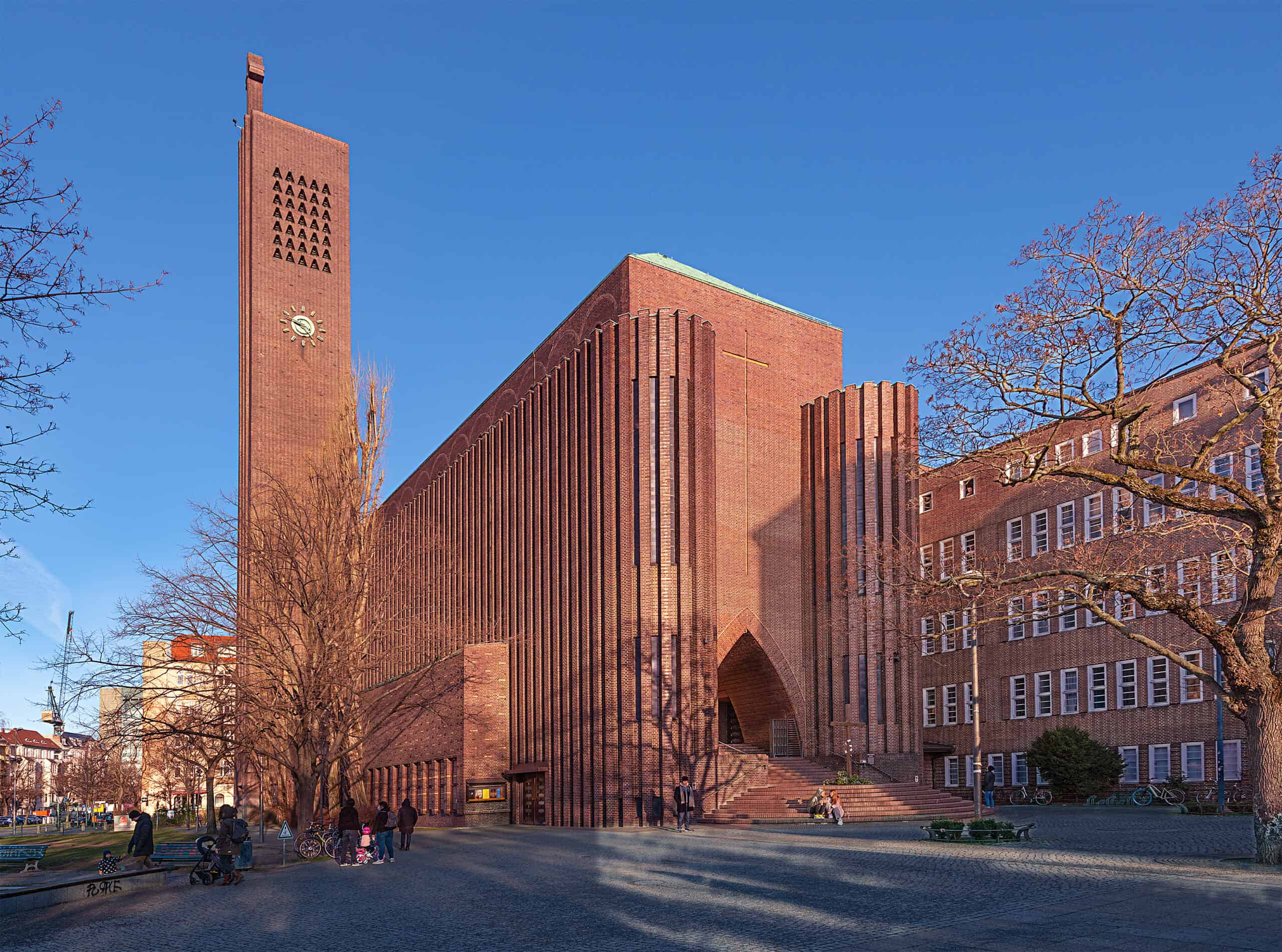
 A full church for half an hour of attentive stillness: it remains an image that clashes with the spirit of the times. And yet it happened, on Saturday, April 11, at the Kirche am Hohenzollernplatz in Berlin. Not an event with outward spectacle, but a "NoonSong" – a liturgically conceived musical space in which listening is still an act. That the church was filled to the last seat felt less like coincidence than like a symptom of a quiet hunger: for concentration, for meaning, for momentarily suspending the outside world.
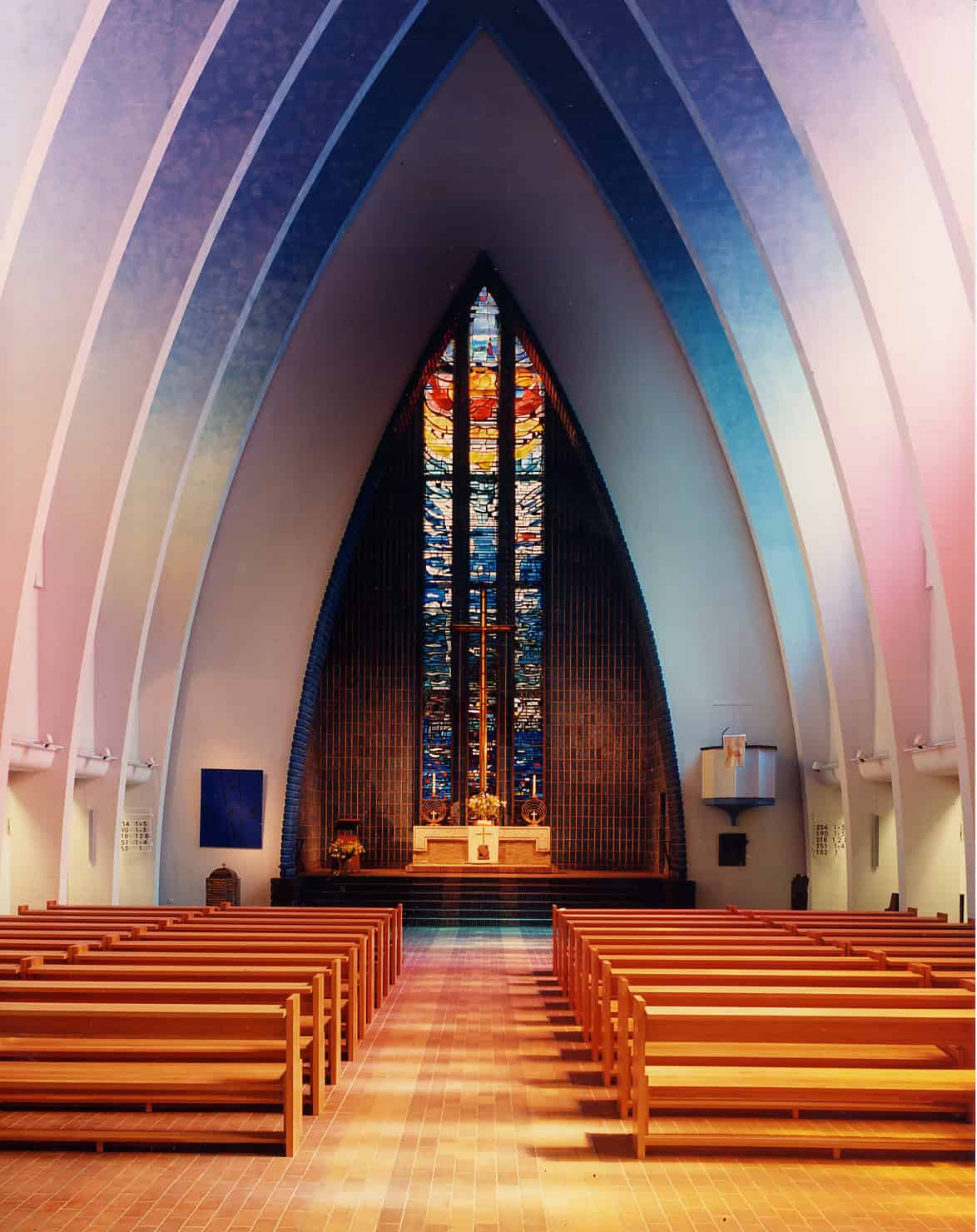
The dramaturgy of this "NoonSong" was exemplary in its simplicity and precision. It began with majestic organ playing: Choral-Improvisation über "Nun danket alle Gott" by Sigfrid Karg-Elert (1877-1933). Not a non-committal introduction, but a sonic opening of the space itself – festive, yes, but above all architecturally conceived, ideal for this intriguing church building, which is not without reason called "Kraftwerk Gottes". Karg-Elert's chorale fantasy unfolded like a colorful stained-glass window in motion, playing with the miraculous light in the space, with the Easter motif developing organically note after note.
Then came the liturgy, which this time leaned remarkably strongly on the English tradition. The Preces & Responses by Richard Ayleward (1626-1669) immediately set the tone: sober, functional, almost ascetic. Here no romantic expansion, but a form of musical humility in which text and sound coincide. The eight angel voices of sirventes berlin struck exactly the right balance: clear and evenly sustained.
That English thread was deepened further with two works by Charles Villiers Stanford (1852-1924), who ultimately formed the backbone of the program. His setting of Psalm 136, Let us, with a gladsome mind, brought a first expansion: the entry of the organ gave the sound a foundation without losing transparency. Stanford proves himself here a master of balance between movement and rest, between liturgical function and musical expressiveness.
Even more striking was Ye choirs of New Jerusalem, the canticle that shone through the space like an Easter hymn. Here the full resonance of the church came into its own: the voices seemed to detach themselves from their source and dissolve into the height of the building. What on paper is four-part writing became in practice a layered sound space in which every line carried meaning.
Against that English clarity stood the more introspective tone of Heinrich von Herzogenberg (1843-1900), with his setting of Psalm 116 (Das ist mir lieb). Less prominent in the program than perhaps announced, but all the more effective as a moment of introspection. Herzogenberg does not write music that immediately reveals itself; it asks for time, and precisely that time was given to it here.
 The Gregorian responsory formed a pivot point: a reminder of the deepest roots of this tradition, sung without historicizing pretense but with self-evident simplicity. It became a moment when time seemed to stand still – not as an effect, but as a consequence.
The reading from the Gospel of John (20,19–29) – the appearance of Christ to the disciples (and the doubting Thomas) – was briefly expounded by Reverend Martin Germer and gave the whole a substantial core: doubt, recognition, faith. These are themes that in this context are not explained, but suggested and sustained by the moving music.
The hymn Mit Freuden zart by Heinrich Reimann (1850-1906) also fit seamlessly into this whole: modest, almost intimate, and precisely therefore disarming. No grand gesture, but a collective breath, when sung together with the congregation.
The conclusion was again for the organ, and for Johann Sebastian Bach (1685-1750), via the arrangement by Marcel Dupré (1886-1971) of the Sinfonia from the cantata Wir danken dir, Gott, wir danken dir (BWV 29). Here exuberance returned, but tempered by the path that preceded it. It was not triumph pure and simple, but an affirmation – a musical amen that concluded the experience without closing it.
What distinguishes this "NoonSong" concept from what I have experienced elsewhere is not only the quality of the performance – that is beyond question – by sirventes berlin under the direction of Stefan Schuck and organist Vladimir Magalashvili, but the coherence of the whole. Everything serves a form that has become rare: religious music as shared time, as space for attention and personal reflection.
 The building itself is not a neutral setting, but an active collaborator. The expressionist architecture of the church – with its almost vertical tension, raw material treatment and exceptional acoustics – lifts the music quite literally. Light and sound reinforce each other in a rare balance, allowing each voice to not only be heard but also experienced spatially. It is precisely that combination of architecture, acoustics and liturgical concentration that makes this "NoonSong" more than a concert moment: a temporary shift in perception.
That a church fills up for this today is not nostalgia. It is a sign.