
Satie s'amuse: A whole day of concerts with Erik Satie as the central composer, it is a unique experience. There was certainly no lack of variety and diversity.
It began with Sacré Satie, a title that sounds as ambivalent as the music that could be heard. Did Satie compose sacred or cursed music with his bizarre work Uspud? From the explanation in the program booklet we learn that he composed the work during a period in which he followed a kind of religious calling and even founded his own society, of which he remained the only member…The character Uspud around which the 1892 work revolves is on the one hand ecstatically religious but on the other hand possessed by demons, which give the work an apocalyptic character. The piece is divided into three acts and has a very fragmentary character. They seem like strange fantasies that dominate Satie's mind and which he expresses in sounds. There are no real melodic lines, the music sounds very fragmentary, without real coherence or evolution. If it demands of the listener a considerable amount of concentration, then for Jan Michiels it is nothing short of a feat to interpret this work as listenable piano music. He does it in his own restrained and quiet style and in this way (aided by skillfully arranged lighting) keeps the listener spellbound. Here also a word of praise for Lise Bruyneel, who provides a simple, flowing background, never intrusive, on which text passages regularly appear, clarifying what occupies Satie.
The combination with the Via Crucis by Franz Liszt, created about fifteen years earlier, fitted wonderfully, not only because of the religious connotation but also because of the - for Liszt almost atypical - sober style and ascetic tone. The naming on video of the stations of the cross in each case also helped in this case to understand the music.
[caption id="attachment_51334" align="aligncenter" width="1024"]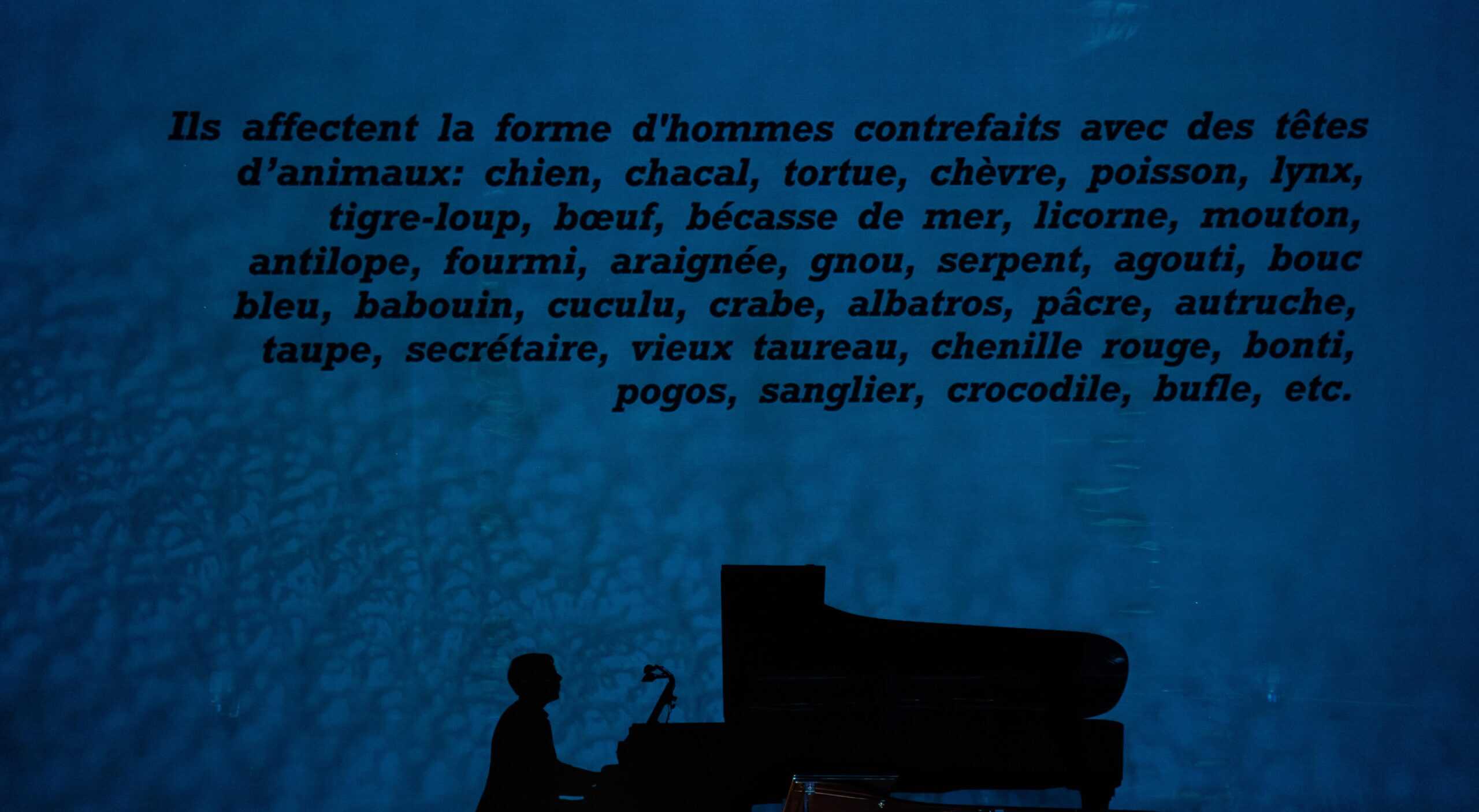 © Malou Van den Heuvel[/caption]
Salon Satie
The first afternoon concert was - for me anyway - the highlight of the day. We have heard Inge Spinette and Lore Binon work together before at song recitals and they released several well-crafted CDs together. Lore Binon was awarded the Gold Label of Klassiek Centraal in 2018 for the recording of Poètes Maudits. The program chosen here was simply a treasure trove for those who love French mélodie from around the turn of the century. Songs about fragile love, dreamy sadness and melancholic wandering, with just a glimpse of joie de vivre: Lore Binon and Inge Spinette find the right tone. With razor-fine threads of her soft timbre, Lore Binon takes you along in magical poetry. Delicately and breathtakingly refined, she sings the subtle melodies, fluently and sensuously without losing expressiveness. On the contrary, her voice seems to gain power with the years, her presence gains persuasiveness. With her encore Mon homme by Mistinguette, the atmosphere was doubly confirmed! Inge Spinette is excellently familiar with the voice. She is a particularly sensitive and text-conscious pianist and accompanies the singer with silken fingers and unwavering attention. Her solo Satie pieces - seamlessly woven into the recital - provided the playful touch. A plus was that here too the texts were projected in a non-intrusive manner.
[caption id="attachment_51335" align="aligncenter" width="2560"]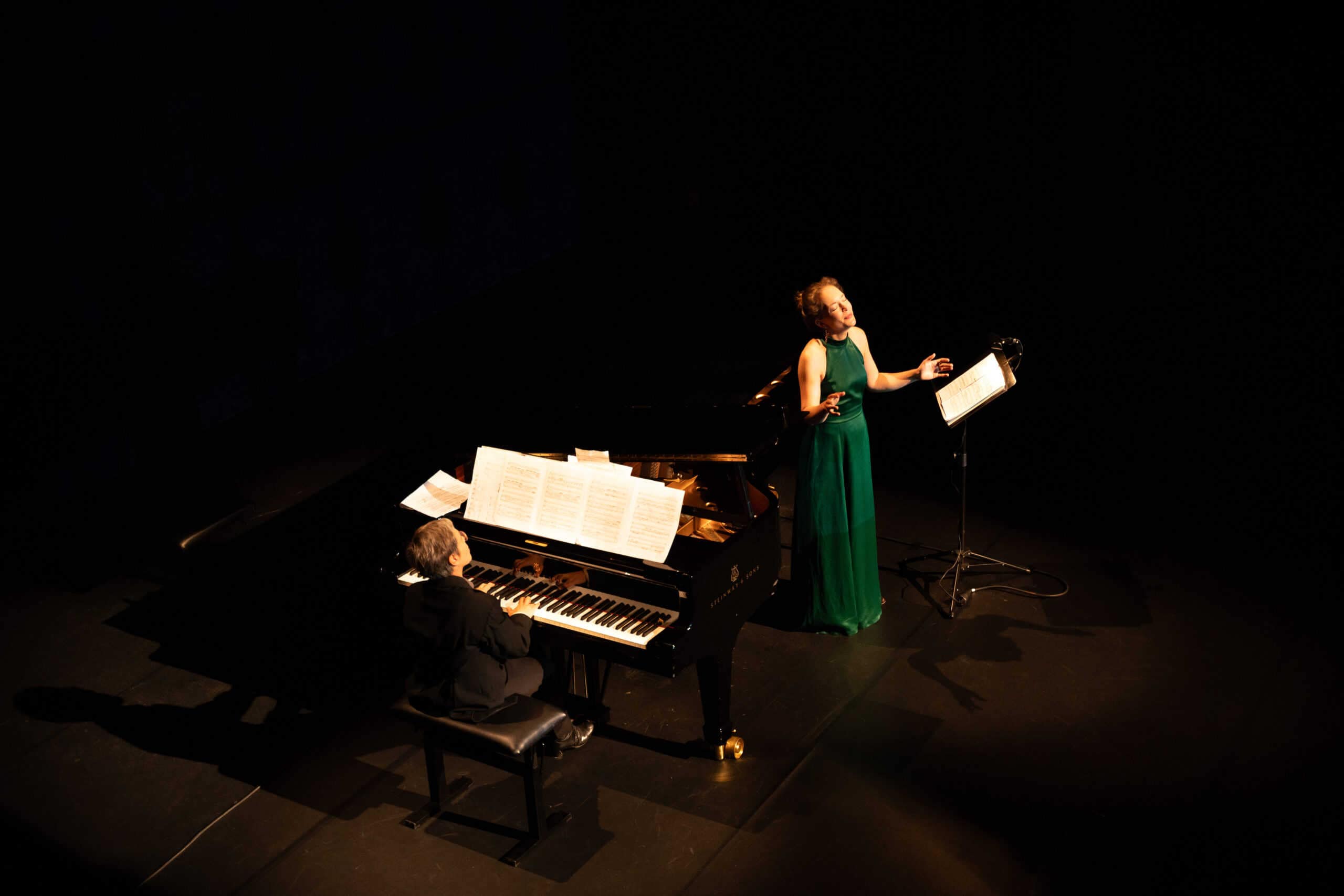 © Malou Van den Heuvel[/caption]
Satire Satie
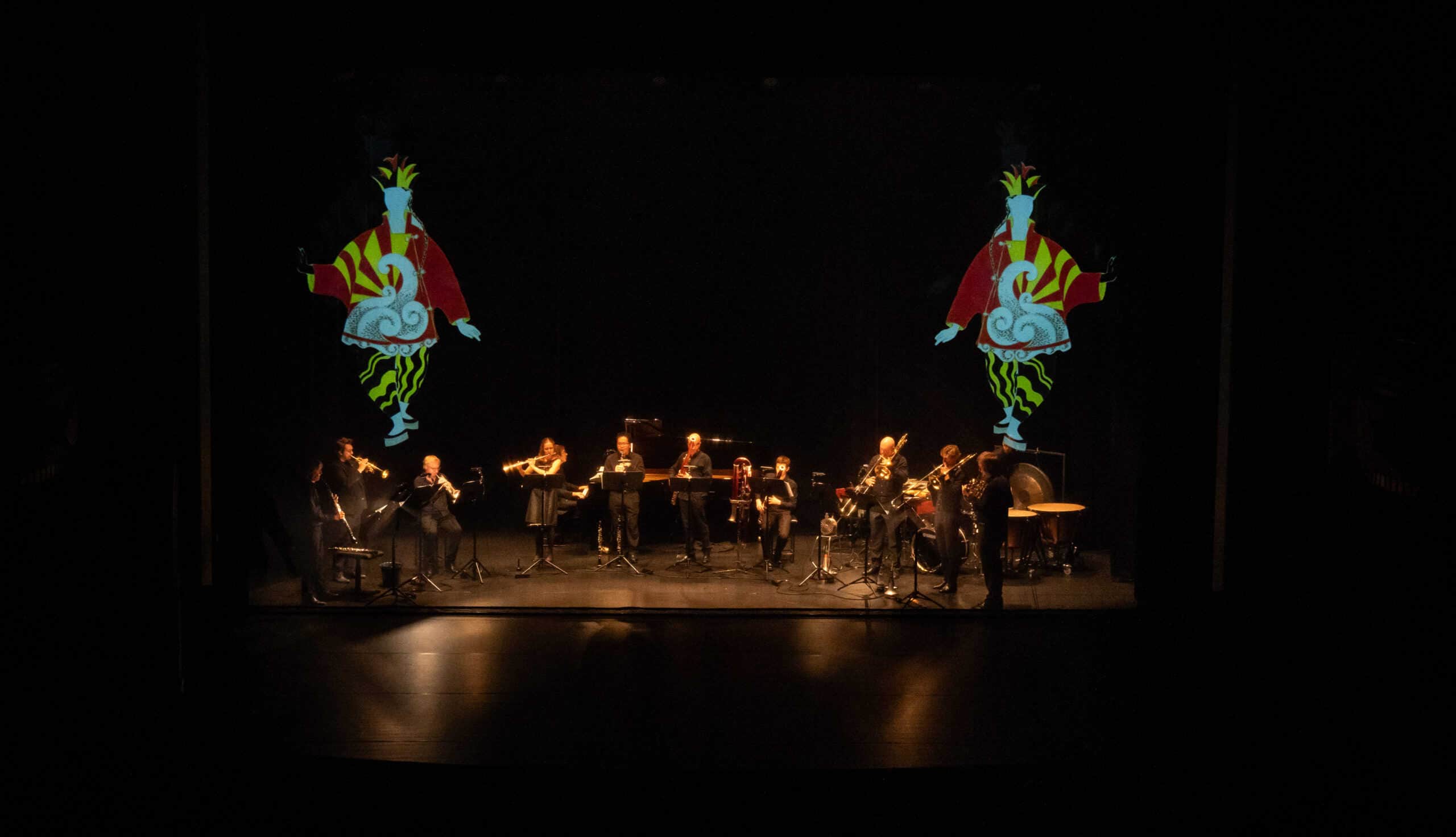
The last concert revolved around more amusing pieces by Satie flanked with chamber music by Poulenc and Stravinsky. For the performance, the musicians of I Solisti filled the stage. In addition to the obligatory woodwind and brass players and the percussionist, a wink was also given to the dada aspects that emerged in the early twentieth century, with typewriters, rattles and wet mops. The whole became a whirling kind of instrumental cabaret, with Parade by Erik Satie as the central piece, performed in a clever arrangement by Tim Mulleman, who transformed the various styles and ragtimes into an atmospheric whole. Here too Lise Bruyneel provided sometimes a carnivalesque background as a setting or let clownish figures inspired by chinoiserie from the early twentieth century drift over the musicians. Throughout the day she revealed herself to be a visual artist with a precise sense of and especially respect for what happens in the music. A unique balance, as I have not yet experienced it at concerts.
Festival 20·21 can certainly look back with satisfaction on the theme day of this edition, a production which in particular artistic director Pieter Bergé put his shoulder to. The Festival continues in Leuven until 29 October 2023.
WHAT: Satie s'amuse, Festival 20·21 WHO: Jan Michiels [piano], Inge Spinette [piano], Lore Binon [soprano], I Solisti, Lise Bruyneel (video) WHERE: Leuven, Stadsschouwburg WHEN: Sunday 8-10-2023