
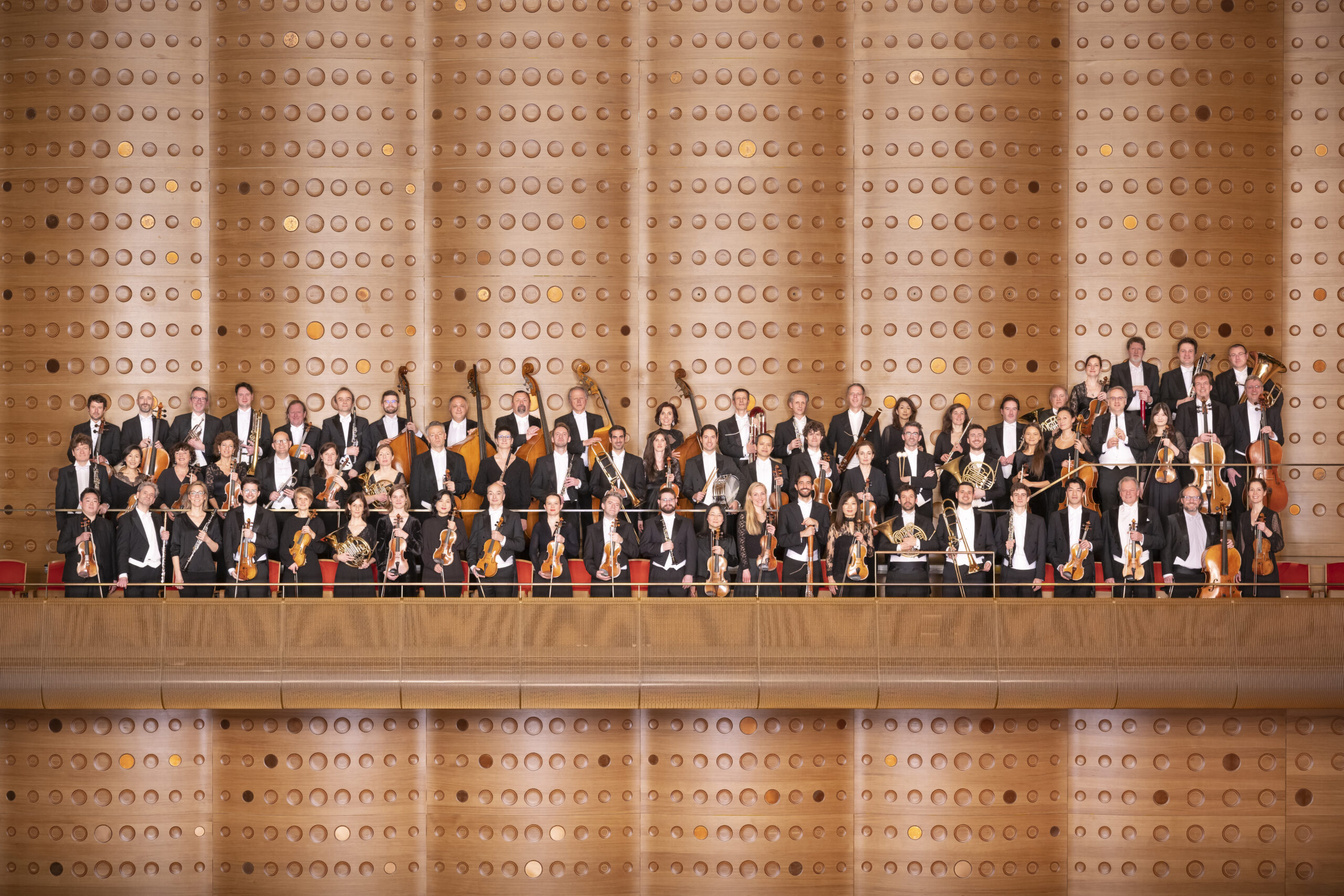
Anyone walking into the Koningin Elisabethzaal in Antwerp these days can feel expectations rising. The Antwerp Symphony Orchestra (ASO) presented its concert season 2026-2027, a programme that marks a clear turning point in the orchestra's history. Not only is it celebrating its seventieth birthday and the iconic Koningin Elisabethzaal is blowing out ten candles, but with the arrival of chief conductor Marc Albrecht, a new artistic chapter also begins.
Under the telling heading Morgen, the ASO profiles itself as a house of connection, reflection and hope. In a time of social uncertainty, the orchestra consciously places music as a space of stillness and human closeness. Artistic director Ulrike Niehoff describes the theme as an invitation to look ahead together. "Morgen is an invitation to look ahead together. That is why we are happy to add the subtitle 'a kinder tomorrow'. It is about treating each other kindly, paying attention to the world and the people around us." The season moves between monumental tradition and contemporary sensitivity. Thus Morgen becomes not only an artistic concept, but also a way to embody a shared future through music.
The prophetic vision of Marc Albrecht
With the appointment of Marc Albrecht, ASO welcomes a conductor who is internationally regarded as one of the most important interpreters of late Romantic and early modernist repertoire. The former chief conductor of De Nationale Opera in Amsterdam built an impressive reputation with music by Mahler, Strauss, Zemlinsky and Korngold – composers who balance on the boundary between nineteenth-century Romanticism and the modern era.
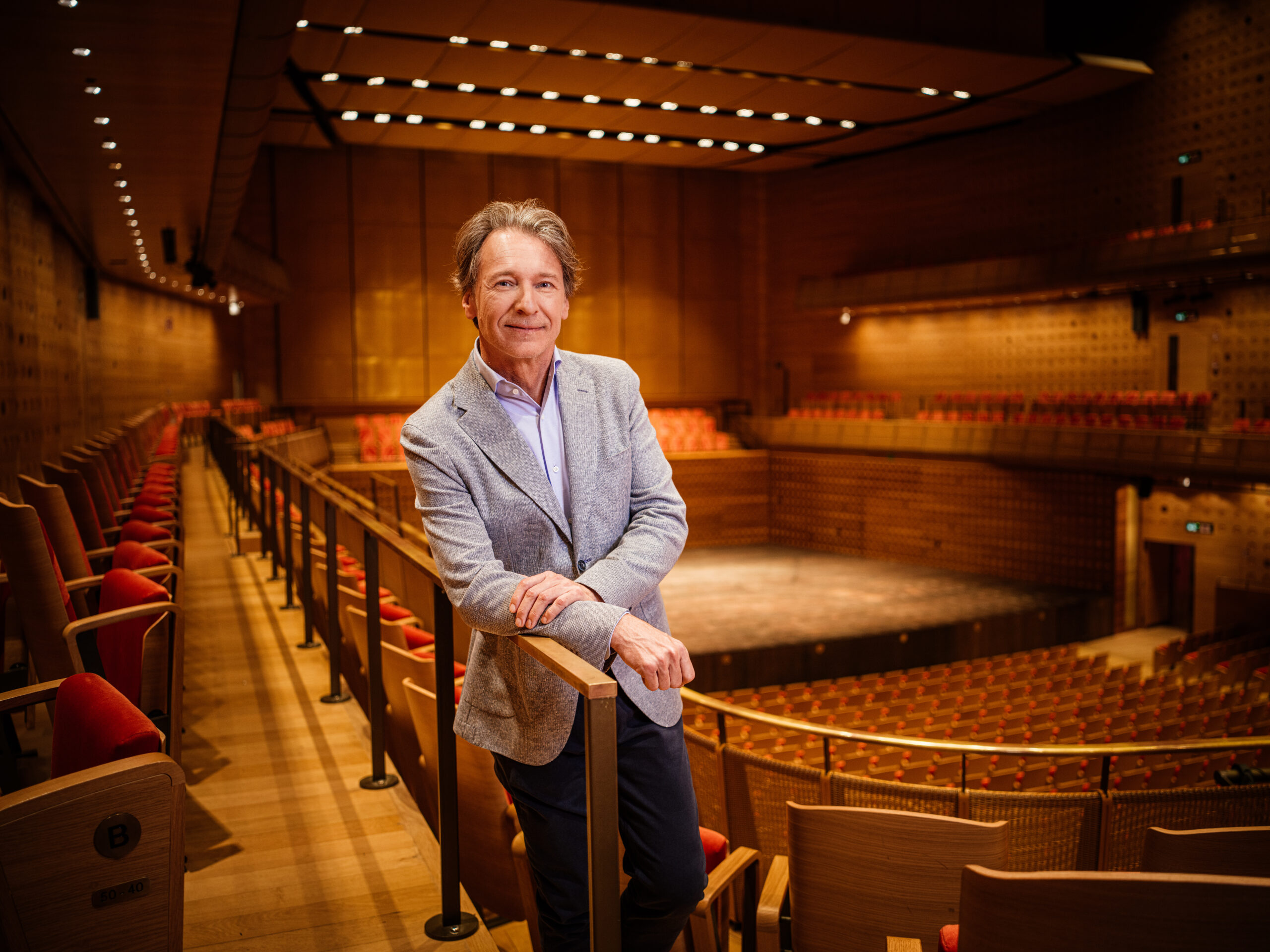 Albrecht describes Gustav Mahler himself as "the prophet of the twentieth century", a composer who "stood on the border between yesterday and tomorrow". For Albrecht, the dialogue between tradition and innovation is at the core of his mission: "Tradition is the passing on of the fire, not the worship of the ashes. You have to know and respect tradition, but if you only keep repeating what has always been done, music loses its vitality." It is thus significant that he officially opens his tenure on 3 October 2026 in the Koningin Elisabethzaal with Mahler's monumental Third Symphony. Together with alto Wiebke Lehmkuhl and the choirs of Opera Ballet Vlaanderen, that inaugural concert promises to be an ambitious calling card for his artistic direction.
Mahler's Third Symphony – a work in which nature, humanity and spirituality merge – fits perfectly within the season's theme Morgen. The concert thus becomes not only a musical inauguration, but also a symbolic statement of intent. The idea of the future is not approached abstractly here, but made tangible through the music itself as something that already announces itself in the present.
Albrecht's hand is moreover felt throughout the entire season. Even before his official start, he conducts César Franck's Symphony in D in June 2026, combined with a tribute to the Antwerp composer Wim Henderickx, who died in 2022 – a meaningful gesture towards contemporary Flemish music. Later in the autumn, he welcomes young violin virtuoso Daniel Lozakovich for Korngold's cinematic and melancholic Violin Concerto.
Between established tradition and the stars of tomorrow
The international profile of ASO is also firmly underlined this season. The traditional Annual Gala on 26 September 2026 takes on a pronounced vocal and Mediterranean character with Egyptian soprano Fatma Said under the direction of Marcus Merkel. Her elegant stage presence and refined musicality are set to make the gala one of the early highlights of the season.
Furthermore, the orchestra remains deliberately committed to the combination of established names and young talent. Thus familiar greats such as Philippe Herreweghe – who is celebrating his eightieth birthday – and Jaap van Zweden return to Antwerp, while at the same time space is made for a new generation of top musicians such as cellist Sheku Kanneh-Mason, young Dutch pianist Nikola Meeuwsen and Finnish violin talent Lilja Haatainen. This commitment to young talent also receives structural anchoring this season through the new project 'Young Impulses': under the mentorship of composer Annelies Van Parys, young talents write new, short works that open each concert as a musical energy boost – an initiative that literally gives the orchestra's artistic renewal a platform.
This mix of experience and renewal fits seamlessly with the orchestra's broader vision: not treating tradition as a museum piece, but as a living art form that continually allows new voices and perspectives.
A window on the world
Internationally too, ASO wants to profile itself as a major cultural hub. Thanks to the historic partnership with concert organiser Cofena, the Koningin Elisabethzaal once again confirms its status as one of the most important music temples of the Low Countries. For generations, Cofena has managed to bring the world's greatest international orchestras, conductors and soloists to Antwerp – a tradition that is continued this season in an obvious yet impressive way.
Thus the Bamberger Symphoniker under the direction of Manfred Honeck open the international segment with a program that combines romantic grandeur with virtuosity: Mendelssohn's Violin Concerto with the legendary Midori as soloist, flanked by Bruckner's spiritual Ninth Symphony. In November, Iván Fischer follows with the Budapest Festival Orchestra, after which later in the season an evening of exceptional prestige awaits when the Royal Concertgebouw Orchestra descends upon Antwerp under the direction of Semyon Bychkov, with public favorite Sheku Kanneh-Mason as soloist – a concert that effortlessly belongs in the European top tier.
Scandinavia also makes its mark with the Bergen Filharmoniske Orkester, which brings a program entirely dedicated to Edvard Grieg, while the Orchestra dell'Accademia Nazionale di Santa Cecilia under Daniel Harding and pianist Beatrice Rana immerses the hall in Mediterranean elegance and Italian intensity.
Enthusiasts of historically informed performances also come fully into their own when Václav Luks and his refined Collegium 1704 visit Antwerp. And as a majestic apotheosis of the season, none other than Kirill Petrenko – chief conductor of the Berliner Philharmoniker – brings the Gustav Mahler Jugendorchester to the Queen Elisabeth Hall on June 21, 2027 – a concert that already bears all the hallmarks of a memorable musical event.
Thus Antwerp confirms itself more than ever as a city where not only great music is performed, but where the international pulse of classical music life remains palpable.
Music as a vision for the future
The 2026-2027 season of the Antwerp Symphony Orchestra is more than a classical series of subscription concerts. It brings jubilee and future-oriented thinking together: a celebration of seventy years of orchestra history, ten years of Queen Elisabeth Hall as permanent home base and the 150th anniversary of the queen after whom the hall is named – and the start of a new artistic chapter under Marc Albrecht. That the orchestra also strengthens its bond with the city is evident from its collaboration with Antwerp city poet Esohe Weyden on December 4, an encounter between music and literature that confirms the concert hall as a shared space.
With Morgen, ASO explicitly chooses music as an answer to a world that needs nuance, beauty and connection. Niehoff articulates the essence succinctly: "An orchestra and the music it brings are not, in my view, a luxury. It is a necessary place for reflection and connection. When people in the hall listen, breathe and feel together, then our mission has succeeded." Thus the season grows into more than a program: it connects seventy years of history with a look ahead, and explores through sound how the future can sound.