
There are composers who are not forgotten because their music was weak, but because history simply prefers other stories. Who thinks of nineteenth-century Italian music inevitably thinks of opera: of Verdi, of bel canto, of the Risorgimento that lent itself so willingly to melodrama. However, this is an image that musicography has thoroughly nuanced over recent decades. Alongside the theatres flourished a rich instrumental culture that manifested itself differently in Rome, Naples, Bologna, Milan, Turin and Florence, sustained by conservatories, concert societies and an increasingly cohesive European network. Giovanni Sgambati and Giuseppe Martucci remain the fixed anchor points, with Busoni as the figure who subsequently drew Italian piano culture further into the world. But around them moved a much denser constellation than the handbooks long wanted to acknowledge.
Luigi Gaetano Gullì (1859 – died at sea, 1918) undoubtedly belongs to that circle. As the youngest of nine children, he studied at the Conservatorio di San Pietro a Majella in Naples, with Beniamino Cesi for piano and Lauro Rossi for composition, before moving to Rome via Paris, entering the circle of Tosti, Sgambati and Mancinelli. What is striking in the testimonies about him is not bravura, but precisely its absence. Gabriele D'Annunzio, who heard him in 1888 in a programme with Bach, Mozart and Reinecke, praised precisely that refusal to seek applause through gratuitous showiness and later even had him return as a minor character in Il piacere. A pianist who provided the novelist with his Roman soundscape: it says something about the esteem that Gullì enjoyed at the time. His later life – the Quintetto Gullì, the friendship with Grieg, the directorship in Texas and Chicago, and ultimately that poignant return journey to Italy which he would not complete – has something of a novel about it, but ultimately the music itself must convince.
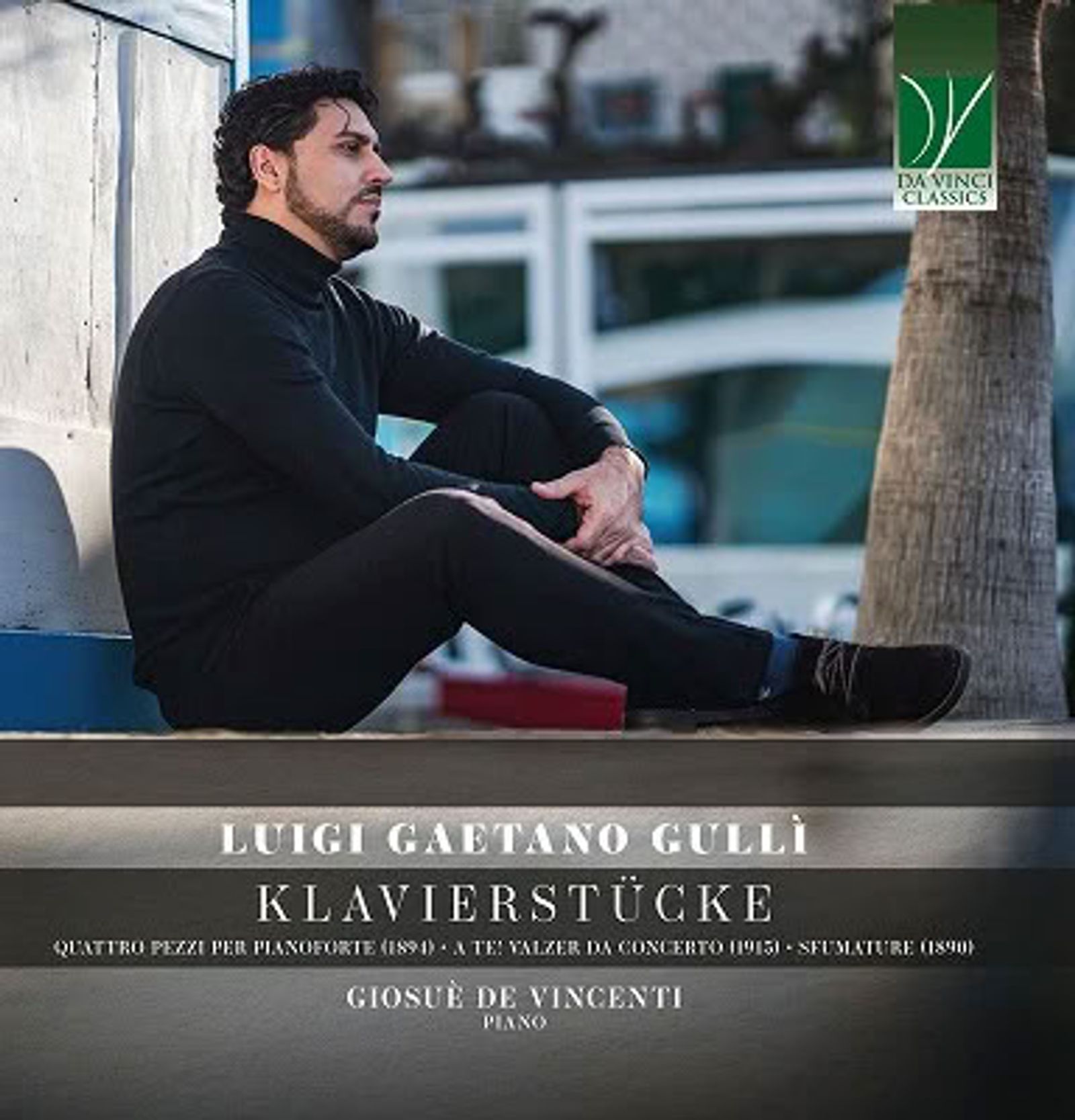
And it does so on this disc, surprisingly and with dedication. The four Klavierstücke, published in 1894 by Breitkopf & Härtel in Leipzig, show a composer who feels more attracted to concentration than to rhetoric. Grand gestures are absent; what remains is a precise, sometimes almost restrained expressive power in which the Italian cantabile tradition effortlessly combines with Central European formal discipline. A te! – Valzer da concerto (Chicago, 1915) continues the tradition of the concert waltz, but effortlessly transcends the non-committal nature of salon sentiment through brilliant pianistic writing in which virtuosity always remains in the service of melody. However, the most enchanting moment of the recording for me is Sfumature – fogli d'album. Here Gullì treats the piano as an instrument of subtle nuances: colours shift almost imperceptibly, phrases seem to grow organically from one another and the music breathes a poetic intimacy that lingers long.
Giosuè De Vincenti, who devoted his doctoral research in Évora to precisely this composer, plays with the authority of someone who knows his subject through and through, but never with the detachment of the scholar. His touch is clear, his phrasing natural and his tone remarkably refined. In Sfumature he preserves the fragile intimacy without becoming sentimental; in A te! he lets the virtuosity sparkle without ever sacrificing the musical line. That balance – technical mastery entirely in the service of style and expression – aligns wonderfully with Gullì's own aesthetics. De Vincenti is therefore much more than a performer: he is the ideal advocate for this music and lets it speak with a naturalness as if it had never disappeared from the repertoire.
This recording casts a surprisingly refreshing light on the piano music of the Italian nineteenth century. This is melodious music, performed with effortless elegance by Giosuè De Vincenti, who proves to be a convincing guide through Gullì's refined piano world. Anyone who thinks there is little more to discover after Martucci and Sgambati is not only kindly contradicted here, but above all convincingly so. One can only wonder why this music had to wait so long for a performance of this calibre.