
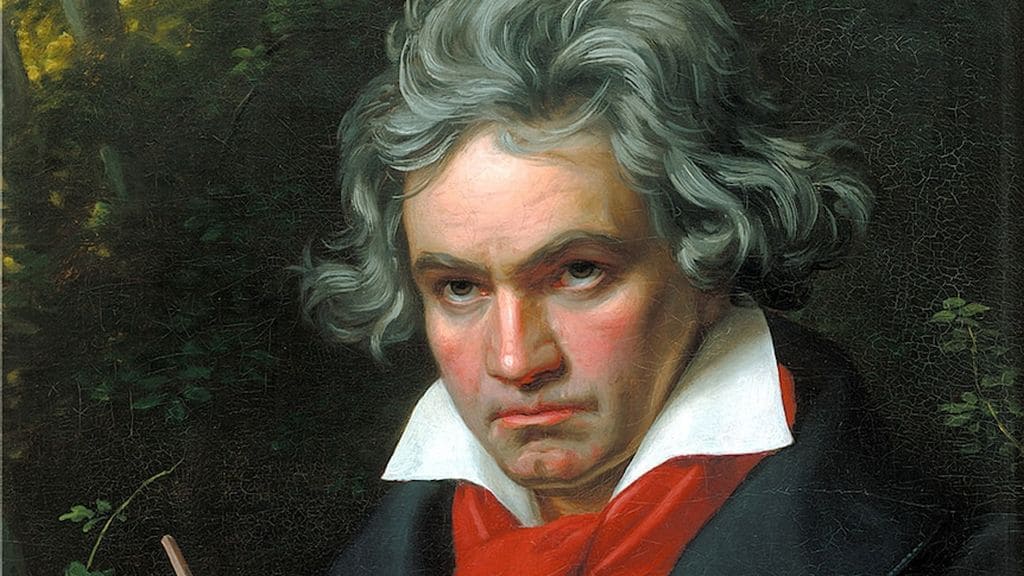
Should we now be deeply disappointed, now that it turns out that Ludwig Van Beethoven's father or one of his ancestors would not be a true Van Beethoven, but just a bastard, an illegitimate child?
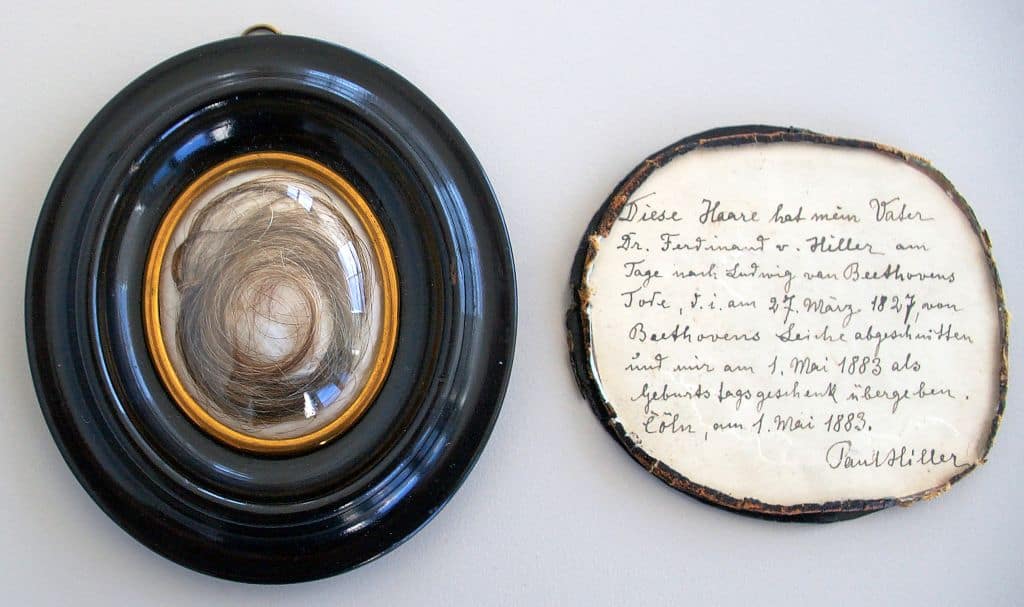
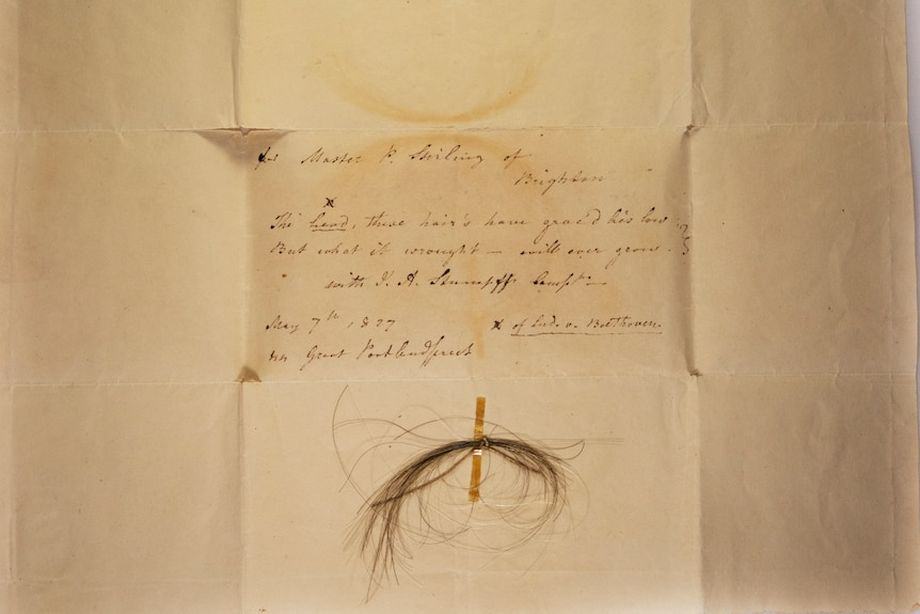
The scientifically sound DNA investigation goes far and allegedly would provide irrefutable evidence of descent in cases of uncertainty. For some reason, a number of hairs from Ludwig Van Beethoven were examined at KULeuven. Several locks of his luxuriant hair were cut, with his permission, to be preserved for posterity.
Real and other hair locks
From the five reliable locks (there are three more but those apparently came from another head), the researchers obtained the same result. They placed the results of the tests with the five locks that were supposed to be from Ludwig Van Beethoven next to those of a number of still-living Flemish descendants of the Van Beethoven line. No match was found. Who went wrong? Where and when? Was it his grandmother on his father's side? That seems to be suggested because there is no baptismal or birth certificate of his father Johann.
Musical heredity or coincidence?
Would the great musicality of Ludwig and his father be coincidence if Louis were not the father of Johann and thus also not the grandfather of Ludwig? Or was the Louis Van Beethoven, who grew up in Mechelen and was musically trained, not a 'real' one? The family was not exactly exemplary. Drinking, mishandling money and yes, who knows, perhaps also less faithfulness? The musicality may then have been continued from 'father unknown' to son Louis, his son Johann and then his eternally famous son Ludwig.
Oh well, does it matter? There were always illegitimate children – in Vienna, for example, in Beethoven's time one in two children were not quite sure who their father was… Times change. Beethoven himself would have had a daughter with his secret love. In any case, the girl was very taken with him and was also a talented pianist.
Does it matter?
For the Flemings, or should I say the Brabanders rather, it may perhaps matter somewhat to know whether the man with Kampenhout/Mechelen roots truly has those roots. It creates a bond and no small one. Who would not be proud to nurture a man of eternity – in the good sense of the word – as a piece of the family, of the people? Because yes, is that still the case? Or is he a 'full-blooded German'? That musical grandfather, eh? Should we then investigate who his mother was and which gentlemen she had come to know more closely? If it must matter: very well, then let us assume that little Louis was found in the vegetable patch between Kampenhout and Mechelen and that his mother raised him singing with the result being a grandson we shall never forget and who will adorn the musical firmament for many centuries to come. That he is now a 'real' or a 'false' Van Beethoven, it actually does not matter at all.
Death from liver disease or hereditary conditions?
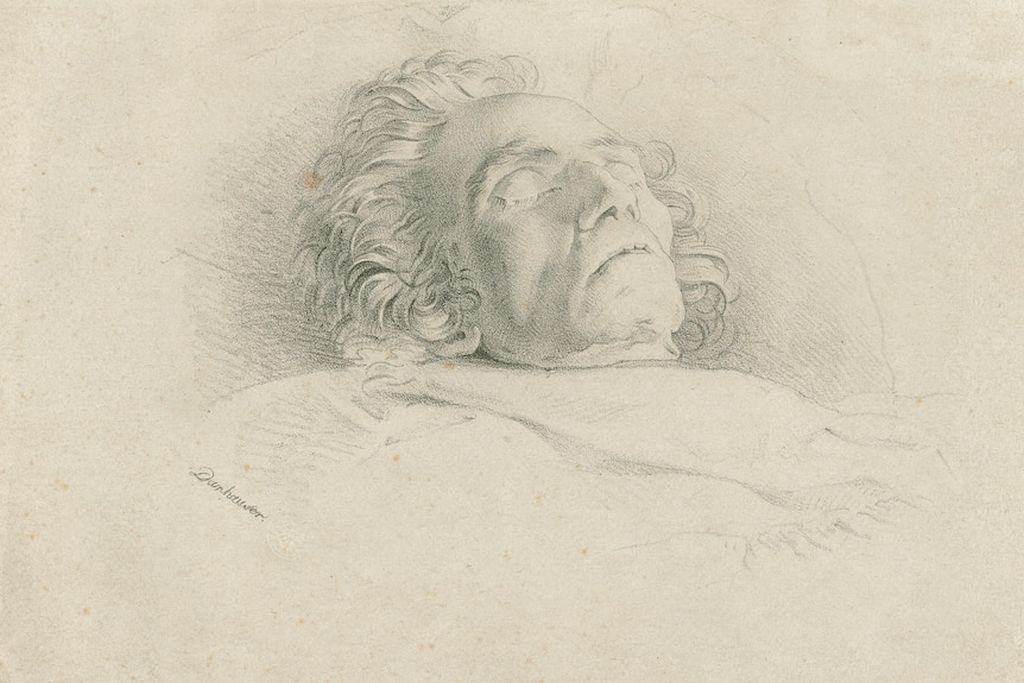
The DNA investigation was also used to be able to determine, or at least attempt to determine, the cause of death. Lead poisoning was certainly not it. That story can thus be definitively moved to the realm of fables. His liver was not in the best condition, and that could be the result of drinking too much 'enriched water', so to speak, alcohol, especially or only wine, alongside the daily strong cup of coffee made from 60 ground coffee beans (he meticulously counted those beans as a full-blooded autist…). At his deathbed, true or not, wine from Bonn was supposedly specially brought – his grandparents owned a wine shop – but alas, the delivery came almost too late. Beethoven would have only been able to enjoy a few spoonfuls of wine before shortly thereafter departing to the heaven of the great musicians. Actually, one does not know it all that precisely yet.
Deaf or 'somewhat hard of hearing'?
His 'deafness' cannot be established through DNA investigation. Well, he was not deaf, he suffered from an extreme form of tinnitus. He certainly could still hear with his left ear. It is therefore incorrect to claim that he did not hear the exuberant applause after the premiere of the Ninth Symphony. The fact that he did not immediately turn toward the audience probably has more to do with expressing his gratitude to the musicians on the stage. He stood weeping and thanked them. He likely considered it far more important to thank the musicians than to immediately make a deep bow for the audience. Besides, bow, for whom did this genius do that? Would it be found in his DNA why he did not want to bow for 'emperor, king, admiral'? Bowing, we may all continue to do that for Ludwig Van Beethoven and no one's DNA will have any influence on that. There you have it!