
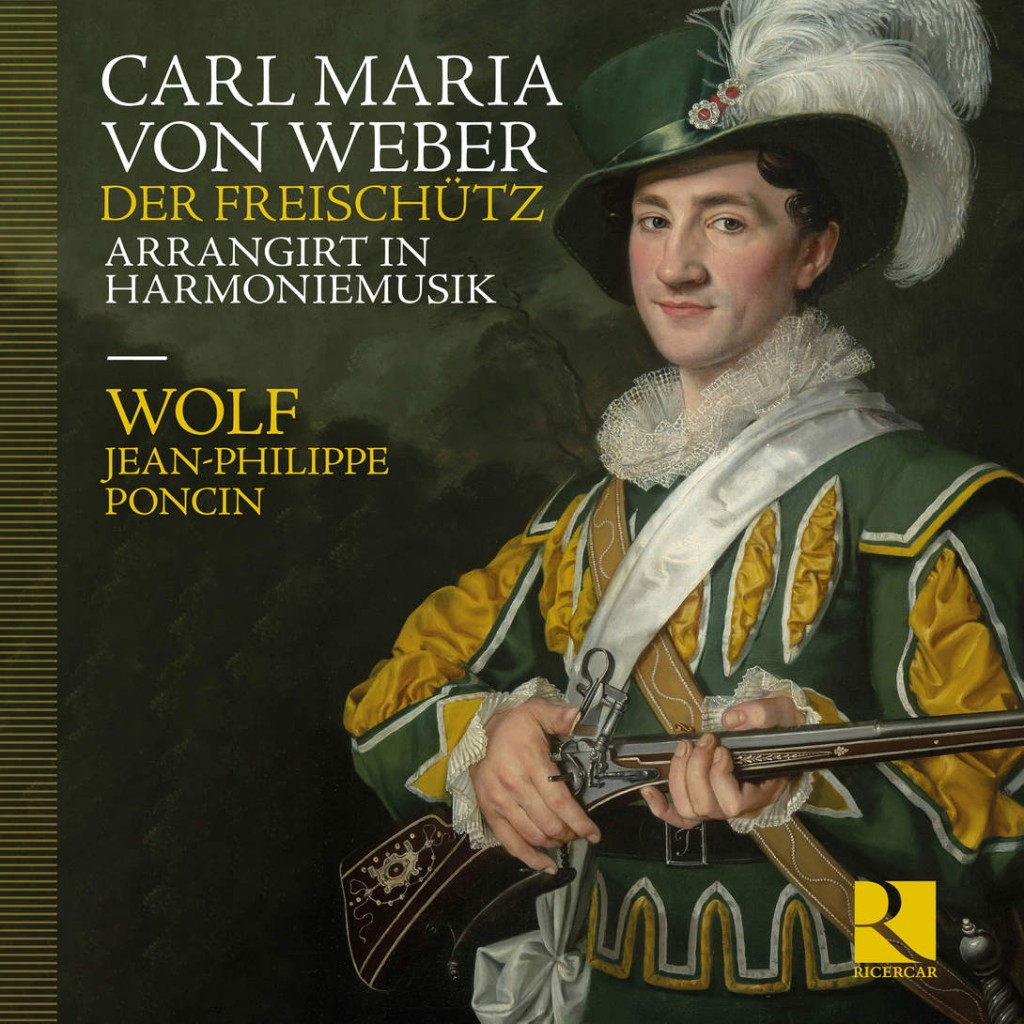
Whether a 'marksman' directed his arrows at wolves or wolves were chasing after the marksmen, your reviewer does not know and it is not even important because the Wolf in this case is not this close relative of the dog, but rather a musical ensemble that combines very well with the marksman, say Der Freischütz.
How did you make extensive musical works such as operas and symphonies known to the general public or how did you bring them to people who could not afford to visit the expensive concert halls at a time when there was not a single form of sound recording that could be listened to at home or anywhere else? It is all so self-evident in our spoiled times today. You simply search a search engine for, for example, 'Der Freyschütz' and you get far too many options. Let us gladly go back in time, at least partly, and become acquainted with an electronic medium on which you can listen to the 'advertisement' for such an opera in the course of the 19th century.
Carl Maria von Weber (1786-1826) was not only a nephew of Mozart's wife Constanze, he was a meritorious composer whose oeuvre remained rather limited. His most famous work is undoubtedly Der Freyschütz, a Romantic opera. It is a late work that was 'revolutionary' in terms of composition method, so interesting even that Richard Wagner took it as an example and based himself strongly on it.
The opera in question deserved more recognition so that everyone felt like going to listen to it. This could not only be done with posters and reviews in newspapers, but certainly with arrangements for smaller ensembles including often wind ensembles. Thus Karl Flachs from Berlin took the score in hand and arranged it in 1822, very shortly after the premiere of the opera, for woodwinds. Flachs limited himself to the essence of the opera, say the overture and all important vocal pieces (solo and choir). The arrangement became almost as popular as the opera itself, but the arranger remained a silent unknown.
The woodwind ensemble Wolf from our own country, which was founded in 2012, has now – at last – realized a recording of this arrangement 'Der Freyschütz, romantische Oper, C. M. v. Weber, arrangirt in Harmoniemusik' as the title page indicates and supplemented with original wind pieces by Weber himself: a rediscovered Adagio and Rondo and a cheerful waltz with trio that invitingly closes the recording. Jean-Philippe Poncin, who leads Ensemble Wolf, and his colleagues delved deep into the archives, discovered and corrected countless errors that crept into old recordings and thoroughly 'restored' the work in collaboration with Guy Van Waas, who gave the ensemble a great deal of moral support from the start and still does. The result of all the work is a recording that you really must listen to and once you have done that, it will not stop at just that one time.
Ensemble Wolf is a permanent fixture and with this recording, which is a strong reference, it will hopefully be able to fill many more venues with full houses. Make yourself and others happy and acquire the CD or digital recording and enjoy.