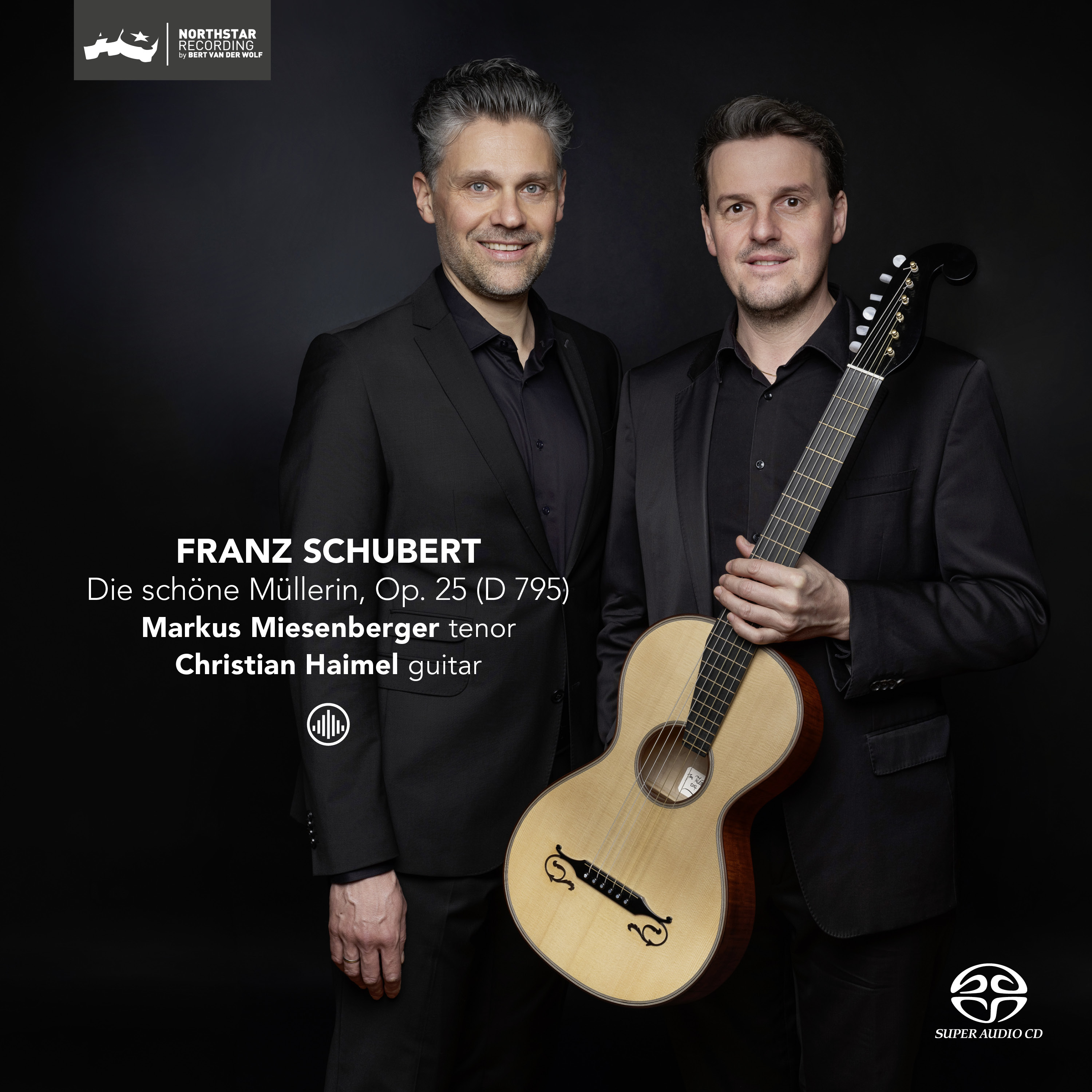
Hungarian Melody & Six Moments Musicaux
Jean-Nicolas Diatkine
- Format
- Digital
Like a lonely wanderer who sometimes discovers unknown paths, Schubert often lost himself in digressions that strayed far from his starting point, yet this did not prevent him from maintaining a high degree of formal rigor. Although the structure of the poem placed within it serves as a framework for composing a song, it is precisely through the boldness of his modulations that he often finds a space that makes his expression particularly striking in its precision. Of course, we find the same dramatic compression in his short piano compositions. Everything rests on every note.
The four Impromptus, op. 90, are so expressive that they stand on their own and need no explanation, with the possible exception of the first. My first approach to the first Impromptu in c minor was initially influenced by the figure of the song "Der Wanderer", the homeless traveler who constantly asks himself: Where must I go? ("Where, always whither?"). The pianissimo opening evokes an energy that threatens to fade out, but gradually flares up again. At the end of the piece, the triple piano suggested to me that ultimately melancholy would prevail. Everything changed when I realized that Schubert allowed the performer no retardation whatsoever until the final chord. The long diminuendo on the last page is reminiscent of a march drifting into the distance, yet without losing its rhythm. My understanding of the piece was completely turned on its head. Another scenario presented itself, that of a song without words, that evoked the same atmosphere of tragic heroism as Heine's "Die Täuter Grenadiers": an imaginary encounter with a small military unit that we hear approaching. Among the members of the group, a poet sings a march, alternating with the refrain of the rest of the group. Without transition, the melody escapes the sordid reality of war, with a very characteristic Schubertian cheerfulness. Then there is a sudden silence, before an episode follows in which the violence of battle and the fear of death resurface. The return of the opening march, this time in major, expresses the tragic joy at the self-sacrifice of these men.
"With the merry trumpet
May my emperor then walk over my bones:
Drums, make yourselves heard!
Armed I rise and leave the earth,
I must defend my emperor!
Heine, The Two Grenadiers
The song fades into the distance and only the trumpet fanfare remains audible. This is repeated four more times, after which the narrator concludes the piece alone and with a heavy heart.