
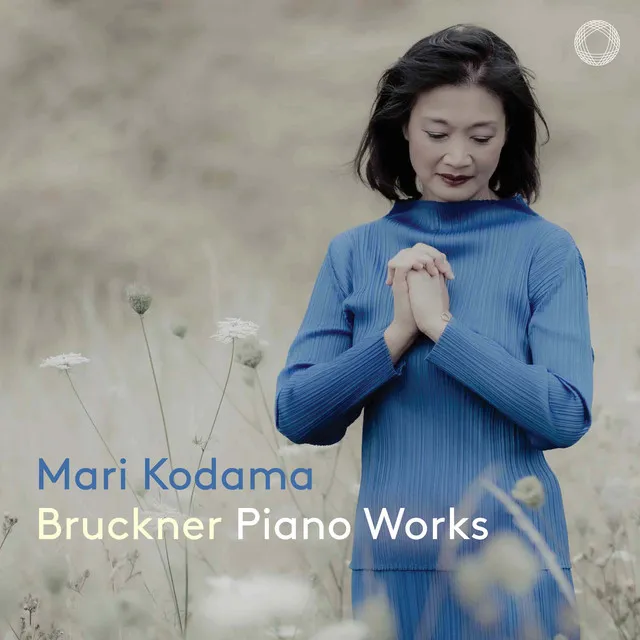
Whoever thinks of piano music rarely thinks of Bruckner. Whoever thinks of Bruckner rarely thinks of his piano music. Is this neglect justified? Not entirely, but one must know what to expect. Those who anticipate symphonies in miniature or church music distilled to its edifying essence will be disappointed. Anton Bruckner (1824-1896) wrote most of his piano pieces in the fifties when he was active in St. Florian as a village organist and teacher. For the benefit of local cheerful gatherings, he wrote all sorts of very short pieces with a strongly dance-like character, simple harmonies, very singable melodies and an extremely clear form—in short, utilitarian music in its purest form and certainly not intended for posterity. For some pieces he consulted operas by Lortzing, which were very well known in Austria at the time but are now, especially in the Netherlands, scarcely heard anymore. Alongside these he wrote somewhat longer pieces (Sonata, Stille Betrachtung, Chromatische Etude and Fantasie) that sound more like art music and in which he allowed himself greater freedom, yet they remain far removed from the symphonies, even the early ones, and from his church music, because this piano music has nothing of the style we associate with religious music. If the pieces come close to other work by Bruckner at all, it is most of all to his Mendelssohn-like string quartet from the early sixties, although that is a work of twenty minutes while these are mostly miniatures.
This cd would probably not have come about without the Bruckner year, even though this is not the first recording of these pieces. Compared to earlier performances this is the best, because the pianist successfully strives to make the pieces sound better than they are. Those who look no further than the Lortzing pastiches understand the neglect. Those who hear Kodama gain more understanding, even though it remains surprising that Bruckner wrote entirely different music for the church and concert hall soon after. Gustav Mahler had an explanation for this: creativity is a mystery, even for the creator. Even without accepting this, it is pleasant music, also thanks to the performance. For Brucknerians it is an interesting addition to the oeuvre of their hero. For pianists and others it is good to know that music history does not consist solely of masterpieces written by unapproachable masters.
Bruckner's piano works are pieces very suitable for amateurs, perhaps more pleasant to play than to listen to, but good for reminding everyone that the pyramid of musical life does not consist only of its apex, that everything beneath it is vital to culture and that there are moments and places in music history where unapproachable masterworks are either absent or do not set the tone, simply because simplicity and untroubled enjoyment take precedence for many. Only, music of that type is sometimes pleasant for contemporaries, known to historians only for professional reasons, and for later generations of music lovers rightly forgotten. The best way to forget those insights for a while is to play the way Kodama does.