
During this week of Belgian music (31/01 – 06/02), composers from our own ranks are placed in the spotlight.
We speak with Maestro Dirk Brossé, who has established his place in the artistic milieu and belongs to a unique intellectual circle. Recently he turned 60 and also celebrated his 40-year music career, which has been highly successful. In these fast-moving times, he remains extraordinarily active. His life unfolds in the balancing act between composing and conducting. Music is universal. He has broken out of the Belgian cocoon and divides his time between his home and workplace in Destelbergen and Philadelphia, where he has been Music Director of The Chamber Orchestra of Philadelphia since 2009, a top orchestra. Additionally, he is Music Director of Ghent Film Festival and professor of conducting & composition at the School of Arts in Ghent. Between these responsibilities, he appears as guest conductor with the most renowned orchestras of the moment. A world citizen. He is a welcome guest everywhere in the world because he proceeds from respect and ethics, transforming this with his enormous technical skills into beautiful, memorable concerts.
In his compositions, Brossé displays enormous versatility. With elements from classical music, folk music, jazz, pop and musical theater, he has built a multidisciplinary oeuvre. His passionate, erotically dramatic music furthermore testifies to unprecedented compositional skill. He has written an enormous amount and creativity continues to flow unstoppably. Absorbed by music, he has extremely rare moments of freedom. For Klassiek Centraal he makes time anyway. We probe his personality and try to capture four decades of music in questions and answers in a trip down memory lane, the present and a look at the future.
-You grew up in a middle-class family with little connection to art and culture. How did the spark for music arise?
From childhood on, I was fascinated by instruments, their distinctive sound. I grew up in a village with few contacts. We had to entertain ourselves. At Saint Nicholas, I would always ask for a musical instrument: I had an accordion, melodica… Around age eight, we watched a Dutch television program Young People on Their Way to the Concert Stage. There was a boy my age playing "Il Silenzio" on his trumpet. The reaction was immediate: I want to do that too.
-You started as an instrumentalist. Was it immediately clear that you wanted to grow into being a composer?
When I was eight or nine, I went to music school. Very quickly I was accepted into the local harmonic band. Our conductor was a professional musician who played the flute. That's where I had my first conscious thought that I had the creativity in me to compose things myself. My first compositions date from when I was twelve or thirteen years old. Of course, those were very simple things. The ambition to one day lead an orchestra myself was already present beneath the surface.
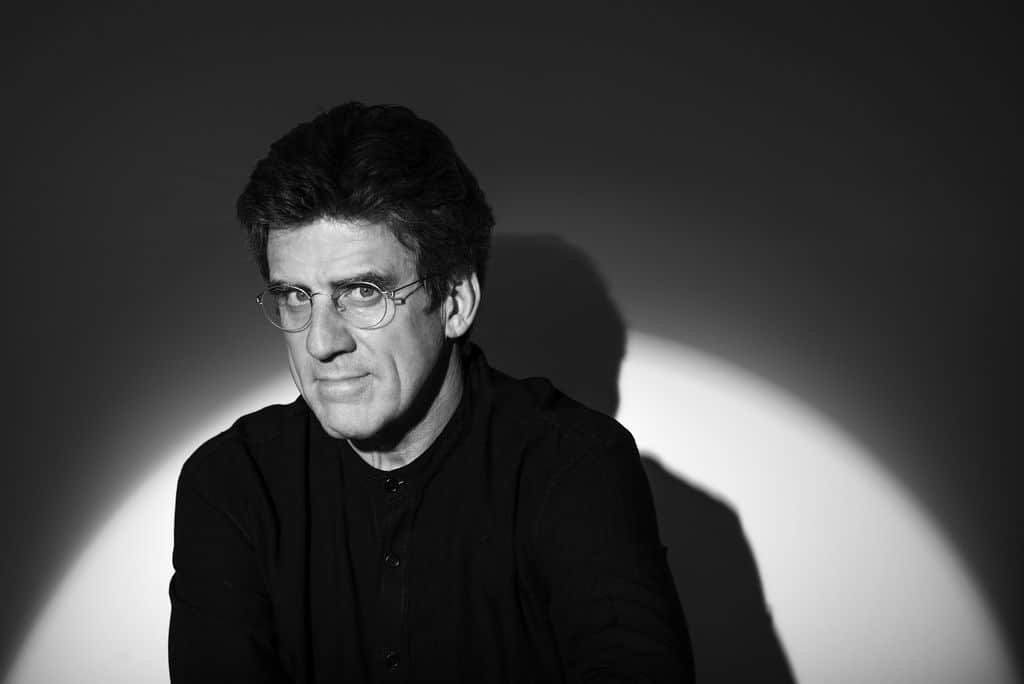
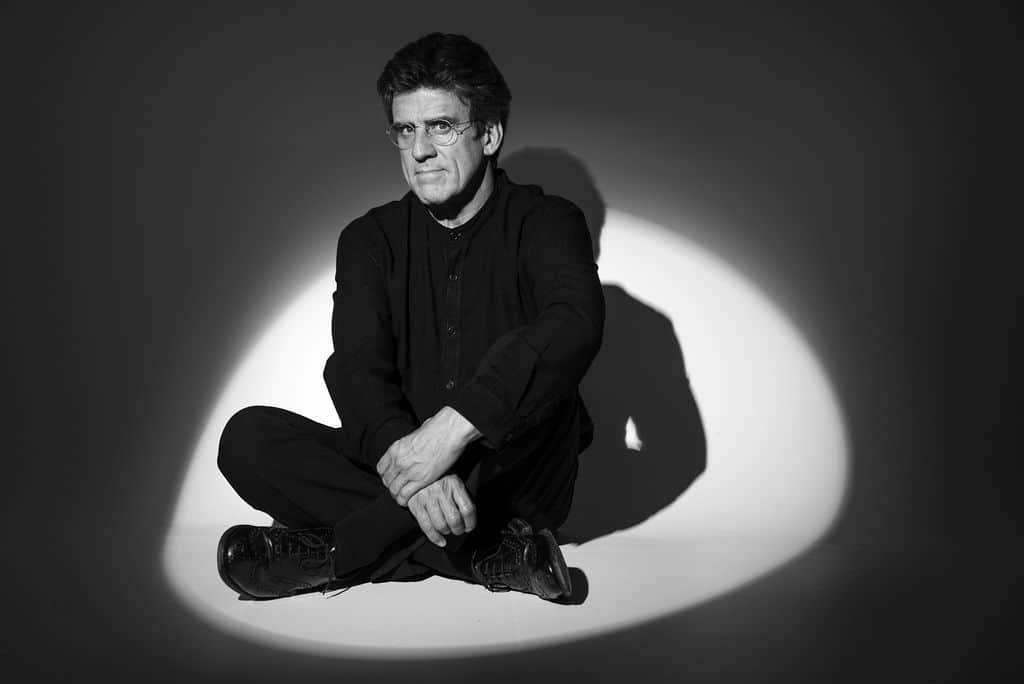
-One of your great role models was the American composer, conductor, pianist and music pedagogue Leonard Bernstein. You have followed in his footsteps. There are many parallels.
There are indeed parallels. He inspired whole generations: music lovers, young people like myself. That man had such charisma, qualities, was so gifted in all the sub-aspects within music! Simply genius. I actually had a couple of illustrious role models. The very first was François Glorieux. Also somewhat of an outsider when you tally up his career. During secondary school we went to a Youth and Music concert. That was "The François Glorieux Panoramic Trio Plays Glorieux". He had put together a special program for young people and talked about his distant travels. Everything a young man of thirteen or fourteen needs to turn the small flame into a gigantic blazing flame. Also the first composer I met in person! John Williams also influenced me, but Bernstein left the greatest substantive impression on me.
-You are active in many fields. Is that attributable to a high dose of stubbornness or entrepreneurship?
A combination of both, I think. My parents were small business owners. From home I learned to pursue different paths. If something falls away, you can fall back on the rest. But I practice the different elements of my job with equal love and passion. Conducting and composing in different genres. I am devoted to ethnic art and music. Literature also appeals to me. Not that I write myself, but I do make use of literature.
-As a source of inspiration?
Indeed. It differs from person to person what things attract or appeal to you.
-A mindset. Art, as a form of expression, is to a large extent developmental dynamics. Art makes you think. Art shows what is otherwise not seen or perceived.
A mindset indeed. We walk around this world and want to enjoy all sorts of things. Experience is an extremely personal thing. Let five people look at a painting or sculpture, or ask five witnesses of an accident for an explanation. You get five different stories!
-What have been the key moments in your career?
There have been various key moments, both inner and outer. People who cross your life path are often determining factors in your development. They are not milestones, but they do mark you. I was once an observer at lessons given by Bernstein. When the man entered a room, I assure you, that sparked something! These are moments that stay with you. Now that I'm getting older, I realize that much of it has to do with perception. Careers are of course based on inner drive, on talent, but also on the media. How a particular person is or is not talked about. It's a sum of parts. Also the meeting with my youthful idol, film music composer John Williams. When you meet someone like that and talk to them face to face. Those are moments you treasure. Later we became very good friends. You get used to such meetings, of course, because they are all just people. Other important moments are when you compose a work and perform it for the first time. You let it go for the first time, that is an almost indescribable emotional moment.
-After a creation what feeling bubbles up: satisfaction or is the way to get there more important?
The latter, the entire journey there. The first thought, from the first to the last note you put on paper. The most important thing is the whole creative process and the thinking process that preceded it. The performance is a different phase. After everything I've already done: conducting thousands of concerts, composing hundreds of works, traveling the world twice a year,… the highest satisfaction I get from conducting my own work. That gives a tremendous kick.
- 'Compositional thinking', how can you clarify that somewhat for a layperson?
Composing is devising sound structures within time structures. It is a logical, often ingenious thinking process that you can compare to building a rocket to fly to the moon… with the difference that music is not an exact science. It is a combination of knowledge, understanding, but also a lot of spontaneity, intuition and feeling. Inspiration that you receive and that you then hold on to. For a poet that can be a word, a flash of thought, a look... For a composer it is actually the same.


-Do mathematics and music have anything to do with each other? Pythagoras spoke about mathematics as the basis of harmony in the 6th century BC.
That's correct, his theory of overtones. Pythagoras was the first to demonstrate that every fundamental tone, whether it comes from a vibrating string or a singing scale, has a series of natural overtones. When you strike a fundamental tone, all those overtones are present in space, even if you don't always hear them. Small children are more receptive to it, the hearing of adults is no longer so perfect. That is the basis of classical harmony on which Western music is based. To be clear, not all musical cultures have based their theories on Pythagoras.
-Stylistic polygamy has become your trademark. You compose world music, symphonies, oratorios, songs, chamber music, film music and music for musicals.
Fundamentally I always do the same thing, it's just the genres that differ. Music is conveying an emotion. Music is never abstract. There are composers who can write abstractly. Bach is a very good example of that. With me there is always a story involved. Somewhere a common thread running through the composition. Whether it's a musical, or an oratorio or an instrumental symphony. That actually doesn't matter. The structure differs of course from work to work. I let myself be inspired by something and the work and talent do the rest.
-I once heard you say in a documentary that composing film music is one of the most difficult things.
It is so difficult because you have to take into account so many aspects that lie outside of music. First of all, film music is applied art in the sense that you are subject to the visual material. Sometimes you have a lot of freedom, other times little. But you always have to adapt yourself technically. Film is the medium in which the image is central. Sometimes music also has to account for dialogue. You are actually a small part of a larger whole. It is sometimes difficult to efface yourself and empathize with each new story. Film music is actually of fairly recent date. A hundred years ago that language did not exist. There was narrative music that was later used a lot in films. Think of the film Death in Venice with music by Mahler. Mahler could never have dreamed in the remotest sense that his music would be used to create an atmosphere in an audiovisual work of art! Film music is a new language that has developed over the past twelve/thirteen decades. Meanwhile, the culture between image and sound has changed incredibly. There is much more room for the personal interpretation of the viewer. There are sound clouds that put you in a state of mind and give you room to fill in what you do or do not want to feel. That means that today the composer must also have a very great dramaturgical/psychological insight. His function is not only to compose music but he must also be a silent guardian of the dramaturgical line that runs through the film.

-Where does your great love lie: being able to do your own thing completely independently or composing music on commission?
Well. Composing music on commission has the advantage that you get paid for it. Apart from the financial side, you're also assured that your music will be performed. When it's performed, the music can also be recorded and passed on to future generations. If you come up with a musical piece yourself, then there's paper on your desk and then you have to struggle a bit to get your music played. That's why I prefer to receive commissions.
-In the early days of your career as a composer, you composed a symphony with quite a few unprecedented instruments, a mesmerizing auditory landscape. You never did that again afterwards.
I indeed did that with the symphony "Artesia" and a second symphony "The Birth of Music". I never did it again for the simple reason that the way orchestras program changed. The biggest difficulty was, and still is, finding the musicians who can play all those ethnic instruments! But I'm now working on an 'Opus Magnum' in which I'm going back to what I did in the nineties. We're a lot further along now. Technologically, things have evolved a lot. It's no longer necessarily the case that you need all those people on stage playing these instruments. There are other ways to bring sound sources to the audience. I can't say too much about it yet, but it's work in progress.
-Does Belgian music have a strong identity?
What is Belgian music? I think that's a good question and at the same time a difficult one. I think of all genres, it's perhaps pop music that has the strongest identity. We've always been good at innovating pop music, and I'm thinking of people like Ozark Henry alias Piet Godard, dEUS who produced new sounds, Hooverphonic, Joost Zweger, Stromae. I also think of Jasper Steverlinck, Vaya Con Dios a couple of decades ago. The genre that has had the most impact on our neighboring countries and perhaps the whole world is Belgian pop music. We certainly have fantastic composers in the classical genre too, Frederik Devreese is one of them. But no figures like a Philip Glass who really changed the course of contemporary classical music. Not that I'm aware of. Perhaps we do have them, but their music hasn't managed to be a trendsetter.
-You compose works in different styles, from early baroque to contemporary creations, which implies versatility and flexibility.
Versatility, that's true. By being asked to compose a Viennese waltz today and an Argentine tango tomorrow, and for the next film something polyphonic or something in renaissance style, you develop flexibility. That has a great advantage, but there's also a downside to it.
-In what sense?
Because you keep moving further away from your own thing. You can prepare all kinds of dishes from around the world. Today you make pizza and tomorrow sushi, but who are you really as a cook? Am I the guy who can skillfully imitate everything or what comes from your own gut?
-You have to preserve your own identity and put it first?
Exactly, preserving your own identity is of paramount importance.
-What is your most ambitious composition so far?
The most ambitious compositions are the symphonies I wrote in the nineties. "La Soledad de Amérika Latina" written in collaboration with Nobel Prize winner Gabriel Garcia Marquez and "Artesia" a universal symphony for orchestra and ethnic instruments. They were very innovative at that time. No one had ever done that before. Not even internationally. In terms of musical language, the violin concerto "Sophia" that I wrote in the year 2000, meanwhile I have some 400 compositions to my credit, can appeal to music history. I've always made it a point that when I compose one work, it should be so good that it can compete with great classical works, then my objective has been achieved. I can't judge that. Time will tell. If you ask me anyway, then I think the violin concerto "Sophia" is indeed a very strong work.
-Your wife Claire Tillekaerts, CEO of Flanders Investment and Trade, leads business missions worldwide. A job where reason reigns. A completely different world than the art scene. Are you a complementary couple?
We are a perfectly complementary couple. As an adolescent, Claire had the ambition to pursue an artistic direction. Her grandfather was a painter and violinist. Her father a magistrate. It was written in the stars that she would end up in the legal profession or judiciary. There wasn't much choice! She actually wanted to follow in her grandfather's footsteps. Claire absolutely has an artistic soul. There is a lot of understanding for my work. She's involved in art a lot herself. She likes to go to museums, is very much into literature. She devours books at a pace, crazy! That has to do with the mindset of the lawyer who has to go through many files in a very short time. There are many more common ground than one might think at first glance. I also have a great business instinct in me. I fight for my art. As the eldest son of a family of five children and middle-class parents, I wasn't given anything for free. I've realized it all myself. I never received subsidies, I never depended on that oxygen bottle, but realized everything on my own strength.
-What is your strongest gift: your talent for composition or your aptitude for synthesis, drive and originality?
I think the latter. It's also a sum of everything. My success is that I know what I can do and know what I cannot do. I have developed expertise in what I am good at and in which I am number one, that is as a conductor and as a composer. The combination of those talents with my business instinct has brought me to where I stand. Now, after forty years of career, I can say: "Thank you to all the people at home and abroad who have continuously put obstacles in my way. Closed doors." They have shaped me into who I am today, inwardly and formally.
-May I end with a quote from British writer Aldous Huxley: "After silence, music is the best way to say the unsayable." That is what I try to contribute to as an artist. As a conductor, to move the audience with the musical legacy and richness of my predecessors and as a composer with my own work.