
Il Trionfo del Tempo e del Disinganno is an early oratorio by Georg Friedrich Händel, composed in 1707 during his stay in Rome, to an Italian libretto by Cardinal Benedetto Pamphilj. The work is conceived as a moral and philosophical debate between four allegorical figures: Bellezza (Beauty), Piacere (Pleasure), Tempo (Time) and Disinganno (Disillusionment). Beauty is torn between the immediate allure of pleasure and the confronting voice of time and insight, until she ultimately chooses a different form of truth. It is not a story in the dramatic sense, but a collision of ideas, in which moral conviction and human weakness continually intersect.
Händel manages to transform this abstract design into music that strikes directly. What can be read textually as a somber reflection on transience acquires in the score a wealth of affects, contrasts and colors. The young Händel proves himself here already a master in playing light against shadow, seduction against seriousness, without ever falling into oversimplification.
Also a triumph for Il Giardino Armonico
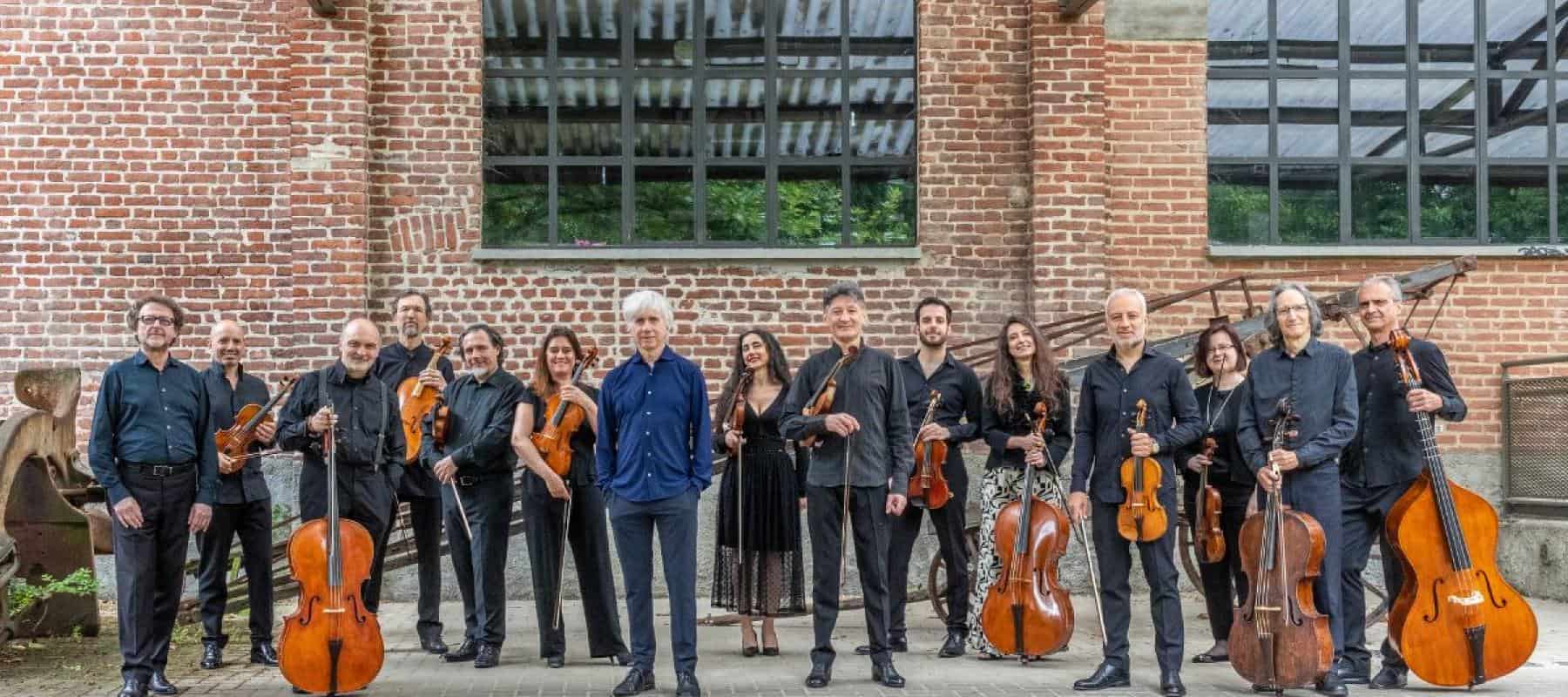
For this performance, Il Giardino Armonico and Giovanni Antonini guaranteed a reading that emphasized the rhetorical character of the work sharply, while keeping it warm and lively at the same time. The ensemble played with great ease in phrasing and articulation, with a continuo that continuously responded to the singing and shaped the musical discourse. The dramatic arc remained intact throughout the entire evening, so that the considerable length of the oratorio never felt burdensome.
The four soloists formed a tight and balanced quartet. Giulia Semenzato gave Bellezza a clear, flexible voice that could express both vulnerability and growth. Julia Lezhneva's Piacere sounded seductive without being superficial, elegant and supple, exactly as this role demands. Carlo Vistoli lent Disinganno a noble seriousness and an almost contemplative calm, while Krystian Adam as Tempo drew a taut, relentless line that kept the moral pressure in the work continually palpable.
Within that whole, various moments stood out without breaking the coherence. Lezhneva's Lascia la spina was a moment of pure stillness: simple, unadorned and therefore all the more moving. Here Händel showed his mastery in letting sobriety speak, while at other moments in the work joy and brilliance are given full space. That continuous interplay between attraction and restraint makes this oratorio so intriguing.
Tempo and Disinganno also received musically well-developed moments. In arias such as Urne voi, che racchiudete, the inexorability of time became audible in broad, sustained lines, while Disinganno in his contributions let clarity and insight sound, not as cold correction, but as an inner shift that slowly takes form.
The finale of the oratorio forms a striking contrast with the grandly constructed concluding sections we know from many other oratorios and operas. In Tu del ciel ministro eletto Händel resolutely chooses restraint and inner concentration, as if any form of outward triumph would be inappropriate here. Giulia Semenzato brought this conclusion with great conviction and a natural simplicity that allowed the meaning of the moment to speak completely. Her singing remained deliberately unadorned, supported by transparent accompaniment, whereby the moral choice of Bellezza was experienced not as victory, but as acceptance and insight. That sobriety worked particularly strongly: after the last sound faded, the hall remained still for a moment, in a stillness that suited this finale perfectly, before the audience gave itself over to loud and prolonged applause.
Imperishable beauty
The oratorio is about the transience of beauty and the inevitable triumph of time. And yet a small paradox presents itself here. The fact that we can still intensely enjoy its beauty more than three hundred years after its creation seems to confirm the premise at the same time as it undermines it. Of course, Pamphilj's text is primarily concerned with physical beauty, which changes and fades with the years. But Händel's music reveals a different form of beauty, one that does not disappear, but renews itself in every convincing performance. In BOZAR, that was not an abstract idea, but an audible reality.