
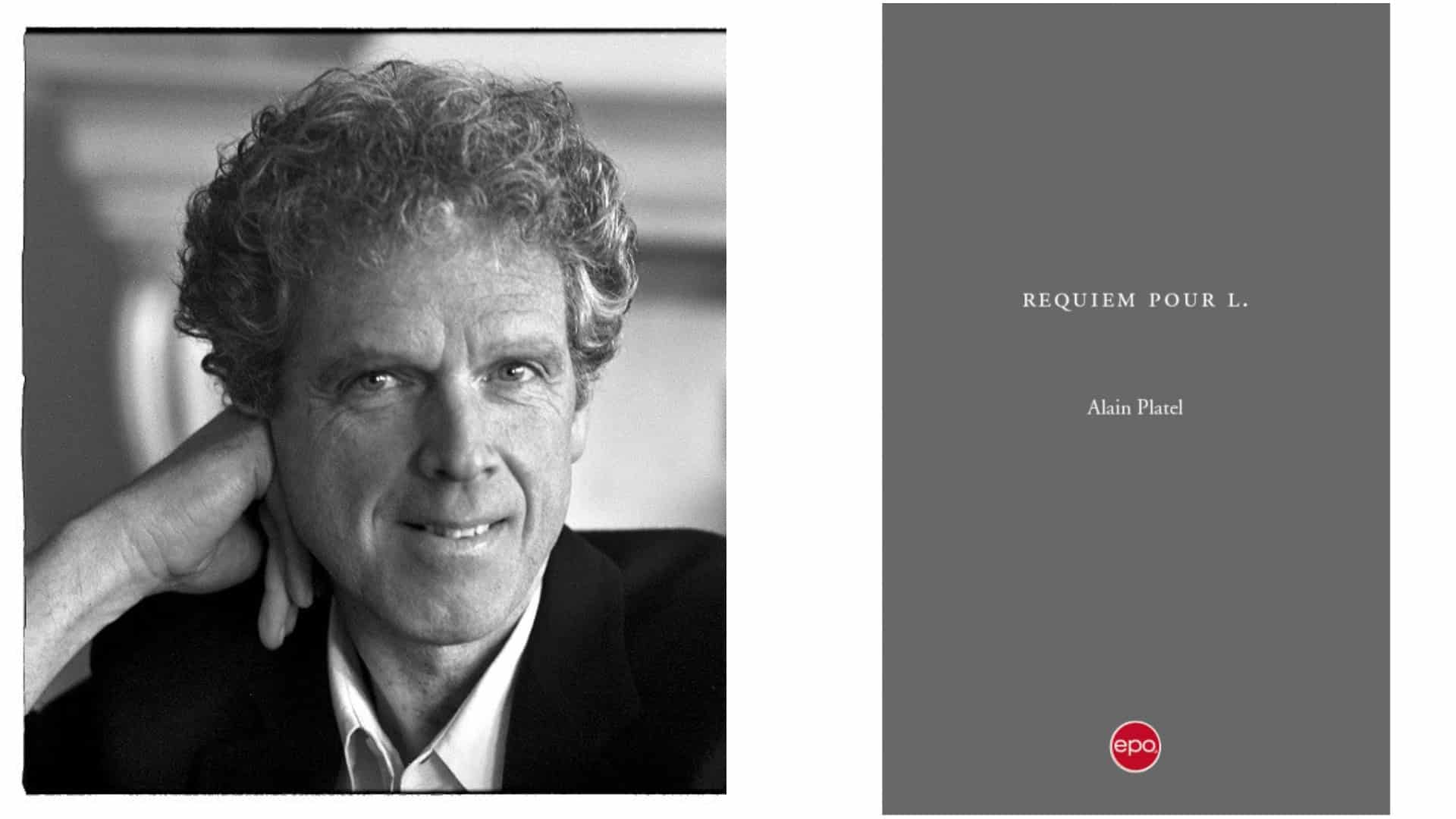
Successful director/choreographer Alain Platel offers in this richly illustrated book a glimpse into the creative process of the acclaimed and iconic production Requiem pour L., set to music by Mozart and composer/saxophonist Fabrizio Cassol. A production that got under Platel's skin, placed him before an ethical dilemma, indeed exhausted him. The entire production process was an emotional rollercoaster that took its serious toll and left its mark. In passing, the author also describes how the young company les ballets C de la B made such rapid progress. When at the right moment, in the right place, the right people cross your path. It is a towering cliché, but it was the springboard to international stages.
Alain Platel takes the reader on a journey through his past. He grew up in a warm but atypical family with five children. His father was an architect and his mother a spirited woman who, besides caring for her children, embraced life in those free-spirited sixties. In reality, the decision to create Requiem pour L. was already made years earlier, long before he could visualize it. It is the culmination of encounters, events and confrontations with death, over many years, in a steady growth process. How one thing leads to another.
Platel kept a kind of logbook. A few people feature prominently in it: family doctor and childhood friend Marc, Belgian composer Fabrizio Cassol, his parents, sisters and good friend and mentor Gerard Mortier and of course L(ucie) and her family. A sometimes somber, yet at the same time joyful blend of facts and memories that all, like a kaleidoscope, contributed to the creation of the acclaimed and moving Requiem.
Illness and Finitude
They traverse our existence. Platel saw his first dead person as a five-year-old boy. Curious about what death exactly was, he had gone to look at a neighbor woman who was laid out in her living room at home. Classmates were mowed down. The emptiness afterwards was downright disillusioning. At seventeen, he was allowed to help out in a hospital for a month as a vacation job. There he saw a dead woman. A quarter of an hour earlier she had been moaning and they had cleaned her bed. Death manifesting itself as a silent killer. A childhood friend was taken from him by cancer. He also had to say goodbye to his faithful four-legged companion. A traffic victim breathed his last breath in his arms, his father in a hospital bed.
Platel was also witness to Gerard Mortier's last breath. The giant Mortier with whom he could talk about their hometown Gent, but also about what drove them professionally, their vision, the role of an artist in society. Mortier challenged him artistically. If Mortier gave him the confidence – which gave him the opportunity to build an international career – Platel in turn surrounded himself with young talented artists to whom he offered a springboard. Mortier appealed to young artists who dared to shake established values to their foundations. Working at the sharp edge and progressive artistic choices united them and also forged a strong bond on a personal level.
Cassol-Platel Duo
They met each other by chance in Jerusalem in 2002 and got into conversation. There were many points of contact, both in terms of professional ethics and spirituality. Both found each other in creating new stories based on familiar material. Together they created VSPRS in 2006 based on Monteverdi's Vespro della Beata Vergine. In 2008 came Pitié!, inspired by Bach's St. Matthew Passion. For Coup Fatal 2013 they gathered a number of Congolese musicians around a repertoire of European baroque songs.
This colorful production begged for a sequel. Fabrizio decided to tackle Mozart's Requiem with partly the same African and partly European musicians. A tour de force because most musicians of African origin could not read music and everything therefore had to happen through oral transmission. However, it was not to be a continuation of Coup Fatal, but a unique memorable production. Therefore, Platel decided to start from what the essence of the requiem is: death. Death is still shrouded in a taboo here with us. So one had to proceed carefully.
Platel realized that with his life and theater experience he now possessed the tools to bend grief into strength, into an energy that propels rather than slows down. We all must "Zum Tode leben", as Heidegger says. Push to the limit of the possible. Showing death in a video installation had happened before, but never in a music theater production.
Coincidence or Not
By chance, an acquaintance was dying and the attending physician was his childhood friend Marc. Would it be possible to record her last hours and incorporate them into the performance: the magical bridge between life and death? Lucie, a woman who stood on the barricades her entire life, agreed. She chose euthanasia and thus became an advocate for the right to die with dignity. Her last active deed: dying in the saddle, so to speak. However, this did not come without a struggle. The children objected. Platel fully understood their resistance. It is intruding into one of the most intimate moments in a human life. Misused, it could also be interpreted as an unhealthy form of voyeurism. Ultimately, the children respected their mother's ultimate wish. The audience experiences her last hours in a serene projection: respectful, without any sensationalism. Through the extrapolation of emotions and music, a diptych emerges. The serene farewell of the Westerner, as opposed to the extroversion of the Africans. We mourn, for them it is a celebration of life. The performance is a confrontation, but at the same time healing. The cultural differences are woven into an intimate pattern to create a warm and deeply human slice of life. An absolute masterpiece that emanated great peace.
Requiem pour L. is impressive not only as a performance. Reading the book of the same name is too. There is not only Alain Platel's story, but also numerous commentaries that colour and support the narrative. For this production, our director/choreographer did not go in lightly. The discretion, the struggle, and the thoughtfulness with which he carefully and subtly fitted everything together characterize him not only as a great artist, but also as an upright person with responsibility and erudition. A respectful man full of compassion who understands the pain and confusion of people.
- WHAT: Requiem pour L.
- WHO: Alain Platel
- PUBLICATION: Uitgeverij EPO, 2019, 260 p.
- WEBSITE: http://www.lesballetscdela.be
- PHOTOS: © Chris Van der Burght