Bremen is the city of musicians, at least the famous four from the story where the discarded animals, the donkey, the dog, the cat and the rooster already 'singing' chase away scoundrels and keep the loot for themselves and stay in the robbers' den, so they never reach Bremen. Those four animals' 'music' must have sounded quite something! Bleating, barking, meowing and crowing; a cacophony has nothing on it. Fortunately, listening to something quite different...
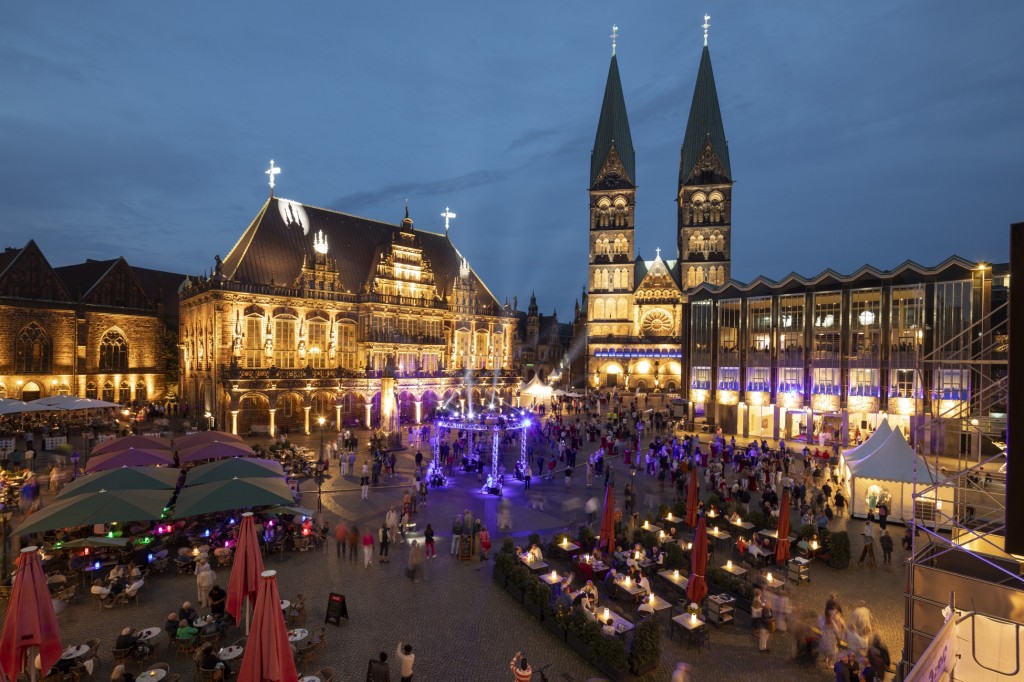
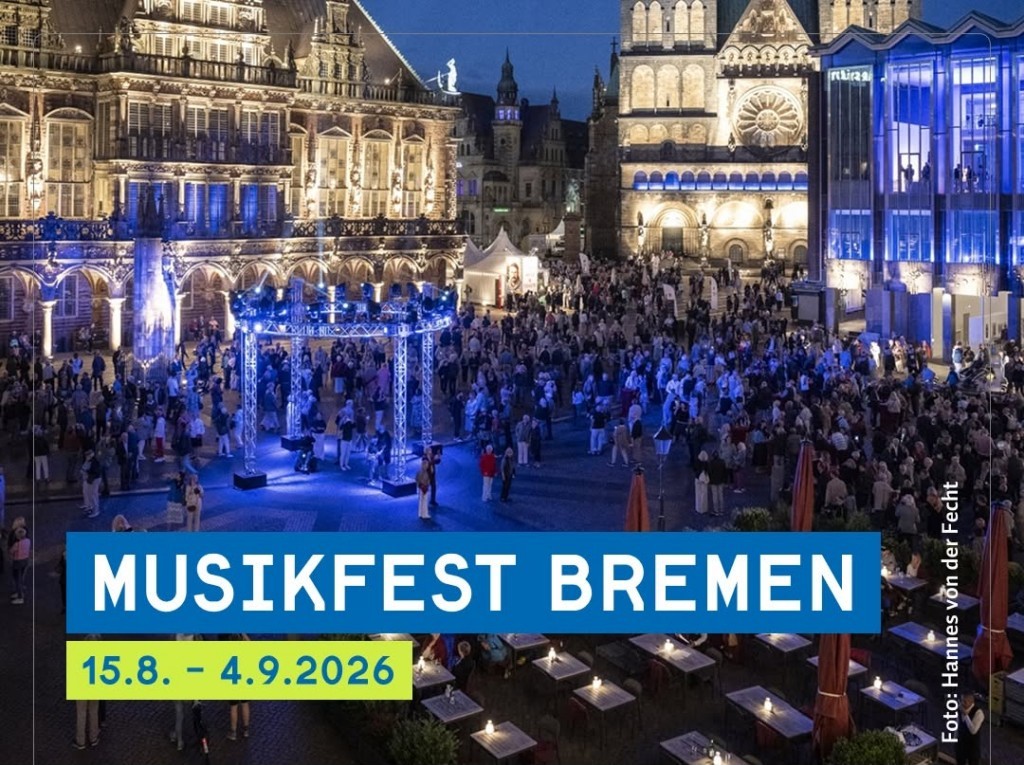
Bremen did not want to be bowed down by false notes and so in 1989 at the initiative of current intendant Thomas Albert came the now world-renowned Musikfest Bremen, festively opened on 15 August, the Assumption of Mary, in this largely Protestant city where fortunately Lutherans, Calvinists and Catholics together with agnostics and atheists and whoever else live in peace together through the streets and fill the concert halls. Under the motto 'Eine große Nachtmusik' Bremen festively celebrated the start of that enormous festival that lasts a good month in the city itself and the surrounding area.
Ceremony in the 'Rathaus' and masterful concerts
The organizers, generous donors and sponsors, political officials and the press were offered a fine reception in the magnificent Bremen city hall by mayor Andreas Bovenschutte and intendant Thomas Albert. Their welcoming words struck the right note, immediately setting the atmosphere and only whetting the appetite to be offered and consume much music of the highest level.
We were able to follow three concerts of approximately 45 minutes each. The quality of one was even better than the other and we review what was offered here.
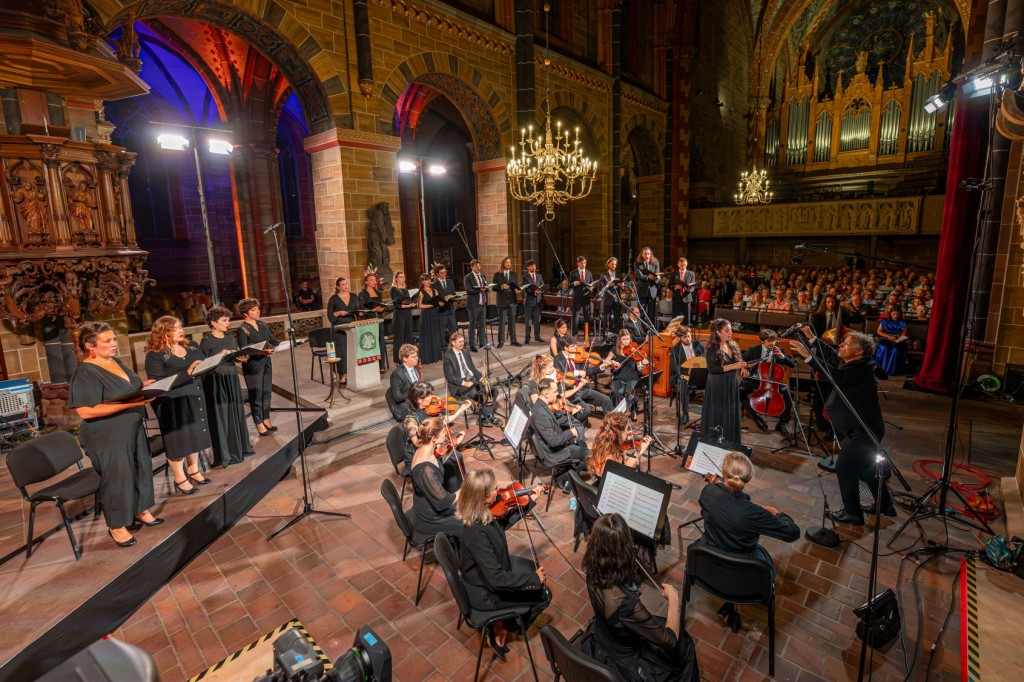
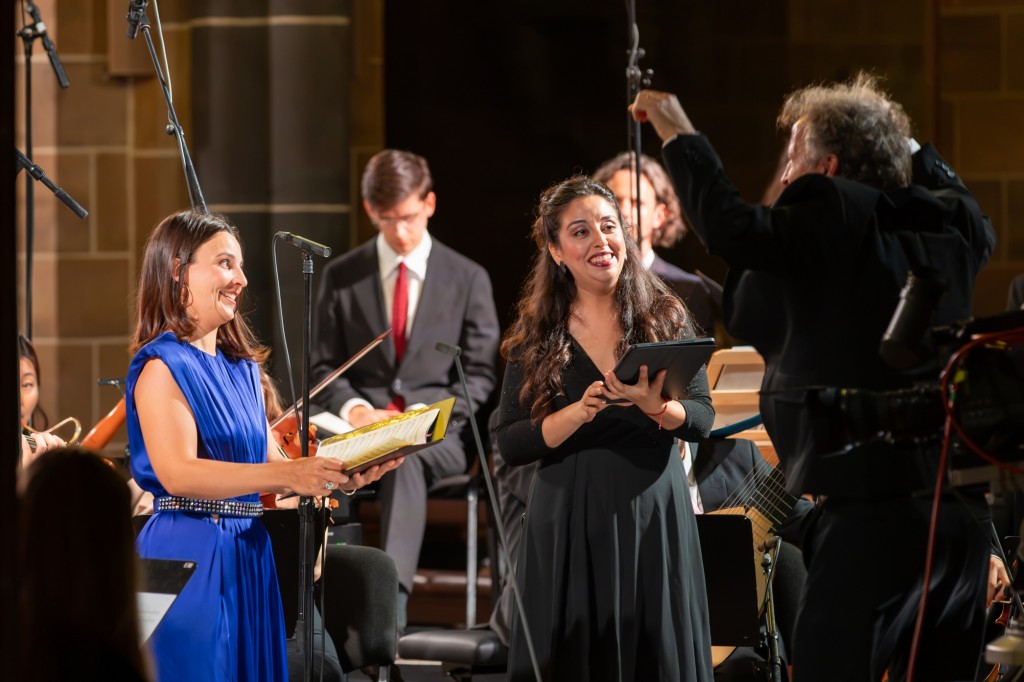
7 pm: Ensemble Matheus - Chœur de l'Académie Haendel Hendrix – soprano Nina Spinosi – alto Javiera Barrios - conductor Jean-Christophe Spinosi
These dedicated musicians brought under the leadership of an almost dancing conductor in the Dom a lesser-known and a well-known work by Antonio Vivaldi: the Laudate pueri Dominum RV 600 and the Gloria RV 589. That Gloria was among the first classical music the undersigned got to know as a toddler. How good to have musically educated parents… The orchestra is sublime, everything performed in historically informed practice on period instruments. We may well be proud that for decades ensembles, soloists, recording studios, concert halls, professorships, publishers, festivals and so on exist all over the world that owe their musical and commercial well-being to our very own Sigiswald Kuiken, who was the first after more than 200 years to play a violin without a chin rest, exactly as he saw and studied it in engravings, paintings, read in texts. The world can never be sufficiently grateful to pioneers like the Kuiken brothers and other contemporaries who were swept up in this resurrection of 'early music'. If only the Flemish government were as well, alas.
It was pure enjoyment of the orchestra and the two particularly excellent singers. A creamy warm soprano and an alto in a thousand with a voice to dream away to. The choir came somewhat less into its own. This was due to the setup in a very difficult Cathedral that actually has no acoustics. Where I sat, you could hear the men and it seemed that perhaps only a couple of women were singing in the choir. Those sitting on the women's side will likely have had the opposite experience. A bit of a pity, but it can't be otherwise in that church.
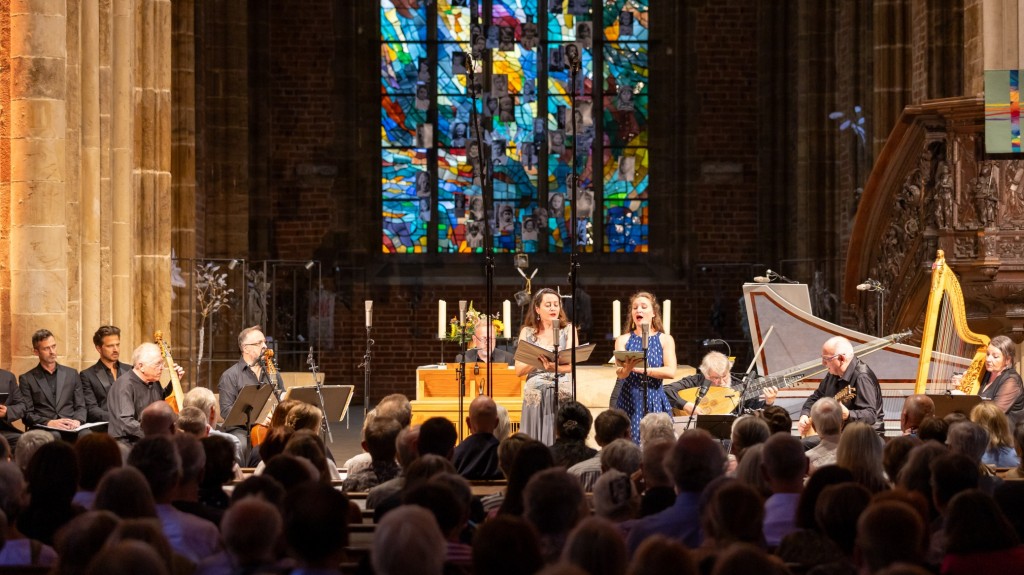
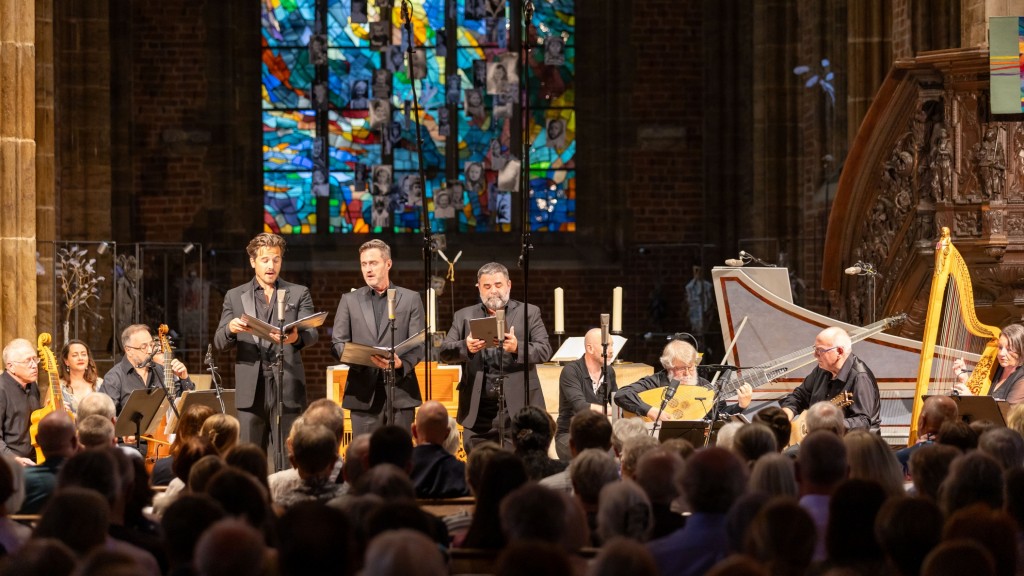
8.30 pm Boston Early Music Festival Vocal & Chamber Ensembles led by none other than lutenist Paul O'Dette and baroque guitarist Stephen Stubbs
The Unsere-Lieber-Frauen-Kirche, located just a few steps from the Dom and the city hall, still stands. It withstood the thunderous applause after 45 minutes of Monteverdi (1567-1643) who were opened with the famous Zefiro Torna. This ensemble is so pure, so Italian, despite being American. The musicians transform into the people who performed Monteverdi's works for Monteverdi himself. What quality indeed. You cannot improve this. Absorb it, don't let it go, remember it and listen again when you talk about it, read about it… A concert that stays with you, music for the ages, musicians who are incredibly well in sync with each other and where every note speaks, expresses, sings, lives. This is grand and so full of fire, panache, conviction and suppleness. A standing ovation, that could not be otherwise.
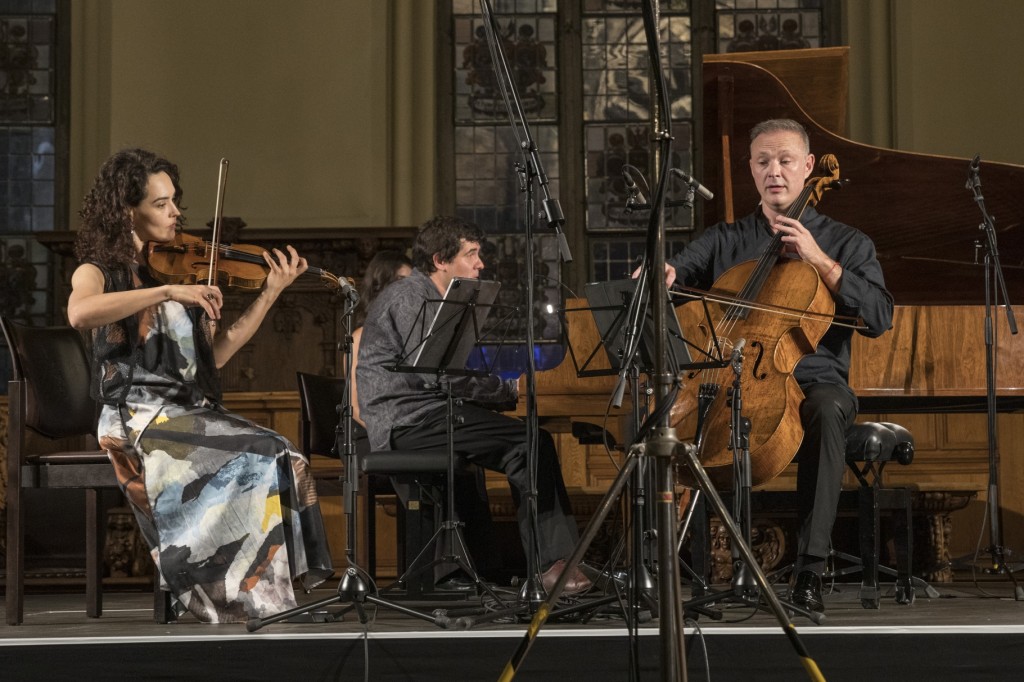
10 pm: Alena Baeva, Kyril Zlotnikov & Vadym Kholodenko with Franz Schuberts (1797-1828) Piano Trio No. 2 D929
The great council chamber, historic splendor, intact Renaissance that survived wars and all kinds of misfortune, was made of the finest wood – and there is woodwork to admire – to let Schubert resound. Acoustically it worked very well, as far as I'm concerned actually better than the small hall of Die Glocke, where it was six days of listening to the Beethoven string quartets by the Quatuor Ebène.
This was the icing on the cake, undeniably. Rarely did you hear Schubert so lyrical, so carefully crafted, so charming and so tormented, so anxious also about the approaching death and yet hopefully serving beauty. It was moving, great romanticism in its purest form, where music once again proved itself as the highest art form. This surpassed everything and it could have lasted much longer. Just to witness this was worth the effort to travel to Bremen. Hopefully we will hear these three talents again closer to home in our own country. That this evening was also concluded with lots of bravos and a standing, stamping ovation needs no further explanation.
If you have the opportunity to attend this festival next year or in the coming years? Do it!