
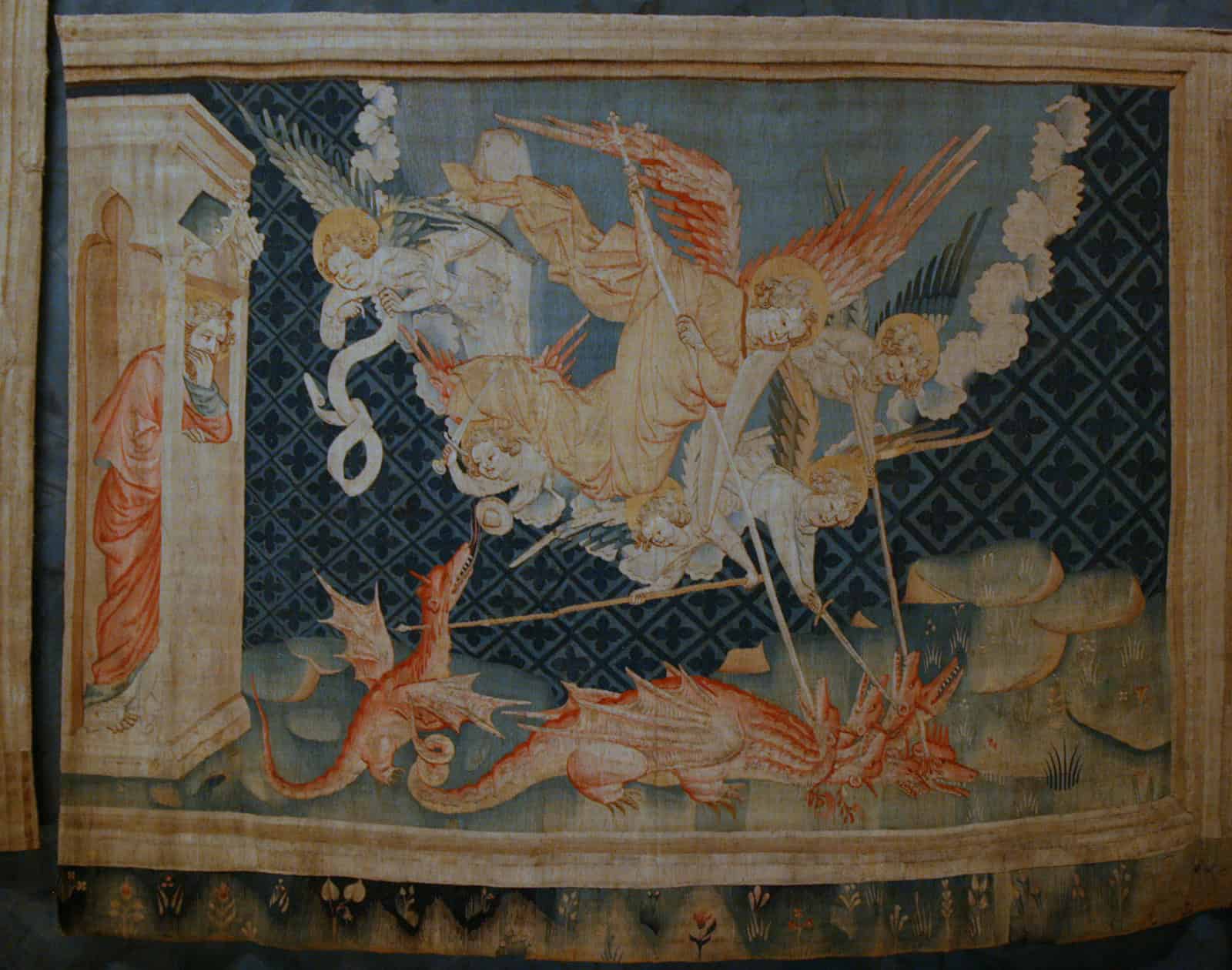
In the intimate space of the Kleiner Saal at Konzerthaus Berlin, a chamber music experience unfolded that is difficult to reduce to a classical recital. What stood on the music stands here was nothing less than the Quatuor pour la fin du temps by Olivier Messiaen (1908-1992): music that is experienced rather than merely performed. The scenographic approach contributed essentially to this: a cool, blue glow defined the space, while during solos or spoken passages the rest of the stage sank into darkness and only one figure was isolated in the light.
Stillness as tension
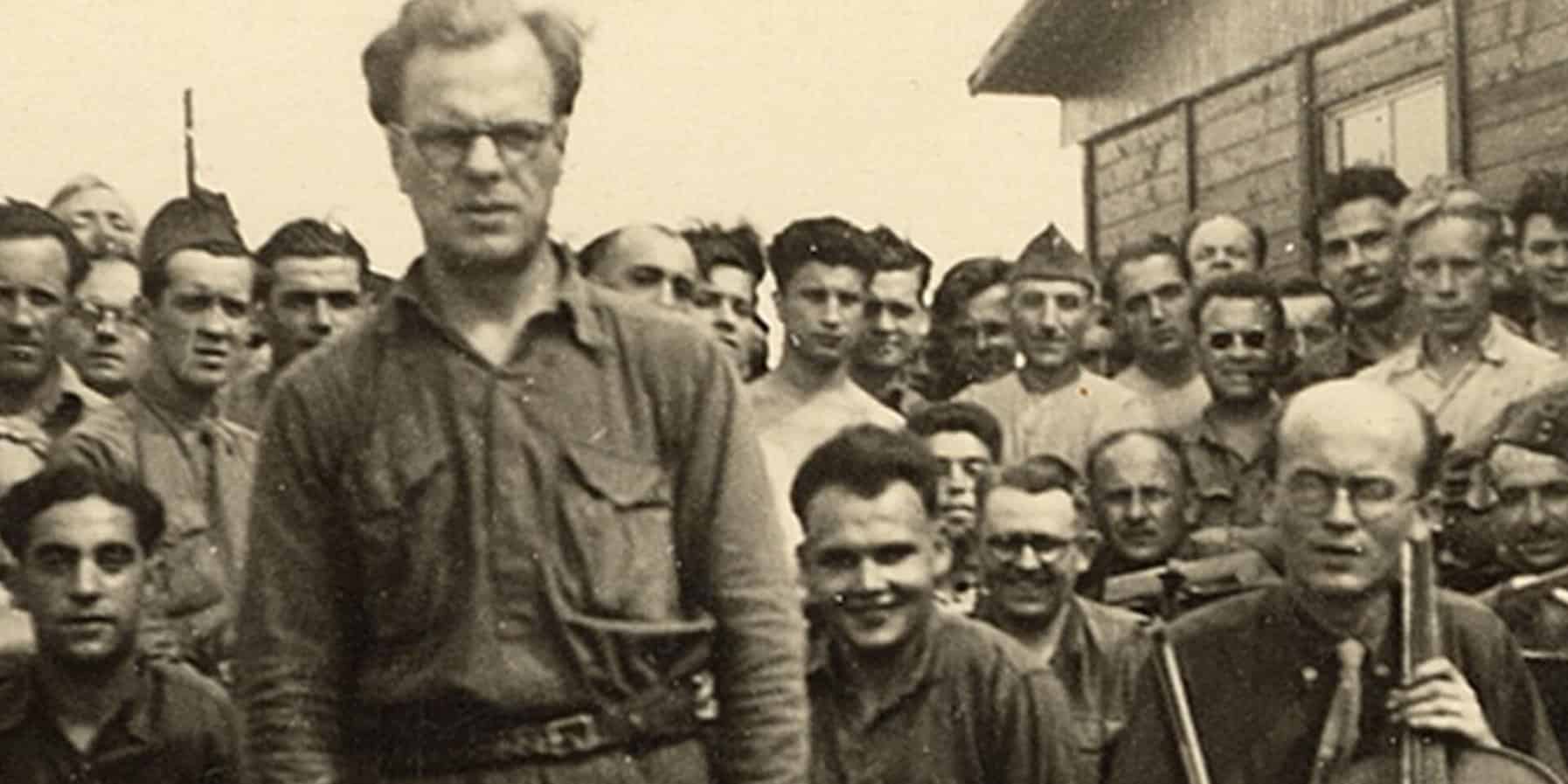
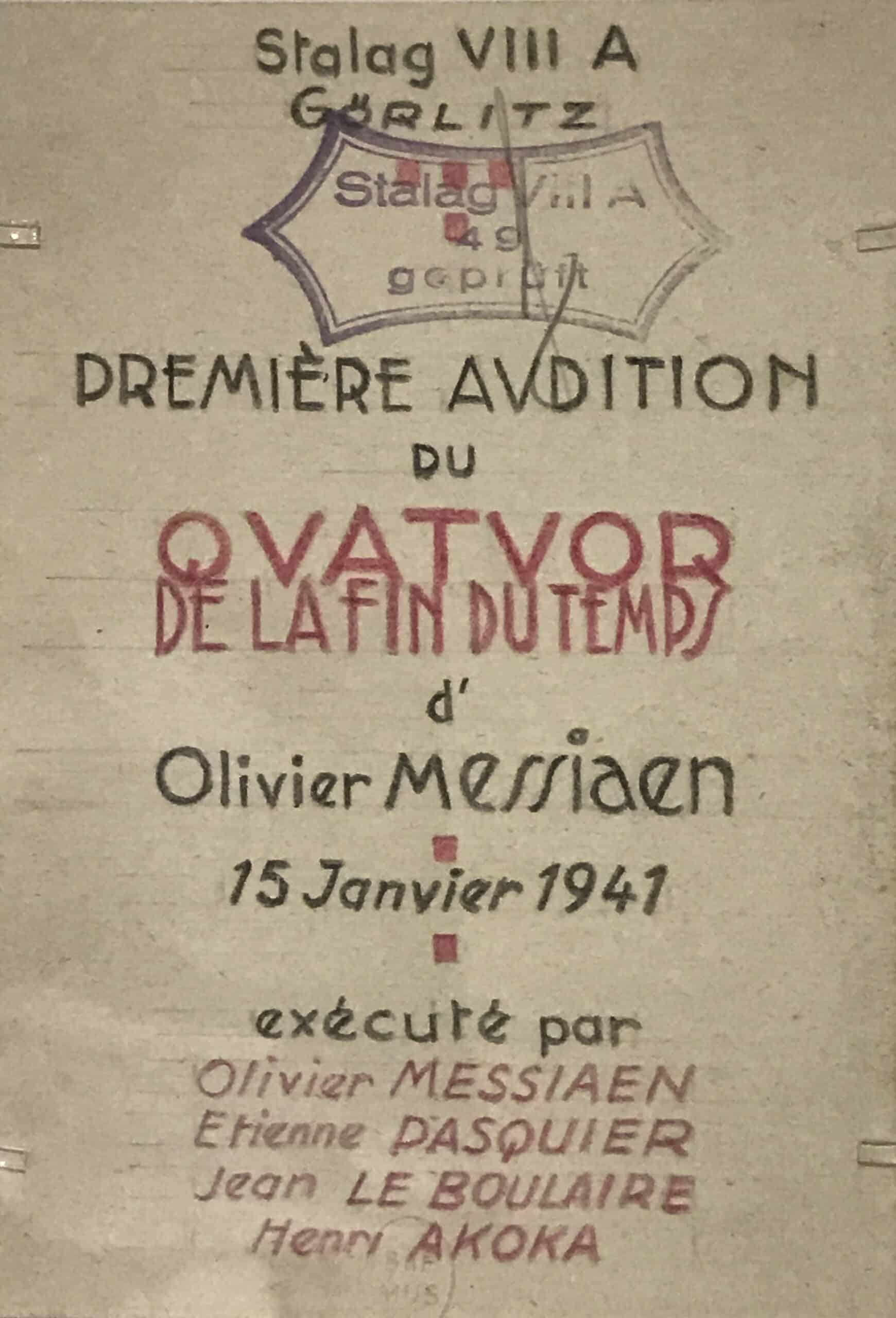 Messiaen composed this poignant work in 1940–41 as a prisoner of war in Stalag VIII-A in Görlitz. This context is not an anecdotal footnote but essential to understanding the work. Here emerges music that breaks free from linear time, inspired by the Book of Revelation in which the angel proclaims that "there will be no more time". The quartet is not a narrative, but a series of contemplative musical thoughts: stillness as a form of resistance against historical reality.
This radical break with traditional temporal progression is reflected in Messiaen's unique musical language. His use of so-called "non-retrogradable rhythms" – structures that are identical forward and backward – creates a sense of frozen time. There is also his fascination with birdsong, which is not merely ornament but a symbol of transcendent freedom. Harmonically, he moves within his own modes of limited transposition, sound fields that do not resolve but remain suspended.
The four musicians attached to the Konzerthausorchester Berlin – Alexandra Kehrle (clarinet), Avigail Bushakevitz (violin), Taneli Turunen (cello) and Florian von Radowitz (piano) – chose not to take the safe path of mere aestheticization. From the very first measures it became clear that they interpreted this stillness not as sluggishness but as tension.
In the opening section, Liturgie de cristal, a sound texture unfolded in which each instrument seemed to follow its own time. The piano laid down an unwavering pattern, while the clarinet and violin moved above it as free entities. Kehrle gave her birdsong an almost tangible lightness, without resorting to effect-seeking. The result was not an idyllic natural painting, but a fragile ecosystem in which each sound seemed on the verge of disappearing.
The subsequent Vocalise, pour l'Ange qui annonce la fin du Temps brought the first eruption. Here von Radowitz proved himself an architect of sound: massive chords were never clumsy, but remained transparent enough to make the internal tensions audible. The strings joined in with an intensity that never tipped into pathos.
The heart of the work, however, lies in the extreme contrasts. In the famous clarinet solo Abîme des oiseaux, time was stretched to the utmost. Kehrle dared to let the silences fall where they belong: not as pauses, but as abysses. The slow phrases seemed to break free from every metric anchor, while the sudden outbursts sounded all the more harrowing.
In contrast to this were rhythmically complex sections such as Danse de la fureur, pour les sept trompettes, in which the four musicians play in unison. Here the precision of the ensemble was put to the test – and successfully. The collective rhythm took on something relentless, almost mechanical, without losing its human tension. This was not virtuosity for virtuosity's sake, but a collective incantation that allowed no escape. All the more striking was the subsequent apocalyptic text, which seemed almost inevitable after this brutally composed unison: a dramaturgical placement that reinforced the impact of both elements.
The two slow solo sections – Louange à l'Éternité de Jésus for cello and piano, and Louange à l'Immortalité de Jésus for violin and piano – formed moments of stillness that avoided every form of sentimentality. Turunen chose a tone that spoke rather than sang: sober, sustained, but never heavy. Bushakevitz, on the other hand, sought an almost weightless sound in which the melody seemed to detach itself from matter itself. In both cases, von Radowitz kept time tightly, without disturbing the illusion of freedom. In the final section, Bushakevitz chose to stand, as if the music no longer wanted to confine itself to the earthly realm but was directed to other realms as a grateful hymn of praise – a gesture that not only depicted the idea of the "end of time" but almost invoked it.
A fragile balance between sound and word
A special dimension was added by Stephan Szász, who performed texts by, among others, Mascha Kaléko and Forugh Farrochzād. This choice deserves closer consideration, because it is more than merely illustrative intermezzo. The texts did not function as interruption, but as moments of reflection that prepared and deepened the subsequent musical section, as it were.
The poetry of Mascha Kaléko (1907-1975), often characterized by an apparently light tone in which melancholy and uprooting remain present beneath the surface, resonates with the condition humaine as it also lies embedded in Messiaen's music. Her texts bear the traces of exile and loss, yet refuse to surrender to pathos – an attitude that aligns closely with the restrained intensity of this performance.
Perhaps most confrontational was the presence of Forugh Farrochzād (1935-1967). Her poetry, intensely physical and existential, breaks through every form of spiritual abstraction. Where Messiaen suggests a cosmic timelessness, Farrochzād places humanity relentlessly in the here and now, in its vulnerability and longing. That friction gave this matinee an added dimension: redemption became not a metaphysical given, but a question that unfolds in concrete life. Her poems proved to be not only fitting, but also revealing: they opened a new layer of reading that invites us to further (re)discover her work.
Szász himself chose a notably sober delivery. No theatrical gestures, no rhetorical emphasis – rather an almost reticent presence that allowed the words to carry their own weight. Precisely because of this, space emerged for the listener to make connections, or not. The word became not a guide, but a parallel track alongside the music.
Yet the tension of this concept lies precisely there. Where Messiaen already constructs a spiritual universe that scarcely requires further elucidation, the spoken texts risk steering the listening process. But that pitfall was avoided here, thanks to careful dosing and a palpable respect for the autonomy of the music.
Where the ending touches the present
What distinguished this matinee was the refusal to 'explain' the work. Instead, a fragile balance emerged between music and word, between sound and meaning. Here the search was not for answers, but for a form of attention – a rare commodity in an age where even silence is often drowned out. Even an unexpected detail, such as the presence of a baby in the hall, became not a disturbance but an almost symbolic counterweight: the soft sounds served as a reminder of continuity and hope, even where the work evokes the end of time.
This performance made clear that Messiaen's quartet is still not a historical document, but a confrontation. One that, if approached with the right seriousness, still cuts deep. The minutes of silence after the performance, followed by hesitant but growing applause and enthusiastic bravos, confirmed that something exceptional had taken place here: a concert experience in which word and music merged into a rare, shared intensity.