
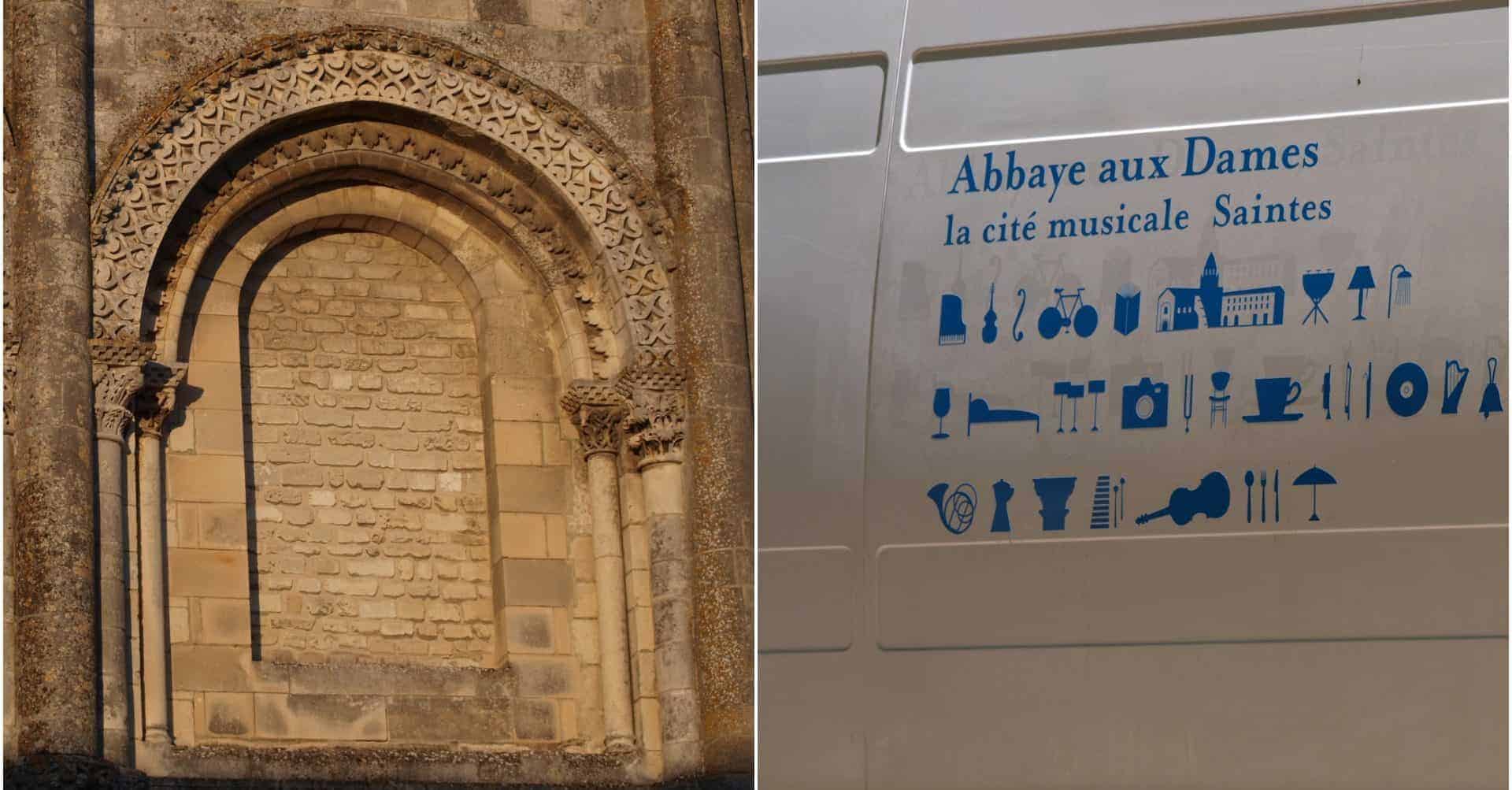
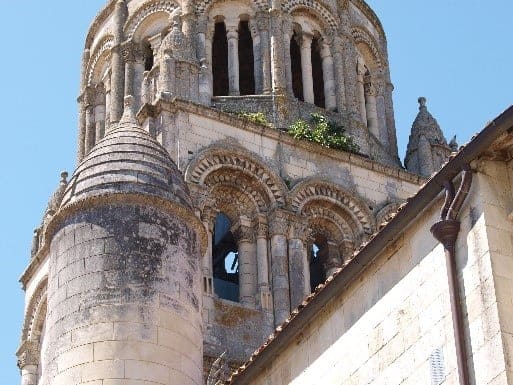
 Music lovers travel from all over to the Charente-Maritime in the month of March, some 100 km north of Bordeaux, to personally reserve their concert tickets and choose the best seats. For this, people even spend the night in sleeping bags in the inner courtyard of the abbey. A loyal festival visitor from East Flanders had already obtained number 42 in l'Abboutique at 6 o'clock in the morning.
As in the early period, the festival has its 'musical friends'. Usual suspects from our country include Huelgas Ensemble, Graindelavoix, Vox Luminis, Oxalys, Het Collectief and of course founding father of the festival Philippe Herreweghe with his Orchestre des Champs-Elysées and/or Collegium Vocale.
Unique coup de coeur
Music lovers travel from all over to the Charente-Maritime in the month of March, some 100 km north of Bordeaux, to personally reserve their concert tickets and choose the best seats. For this, people even spend the night in sleeping bags in the inner courtyard of the abbey. A loyal festival visitor from East Flanders had already obtained number 42 in l'Abboutique at 6 o'clock in the morning.
As in the early period, the festival has its 'musical friends'. Usual suspects from our country include Huelgas Ensemble, Graindelavoix, Vox Luminis, Oxalys, Het Collectief and of course founding father of the festival Philippe Herreweghe with his Orchestre des Champs-Elysées and/or Collegium Vocale.
Unique coup de coeur
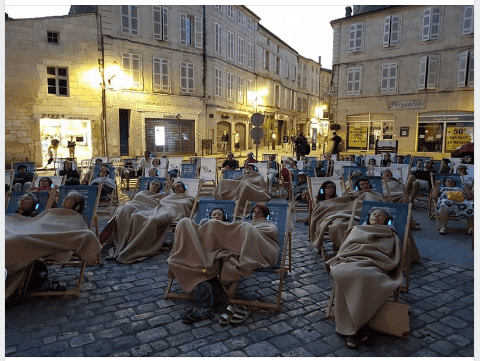 The opening concert on July 12 in the Gothic cathedral Saint-Pierre could be followed outside via headphones. Whoever sent in the most original photo of this happening had a chance to win free concert tickets. Le Concert Spirituel and Hervé Niquet built a staged program around an eight-choir mass by Orazio Benevolo (1605-1672). Unfortunately I missed this monumental concert. It must have been quite impressive, époustouflant. Fortunately, the Missa si Deus pro nobis can still be heard on March 16, 2020 at BOZAR during the Klara Festival. My coup de coeur of this festival edition is the unique production of Mahler's Das Lied von der Erde by Het Collectief under the direction of Reinbert de Leeuw and with vocal soloists Lucile Richardot and Yves Saelens.
Mahler bouleversant Gérard Pangon in Musikzen At the Saintes festival, Mahler brings joy to music lovers Thierry Collard in Sud-Ouest The Dutch maestro, whose movements and body bend under the weight of the work and the years, keeps the complex threads of polyphony solid Vojin Jaglicic in Ôlyrix
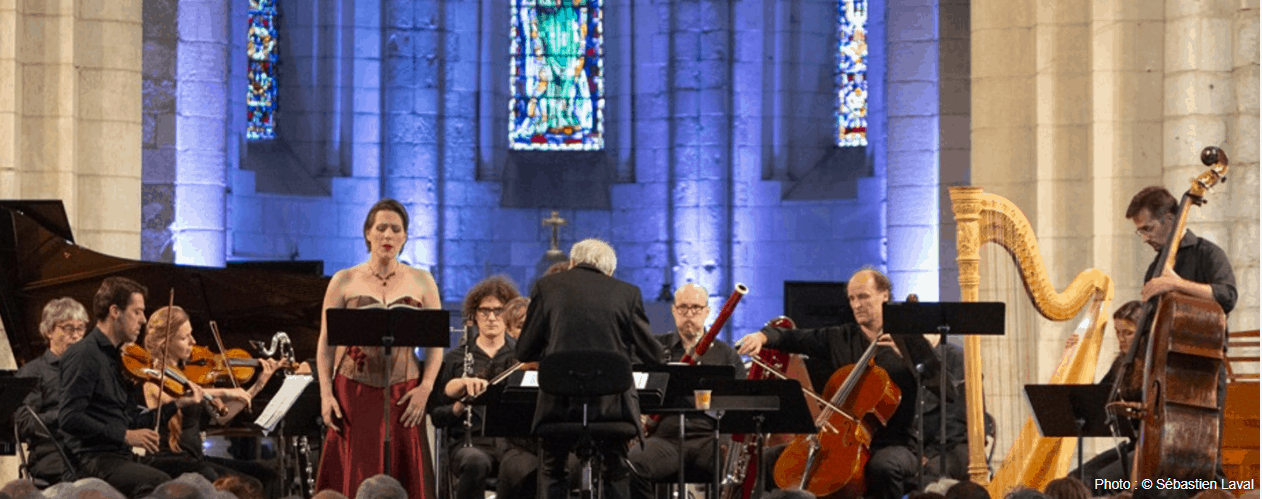
Mahler nor Schönberg ever heard their own score of Das Lied von der Erde. That cannot be said of Reinbert de Leeuw, who conducted his own arrangement for chamber music ensemble in Saintes with verve. He wrote it in 2011 for the Asko-Schönberg ensemble as part of the Rotterdam Opera Days. It is regrettable that both the programme booklet and the French music press insist that the Schönberg version was performed in Saintes, especially since we know that de Leeuw is not at all fond of the 'reduction' that Schönberg began in 1921 and that Rainer Riehn completed in 1983. The now elderly and frail conductor takes the stage in Saintes to immediately lead a 15-member army of soloists with a strong hand. Whaam – what a grand sound bursts forth here, what dynamics. With your eyes closed, you sometimes think you hear an orchestra at full strength. Many of them came from the Rotterdam Philharmonic Orchestra for the occasion to bring Het Collectief à géométrie variable to the required size. Das Lied is a song cycle for tenor and mezzo-soprano: two voices that never touch each other. One fades as the other leaves the stage, each in his universe. Since his first collaboration with de Leeuw at the Rotterdam Opera Days, Yves Saelens sees these two voices as an example of yin and yang, man and woman: the complement of two complementary opposites that question each other, perhaps do not even understand each other, but still try to come together. In the poetry that Mahler selected, Saelens also sees that strange, Eastern element: attractive, moving, profound, dissolute, life-loving, hushed, letting go … Everything in one. Woman with two voices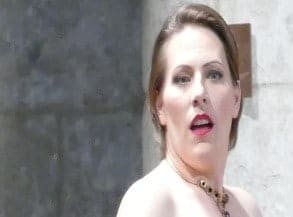 At the production in Saintes, the voices also literally came from another world. Stephan Maciejewski, the artistic director of the festival who took over the concert programming from Herreweghe as early as 1996, took a gamble. He invited someone from the Baroque genre: the French Lucile Richardot. You may know her, among other things, from the recording Perpetual Night that she made with ensemble Correspondances. She would never have accepted Mahler's original Lied von der Erde, says Richardot, but a version for chamber music seemed acceptable to her. Richardot is the woman with two voices: crystal clear, almost sharp in the high register only to switch in one and the same sentence to a warm, round sound that embraces you. Yes, some will see this as a technical flaw. I found it rather fascinating. And with what ease and how modestly does she sing this unfamiliar repertoire for her.
Yves Saelens has a lifelong bond with Das Lied. In 1998 he already sang the Schönberg/Riehn version at a festival in Tours. And in 2011 he sang together with Birgit Remmert the transcription by Reinbert de Leeuw, a semi-staged performance that was later heard, among other places, at the Klara Festival 2012. As a heroic tenor, Yves Saelens throws himself into Das Trinklied vom Jammer der Erde here in Saintes. He raises his glass, opening up everything, the great primal scream of life. Even without a libretto, you believe what he tells. Unfortunately, it is regrettable that his voice, especially in the first and third song, somewhat faded into the collectivity, which was not the case with Richardot. Admittedly, the mezzo sings mainly during the softer orchestral passages, while the tenor often has to struggle against heavy fortes. Is the acoustics of L'Abbaye not suitable for this repertoire? Do those 15 soloists play so convincingly that they pour their souls out and become disproportionately large? Or has de Leeuw not watched the balance carefully in his enthusiasm? By the way, in other concerts at L'Abbatiale in Saintes we also heard singers who did not rise above the instruments, such as at Gli Angeli under the direction of Stephan MacLeod to name but one.
The grand and the intimate
At the production in Saintes, the voices also literally came from another world. Stephan Maciejewski, the artistic director of the festival who took over the concert programming from Herreweghe as early as 1996, took a gamble. He invited someone from the Baroque genre: the French Lucile Richardot. You may know her, among other things, from the recording Perpetual Night that she made with ensemble Correspondances. She would never have accepted Mahler's original Lied von der Erde, says Richardot, but a version for chamber music seemed acceptable to her. Richardot is the woman with two voices: crystal clear, almost sharp in the high register only to switch in one and the same sentence to a warm, round sound that embraces you. Yes, some will see this as a technical flaw. I found it rather fascinating. And with what ease and how modestly does she sing this unfamiliar repertoire for her.
Yves Saelens has a lifelong bond with Das Lied. In 1998 he already sang the Schönberg/Riehn version at a festival in Tours. And in 2011 he sang together with Birgit Remmert the transcription by Reinbert de Leeuw, a semi-staged performance that was later heard, among other places, at the Klara Festival 2012. As a heroic tenor, Yves Saelens throws himself into Das Trinklied vom Jammer der Erde here in Saintes. He raises his glass, opening up everything, the great primal scream of life. Even without a libretto, you believe what he tells. Unfortunately, it is regrettable that his voice, especially in the first and third song, somewhat faded into the collectivity, which was not the case with Richardot. Admittedly, the mezzo sings mainly during the softer orchestral passages, while the tenor often has to struggle against heavy fortes. Is the acoustics of L'Abbaye not suitable for this repertoire? Do those 15 soloists play so convincingly that they pour their souls out and become disproportionately large? Or has de Leeuw not watched the balance carefully in his enthusiasm? By the way, in other concerts at L'Abbatiale in Saintes we also heard singers who did not rise above the instruments, such as at Gli Angeli under the direction of Stephan MacLeod to name but one.
The grand and the intimate
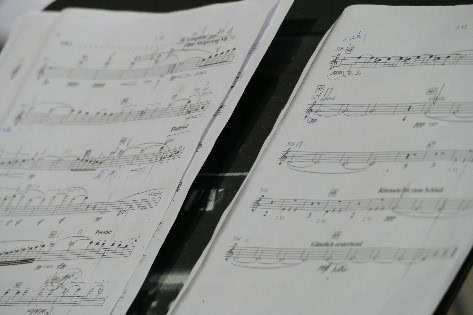 Unlike the Schönberg/Riehn version, Reinbert de Leeuw provided a harp and the piano only has to take over one harp part – Mahler writes two for it. Dunkel ist das Leben sounds lighter and more bearable with harp accompaniment. Instead of one, de Leeuw uses two clarinets. The contrabassoon is also striking, which delightfully mingles with other instruments such as the gong and the cello which together make the death bells ring. Or are they rather whiplashes that follow you: come on, do something, because life is short. Where Schönberg omits the celesta (to save money?) Reinbert de Leeuw, just as in the symphonic original in Der Abschied, chooses a celesta that engages in intimate dialogue with the harp. Unmoved, in the best sense of the word, Lucile Richardot is the high priestess who speaks the words Ewig … ewig to her listeners.
Ich wandle nach der Heimat, meiner Stätte Ich werde niemals in die Ferne schweifen Still ist mein Herz und harret seiner Stunde!
Since the closed concerts of the Vienna Verein für musikalische Privataufführungen that Schönberg founded in 1918, symphonic works have been performed in pocket format. The fact that they cost the organizer less is a bonus. Whether they constitute an amputation of the original is a matter for discussion. With Das Lied by de Leeuw, we were able to hear once again that a chamber music version tells exactly the same story as its great predecessor from 1909. Only the musical lines and the text become clearer, the details much more audible, the color palette more refined, all bombast – for those who haven't taken to it – disappears, and the end result is simply much more poetic. As pianist and artistic director of Het Collectief Thomas Dieltjens says, this version of de Leeuw brings together the best of two worlds: the grand and the intimate. However dark life may be, after this concert I felt reasonably reconciled with the eternal circle of Life and Death. After such an intense concert experience, you especially want to remain silent. The fireworks and traditional ball of the Quatorze Juillet were not for me. Let's hope this production will be heard in our region again. Gallia Théâtre is the cinema in Saintes that shows quality films. During the festival, you can go there for films that have a direct link with the concert program. This summer, it showed, among others, La tourneuse de pages by Denis Dercourt, the Mahler documentary Autopsy of a genius by Andy Sommer, and the cult film Mahler by Ken Russell from 1974 with Robert Powell in the role of the composer. Meanwhile, the exhibition Mahler, mon temps viendra… runs in the chapter hall of the abbey.
In March, the program of the Festival of Saintes 2020 will be announced. In the second part of this report, you will soon read more about this festival, which brings together the best of two worlds: vacation and culture.
Gallia Théâtre is the cinema in Saintes that shows quality films. During the festival, you can go there for films that have a direct link with the concert program. This summer, it showed, among others, La tourneuse de pages by Denis Dercourt, the Mahler documentary Autopsy of a genius by Andy Sommer, and the cult film Mahler by Ken Russell from 1974 with Robert Powell in the role of the composer. Meanwhile, the exhibition Mahler, mon temps viendra… runs in the chapter hall of the abbey.
In March, the program of the Festival of Saintes 2020 will be announced. In the second part of this report, you will soon read more about this festival, which brings together the best of two worlds: vacation and culture.
- WHAT: concert review from the Festival of Saintes 2019. Part 1.
- WHO: Het Collectief conducted by Reinbert de Leeuw || Gustav Mahler (1860-1911) – Das Lied von der Erde
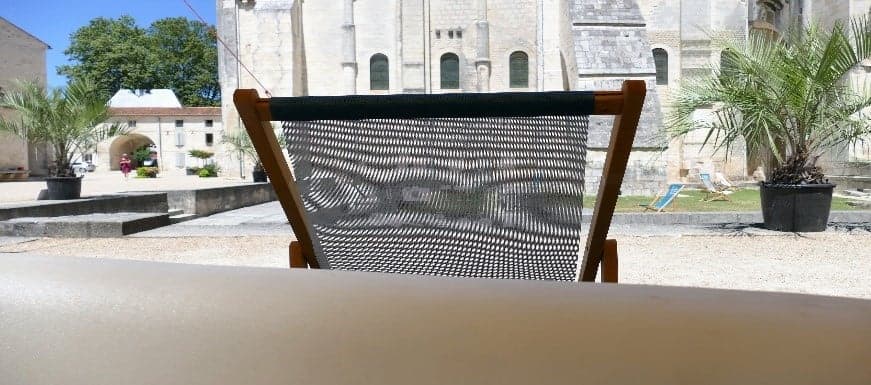
- WHERE: L'Abbatiale, Saintes, France
- WHEN: Sunday 14 July 2019
- PHOTOS: © Sébastien Laval | Johan Vandenbosch
- CONCERT TIPS:
- On 26 November 2019 (20:00), Lucile Richardot can be heard at the Fondation Axel Vervoort in Wijnegem in the program Perpetual Nights with ensemble Correspondances conducted by Sébastien Daucé.
- Yves Saelens performs with Oxalys in the program The Curlew, British chamber music by, among others, Vaughan Williams, Warlock and Dove on 3 October 2019 (20:30) in the Grote Aula Maria Theresia in Leuven. In February 2020, he sings in the Da Ponte trilogy by Mozart at De Munt in Brussels.