
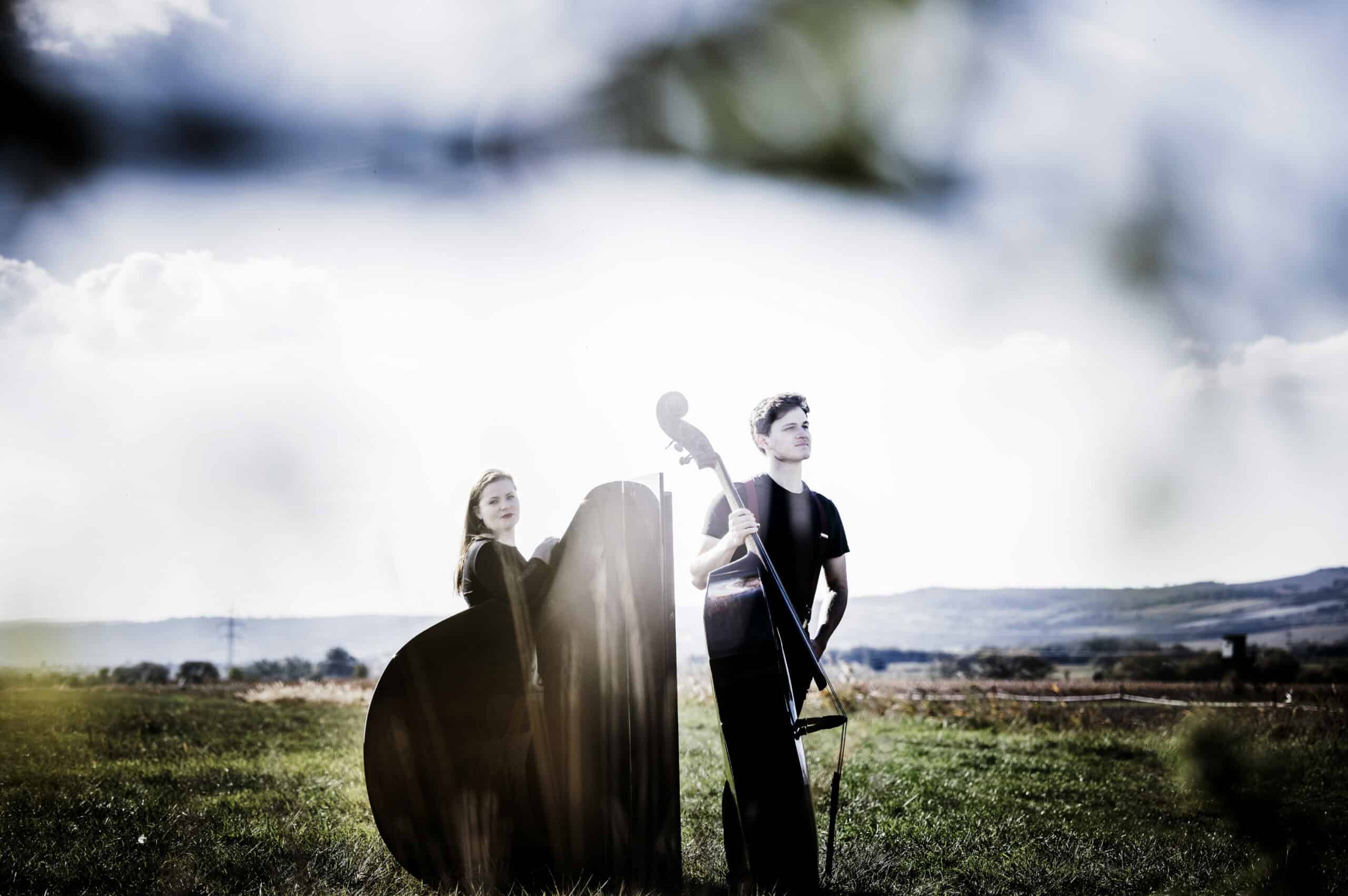
Vienna-based musician Dominik Wagner surprises with a cd entirely devoted to the giant among string instruments – the double bass. Together with pianist Lauma Skride, he presents a selection of 14 compelling pieces, ranging from Schubert and Ravel, via Fauré and Boulanger to Richter, Glass and, yes, Charles Chaplin.
In the symphony orchestra, the double bass is the largest string instrument with the lowest register. The history of the double bass is two-sided: on one hand it is part of the violin family, but on the other hand also of the viola da gamba. An additional complication is that the bass is not standardized; there are versions with 3, 4 (customary) and 5 strings. The double bass is particularly known for its rhythmic and harmonic role in the symphony orchestra. The lowness of the register means that all other instruments inhabit the higher regions. For a rich and warm orchestral sound, you need to look to the double bass.
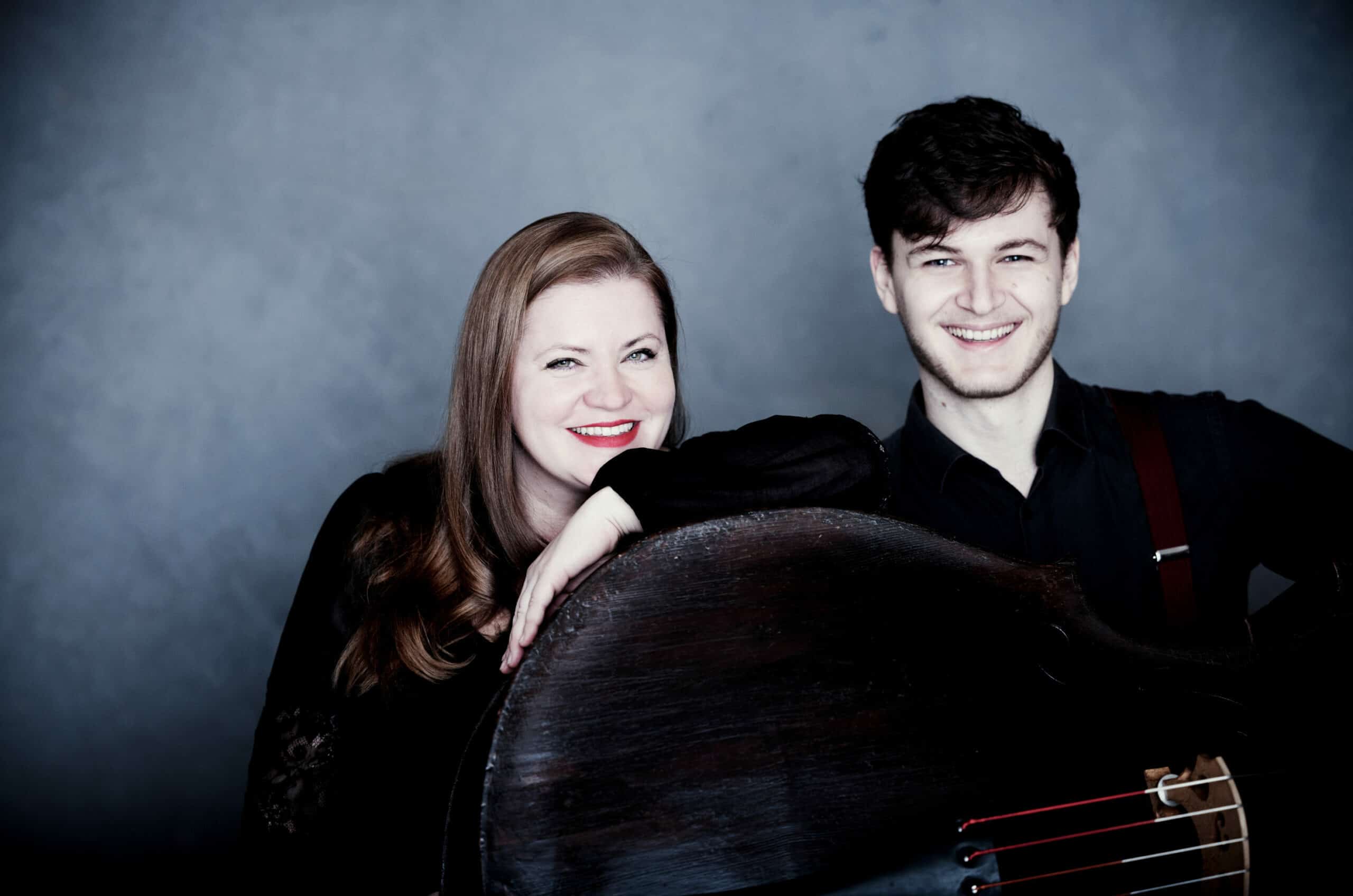
Wagner and Skride have recorded an arrangement by double bassist and composer Peteris Vasks of his Andante Cantabile. It originally comes from his second cello concerto, but is now allowed to take on a life of its own. Wagner's interpretation opens up a world of lyricism. After a mournful introduction, the singing voice comes fully into its own in the higher registers, after which through a robust piano solo the long closing motif is carefully laid down.
From minimalist composer Max Richter, who characteristically keeps his distance from well-trodden classical orchestrations and thereby creates a convenient kind of tension, the piece Mercy (2010) has been chosen. It is a plea for compassion and forgiveness, something that is also welcome in these times. Mercy unfolds into a drawn-out arpeggio with relatively large leaps within the chords, with Wagner daring to increase the tempo. This also shows the cheerful sides of that instrument. Franz Schubert is prominently present with two compositions. In the song Du bist die Ruh, the double bass takes over the vocal line, adding a new dimension to the poetic eloquence.
The pieces that originate from art song are interesting because they mark the transition from the classical period (Mozart, Haydn, Beethoven) in which the bass served to double the cello (but an octave lower) to the 19th century when the bass was also used for individual expression. A well-known example of the emancipation of the double bass is the part in the opera Otello (4th act, in which he believes his wife is deceiving him).
For Ständchen – Reharmonized, the second piece by Schubert on the cd, Wagner brought in Berlin pianist and arranger Jarkko Riihimäki. This gives the serenade a strong dose of jazziness, which noticeably refreshes the listening experience. French composer Claude Debussy announces himself through the melancholic song Beau Soir, an interpretation with which Wagner's lyricism approaches the physicality of the cello.
American stalwart Jeff Bradetich also makes his presence felt through an arrangement of Fauré's Elégie. It was originally written for cello, but the arrangement for double bass results in a gripping tale of heartache, with much emotion and warmth. By now building the perspective from the lowest registers, the drama is convincingly set in motion. The cd concludes with some evergreens, such as Moon River by Henry Mancini and the theme from Modern Times by Charles Chaplin.
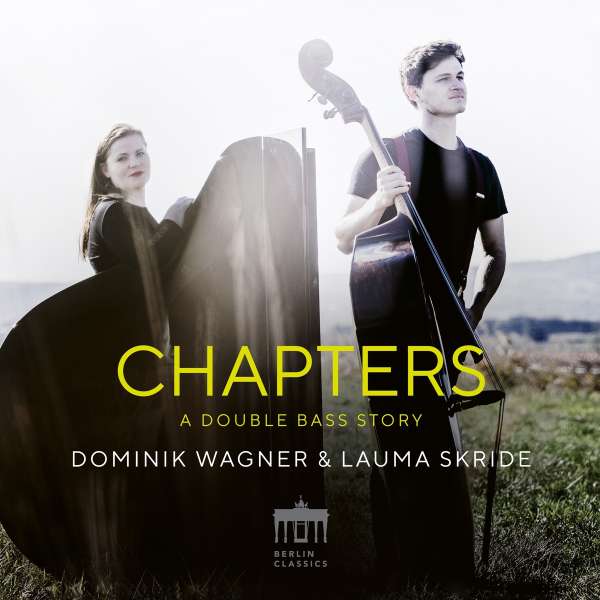
WHAT: Chapters (A Double Bass Story)
WHO: Dominik Wagner [double bass], Lauma Skride [piano]
LABEL: Berlin Classics
RELEASE: March 10, 2023
ORDER: JPC