
Ghent festivities are sometimes associated with going out, drinking and young people watching the sun rise on the Vlasmarkt in the morning. But of course there is much more. The Ghent Festivities, that is Europe's biggest cultural festival, with many free performances. The Ghent festivities are not only for young people, there is also an older audience that keeps growing older and larger. That audience likes to go to classical concerts, I notice from the massive turnout in the Sint-Michiels or Sint-Jacobskerk.
Wonder
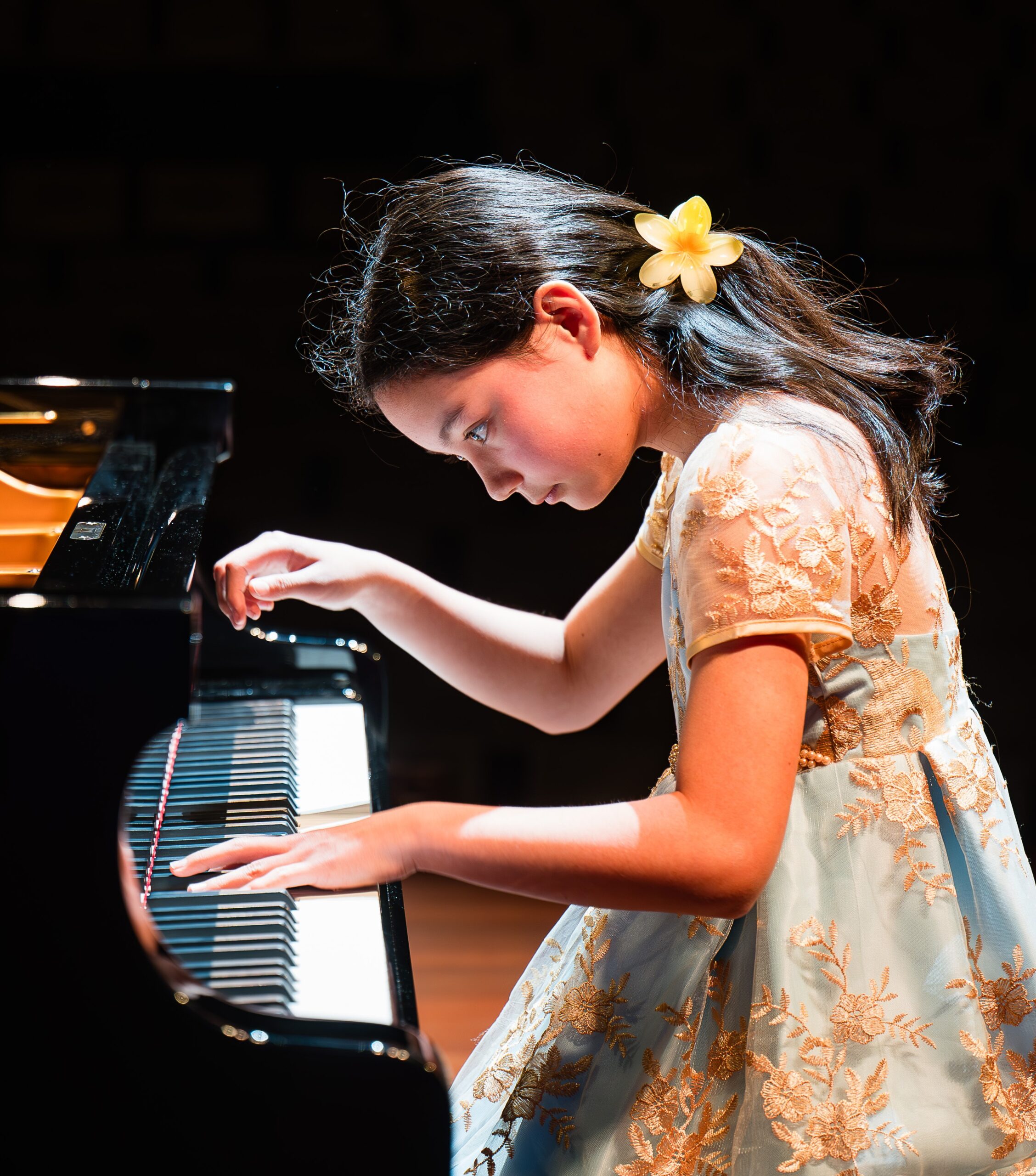 My report of ten classical concerts at the Ghent Festivities begins immediately with a wonder. Akari Bastiaens plays like an accomplished pianist. The speaker introduces her as being thirteen years old. He means "only thirteen". But actually you should say "already thirteen", because Akari Bastiaens has already come a long way since she started piano when she was not yet four years old. She was also here in the Sint-Jacobskerk last year and was even seen on the VTM news. A child prodigy.
She plays Chopin, Schumann, Liszt with ease and grace, as if it flows from her hands. Her goal: to win the Elisabeth Competition. Why not. She already plays like a mature musician. Moreover, she is well guided by her parents, also musicians, her Dutch father and Japanese mother. "Girls of thirteen", Paul Van Vliet once sang, "they don't know what they should do at all". Akari Bastiaens is an exception to the rule. The only downside of this recital has nothing to do with Akari, but with the acoustics in the church. At the back the notes completely blend together.
Klarifest
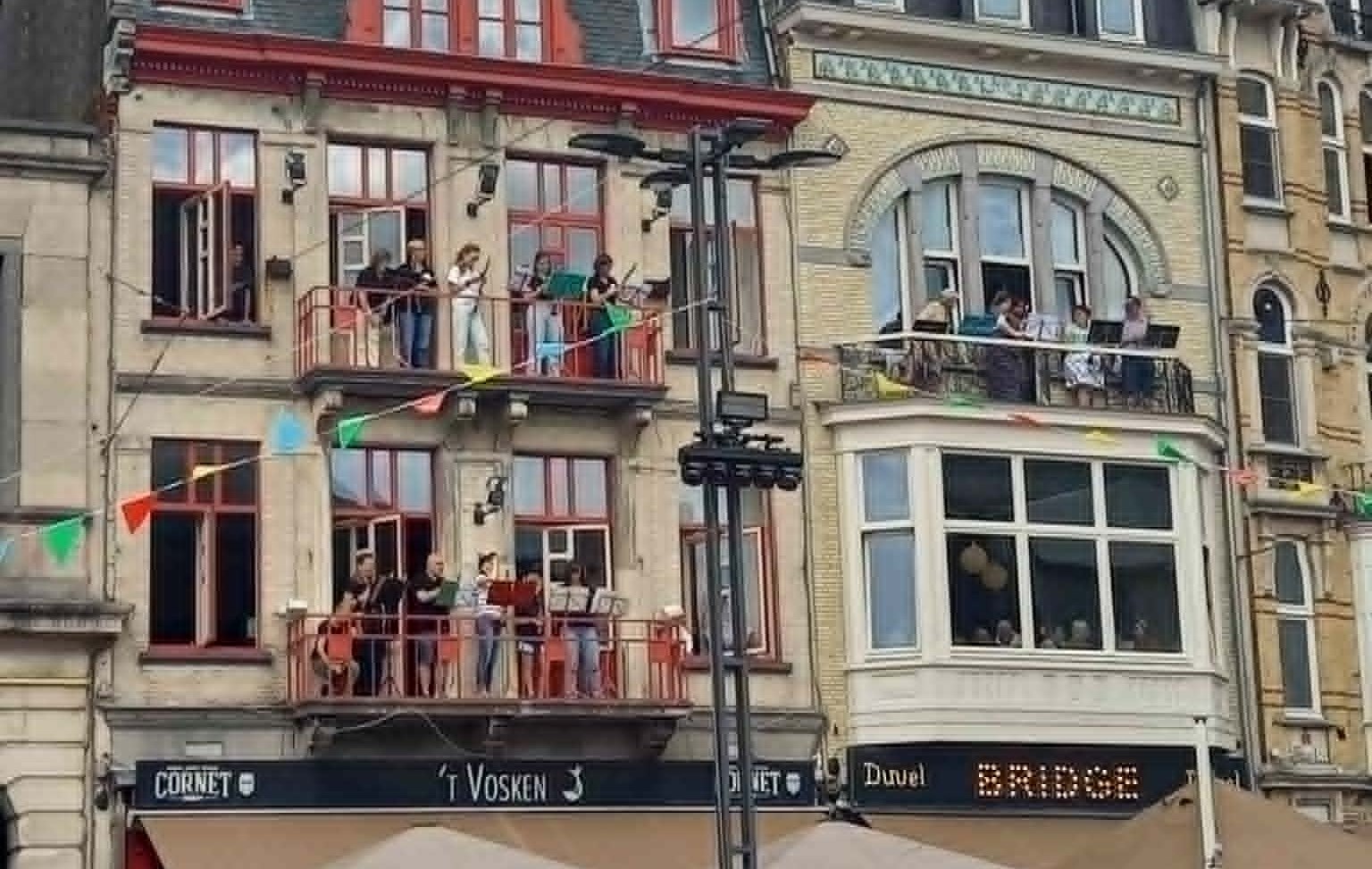 Last year it was saxophones, this year there is the clarinet festival on Sint-Baafsplein. Klarifest! On the large stage sits an ensemble with only clarinets. Opposite on a construction on the side of the cloth hall sits about ten more clarinetists. But that's not all. When you look around I see more and more, on all the terraces and balconies around the square they sit. Six hundred clarinets!
Well-known clarinet melodies are played, such as Rhapsody in Blue or Peter and the Wolf. There is an ode to famous Flemish clarinetists such as Walter Boeykens or Freddy Arteel. Classics, these are also Ghent classics: The Kite by Walter De Buck and of course the Ghent anthem Klokke Roeland. Everyone sings along. What a party, what a wonderful instrument!
Shapovalov
Just like last year, there is a recital every day in the rooms of the piano shop Quatre Mains, organized by the association Shapovalov. The association was founded last year by four dedicated young musicians, as an extension of the Shapovalov Sessions in the foyer of the former concert hall De Rode Pomp in Ghent. The brothers Taha and Yassine Posman (piano and clarinet), Jacob Van Durme (cello) and Renaat De Keyser (piano) are the driving force behind the association. They are the core, which can be expanded. There have even been symphonic concerts with the Shapovalov orchestra.
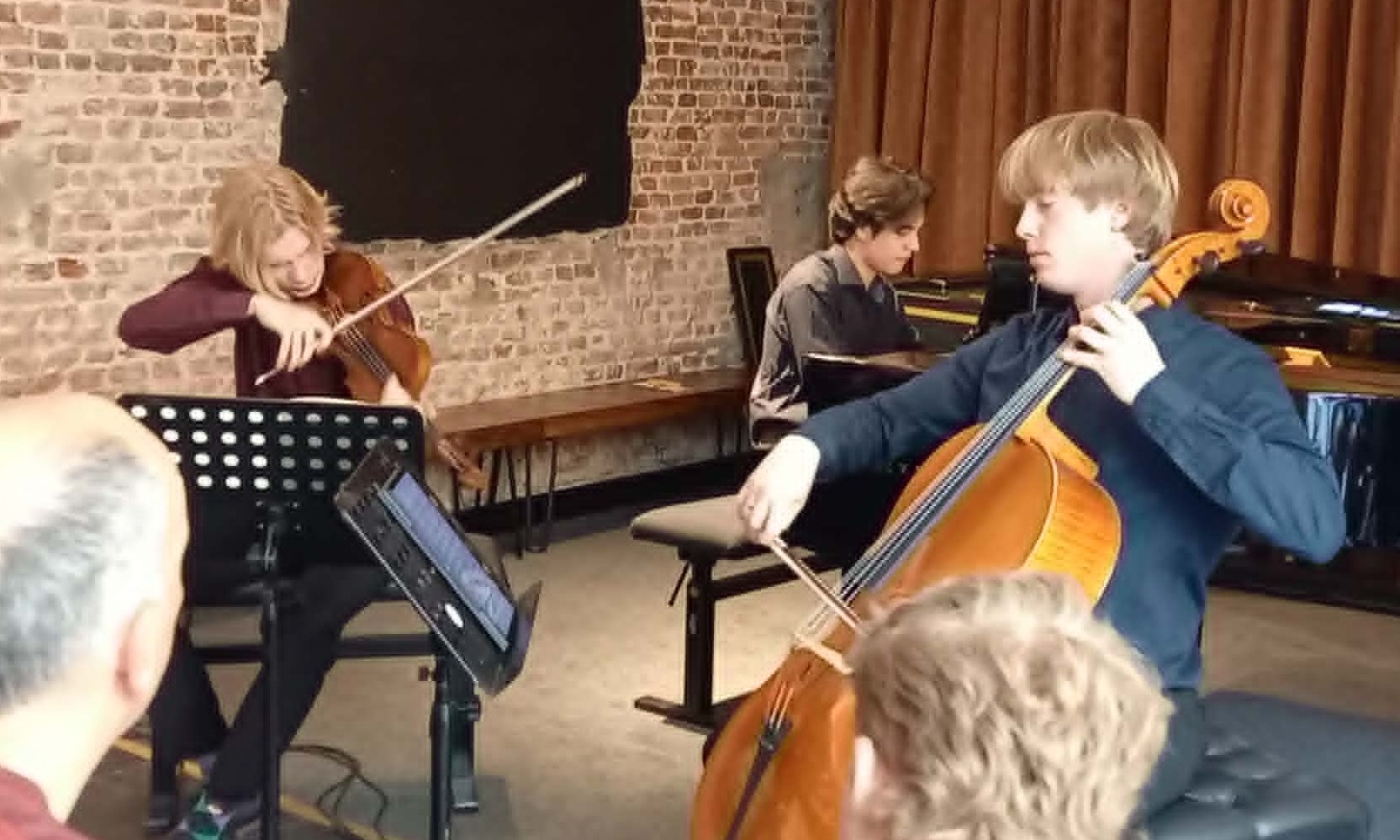 The small hall of Quatre Mains is excellent for intimate chamber music concerts. Free, but "come on time, because when it's full it's full", the announcement says. The audience sits close together, the front row stares at the hands, fingers and strings. Pianist Steven Kleeven, violinist Quintijn Van Heek and Jacob Van Durme together form the Duo Dea. They have known each other for years, but have only formed a piano trio since last year and won the audience prize at the Supernova competition for young talent earlier this year. Here they play Brahms' first piano trio and Rachmaninov's second. With full conviction and romantic glow.
The next day pianist Taha Posman invites French cellist Noé Drdak. Drdak has already won quite a few prizes and continues his studies at the Haute Ecole de Musique in Lausanne. The second sonata for cello and piano by George Enescu is an extensive, improvisatory work that is rarely performed. As a contrast, this is followed by a cello sonata by Dmitri Shostakovitch. Impressively performed. Beautiful organization. Chapeau Shapovalov!
Harmonica
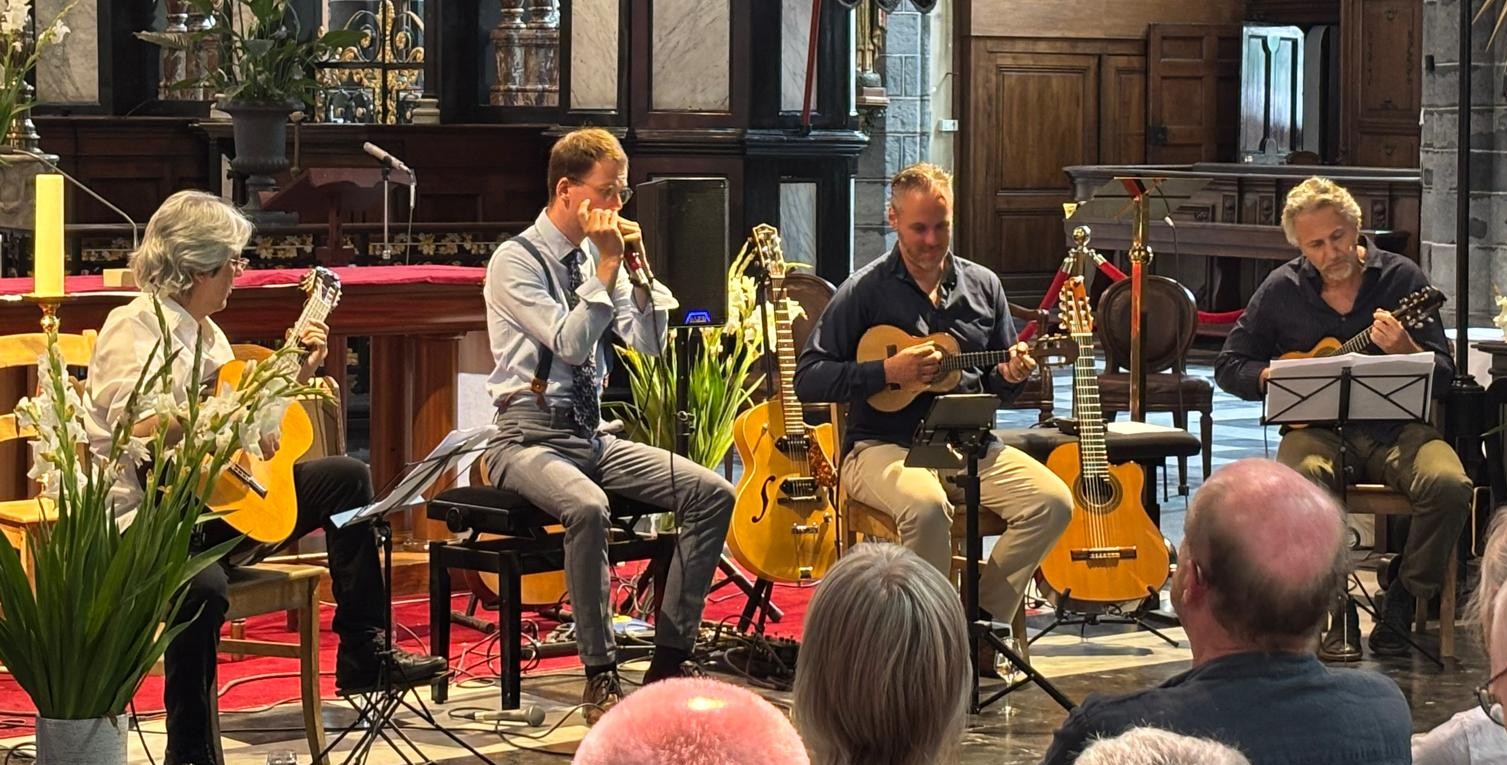 On the seventh day I'm back in Sint-Jacobskerk for a special concert by Duo Gaitar. That's Rutger Mathys on harmonica and Marijn van der Linden, guitars. An instrument like harmonica may sound more banal than a violin or a piano, but think of our Belgian pride Toots Thielemans. I have that Toots sound in my head all the time, a often melancholic, then again piercing sound, that wraps around the entire church. They play both original compositions and jazzy arrangements of classical pieces, e.g. Claire de lune by Debussy.
Unlike Akari Bastiaens' piano recital, the harmonica is perfect for this church. Masterful and above all moving. Rutger grabs you with his simple harmonica by the throat.
In the second part we go to Brazil. Rutger has been to Brazil several times, performed there and apparently lost his heart there. Slow, sad pieces (Saudade) alternated with bossa nova and samba rhythms. A few friends from Brazil join him on stage. Towards the end we get a big Brazilian party.
Organ
The Sint-Niklaaskerk in Ghent is known in organ circles for the great romantic Cavallé-Coll organ, which has been under restoration for many years. Organist Samuel Schalckens sits high above the audience at the other organ, a Flentrop organ from 1973. The program even describes all parts of the organ in detail, as in a car manual.
Schalckens plays baroque organ music by Vincent Lübeck, Pedro de Araujo and of course by Bach. A short concert, because before that another organist has already played six baroque works on this beautiful Flentrop organ.
There is more organ, but then in part two of Classical at the Ghent Festivities...