
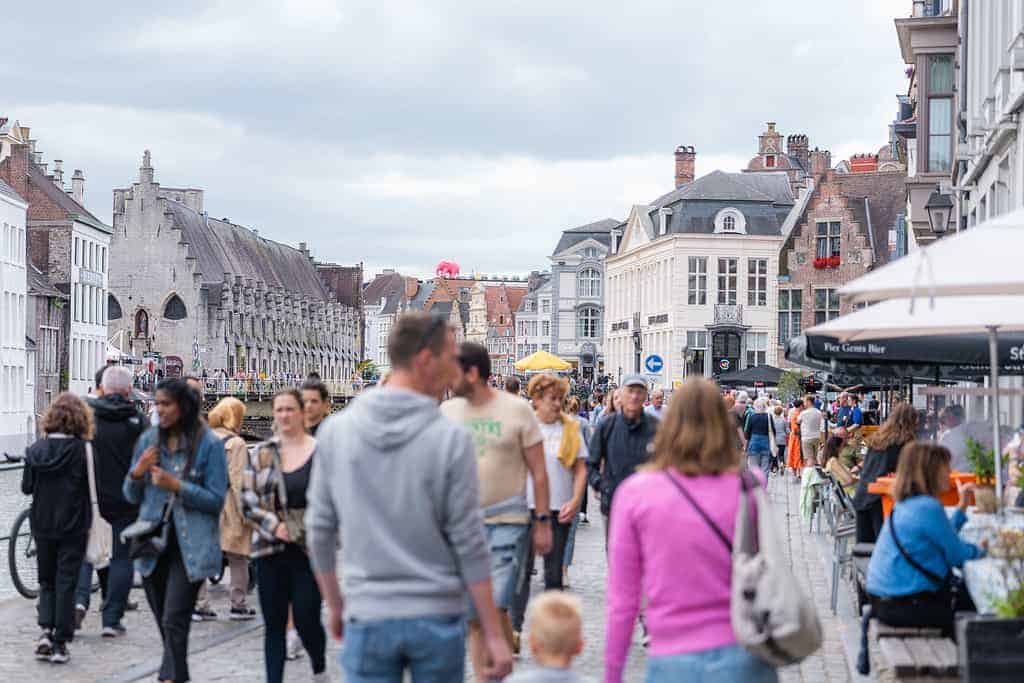
From July 14 to 23, the Genste Feesten took place again. One of the largest folk festivals and multi-day cultural festivals in all of Europe. Ten days of culture in the city, with both paid and free performances. Well-known names in cultural venues and on the squares, alongside street musicians who often surprise passersby. Among the hundreds of events there is also quite a bit of classical music. I attended around ten concerts, recitals and street performances. An impression of some instrumental concerts and recitals.
Violist BezverkhnI in the hall and on the street.
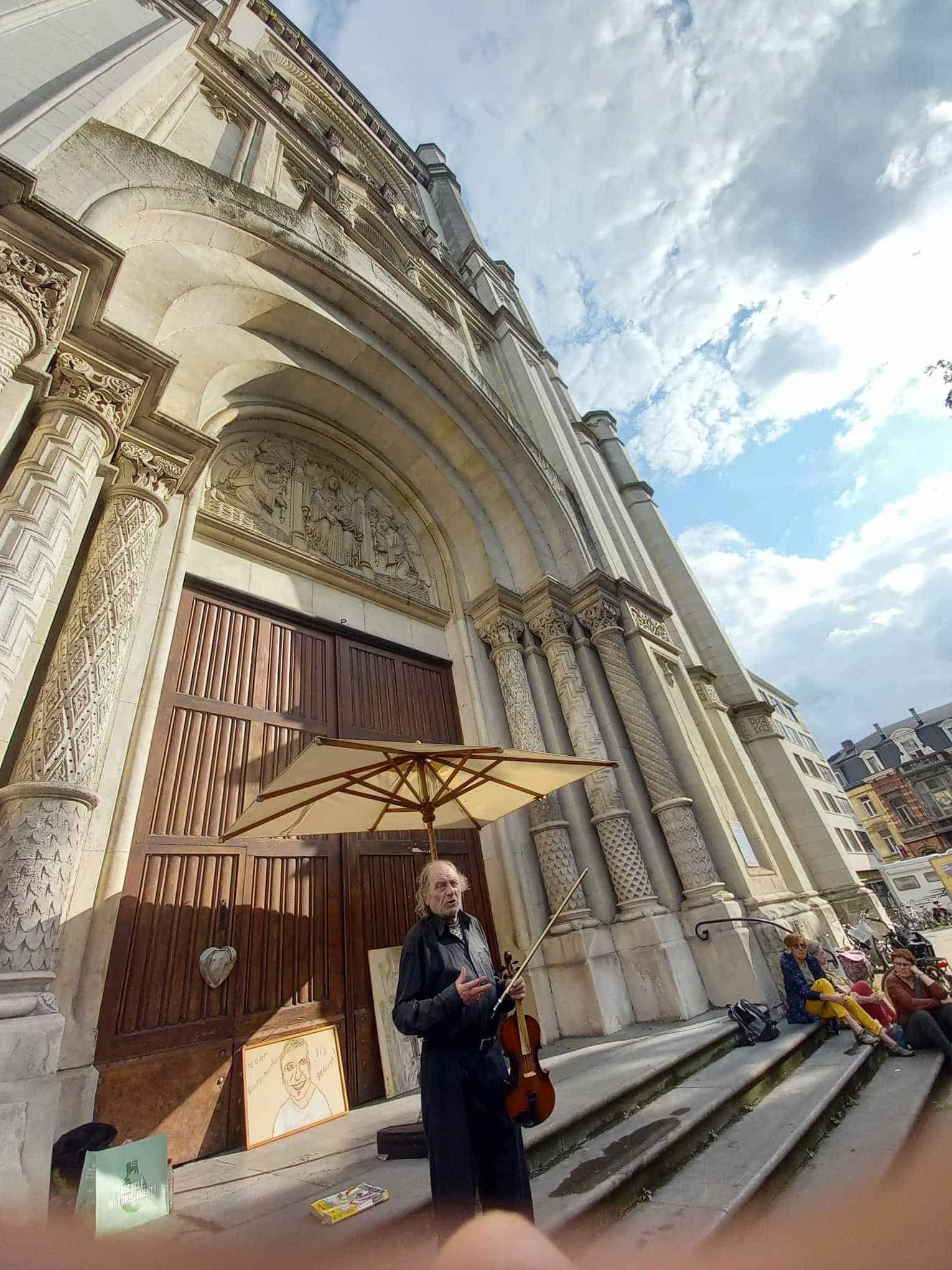 Mikhail BezverkhnI is a phenomenon in Ghent. In 1976, the Russian violinist won the Elisabeth Competition, and after the fall of communism he came to our city and became a professor at the conservatory. After his retirement, he felt liberated enough to become a street musician. Without hesitation, the Elisabeth Prize winner plays on corners and squares of the city. In recent years he came into view during the protest against the sale of Ghent's Sint-Annakerk. On July 19, Bezverkhni performed a recital in the small theater hall of Tinnen Pot theater, together with Dutch violinist Jeroen de Groot. The bonbonnière is a small room for about sixty listeners. Mikhail takes the stage without his violin, as he first wants to welcome the audience and explain the concept: a duel.
In the duel, the two violinists take turns playing solo works by Bach, Ysaÿe and Paganini. De Groot opens with a monument, the Chaconne from the second partita for solo violin by Johann Sebastian Bach. Mikhail continues with two movements from the fourth partita. Following this principle, they take turns playing further solo works by Ysaÿe and Paganini, and the audience can compare, as this was also organized in the eighteenth and nineteenth centuries between great virtuosos. Beethoven and Mozart dueled in this way with their competitors without weapons and bloodshed.
Extremely difficult work by Ysaÿe in a dry acoustic, but they handle it well. Some may note that Mikhail has had his best days, but you still hear structure in his playing; in both Bach, Ysaÿe and Paganini there is an idea behind his mature playing. At 76 years old, there is of course some wear and tear, but that was also the case with a master like Yehudi Menuhin. So we can forgive him the impurities in intonation and bow technique.
Protesting with the violin
The next day I find BezverkhnI back at his familiar spot, in front of the gate of Sint-Annakerk. Against the background of cars driving by, motorcycles and buses, he sits like a kind of meditating monk playing, undisturbed by all the background noise. The most impressive is the famous aria from the St. Matthew Passion, a prayer for the lost cause of Sint-Anna, as it has been sold and a Delhaize is coming.
Twice he sits in front of St. Anna Church, surrounded and supported by a crowd of fans. A troupe of bohemians who also support the bohemian Bezverkhni in his fight against the sale of the church. Some long-haired barefoot music lovers. In one of them I see no long toes, but extremely long toenails that no longer fit in shoes. Let those hairs grow, those toenails, that love for the cause of St. Anna Church and the phenomenon Mikhail Bezverkhni!
Living room concert
Concerts in theaters or churches, performances in open air and also recitals in a living room. The Klinkende Dok, "classical piano music at the new docks", is an initiative in a beautiful spacious apartment with a living room where around sixty listeners can sit, next to the old Steinway. Thomas Eeckhout is the son of the house; he plays Schubert, Debussy and Grieg. Still in his early thirties, he already has great maturity. After his teacher Levente Kende in Antwerp, he headed towards the Guild Hall in London where he obtained a Master's in piano accompaniment. It testifies to the modesty of the young man. Because in the simple Moments Musicaux by Schubert you have to come from a good house to find the right balance and cadence. Sometimes it is said that only old, mature pianists can play this. Initially skeptical about a young somewhat shy man at the piano, after ten minutes he captivated me, along with the other listeners in the large living room at the docks. During the break we were invited for a glass on the terrace, with a beautiful view of the towers of Ghent. Then continuing with the same intimate spirit with some lyrical pieces by Grieg. Pianist Thomas Eeckhout, a name to remember.
The OKRA senior orchestra
The OKRA Promenade Orchestra is a colorful mix of 55-plus year-olds with too many brass players compared to a handful of strings. They performed on July 19 in the series of musical interludes in Sint-Michielskerk. Free concerts that often result in a packed church. Just as seniors line up at the supermarket door five minutes before opening time, so not only the audience but also the orchestra are ready to play when I enter the church ten minutes early. A potpourri of classical evergreens such as Grieg's Morning Mood combined with chansons such as "Non, je ne regrette rien". The joy of playing radiates from it. The strings are in the minority, which makes it more of a harmony than a symphony orchestra. Conductor Hans Moreels does more than conduct. As a witty entertainer, he addresses the audience and turns around to elicit applause for the Radetzky March from the public. Not a silver, but a golden generation when you see the seniors so enthusiastically engaged.
The Ghent Baroque Players
The beguinage Ter Hooien is a true oasis in the city. In the beguinage church, the Ghent Baroque Players perform their program twice on July 20, in the afternoon and in the evening. I see several names of old acquaintances in the program booklet. An amateur ensemble, it sounds too modest when I speak to one of the musicians. Everyone plays here voluntarily, because the proceeds go entirely to the non-profit organization Thope, which provides housing for vulnerable tenants. A varied program of Baroque music, from Telemann, through Purcell and Scarlatti, presented in a stylish and professional manner by a dozen musicians who wrongly call themselves amateurs. Two spinets are also prominent. Featherlight string instruments that after the concert are slid into the car of the much-praised harpsichordist Ignace Derese with a few simple moves.
The last two pieces are by the hand of the ensemble's leader, Francis Michels. Serene, somewhat mysterious music that gives an extra dimension and contrast to the entire concert. Michels was inspired by Early Medieval texts on medicinal plants by Abbot Strabo from the year 800. We heard about the healing properties of fennel and gladiolus. A healing concert in the midst of a refreshing oasis in the festive city.