
Although Belgium is a small country, in recent decades we have managed to gain international attention in the fashion world with the Six of Antwerp who broke through in the 1980s: Dirk Bikkenbergs, Ann De Meulemeester, Walter Van Beirendonck, Dries Van Noten, Dirk Van Saene and Marina Yee.
In the field of dance too, it was an inspiring and fruitful period and pieces were moved with Béjart and the Ballet of the Twentieth Century. Each generation has refreshing ideas. In his wake, even stronger innovators came forward: Anne Teresa De Keersmaeker, Jan Fabre, Wim Vandekeybus, Jan Lauwers and not least Alain Platel with les ballets C de la B. (in full 'les ballets Contemporains de la Belgique'). Each of these choreographers has a different mode of expression and yet they are connected in one way or another.
Collective
Founded in 1984, Alain Platel and his company quickly gained world fame with an eclectic, almost surrealistic mix of contemporary dance, text theater and music. Language as a lubricant to come closer to each other. To impress, but also to command respect. By training an orthopedagogue. As an educator, observing the wounded human occupied him greatly. As a director and choreographer self-taught. Entities that determined his work and methodology. This resulted in a perfect combination of feeling, heart and technique through the depth of thinking and creativity. A man who dares to look further than his own horizon, right through mists and walls. Assembling and theatricalizing fragments of reality. His oeuvre has a broad arc of tension and draws its inspiration from the great joyful, sad life, aging, death. With this he composes reality theater with a touch of poetry. It transcends superficiality and gives the audience food for thought. Over the years, the company has developed into an artistic platform for different choreographers. Through the mix of artistic visions, which constantly pollinate each other, les ballets C de la B cannot simply be brought together under one heading.
Building Bridges
Although the world is locked down by coronavirus and the entire dance scene is virtually flat, ideas continue to bubble up. Like many other cultural organizations, les ballets C de la B feels a great need to reconnect with the audience, physically distant but mentally close. How can you bridge the gap? If it is not yet possible on stage, Alain Platel, who has been its driving force for years, seeks alternative paths and anticipates the impasse with an exhibition about the history of his company. When we think of 'ballets', we immediately think of delicate and graceful dancing. As an orthopedagogue, Alain Platel became fascinated by the specific individuality of each body. He reveals the beauty in the imperfect, chooses for wooden movements, convulsions. He worded it in an interview as follows: "I do have a sense of grace, but there is something broken to it. Something that doesn't quite fit. Maybe you could call it 'clumsy graceful'." An artist who, out of personal passion with a unique visual language, a bombardment of visions, tastes and intentions, moved a stone in the immeasurable river of life. His 'artistic language' is like an extended metaphor that never loses touch with social reality.
Retrospective
To capture 35 years of work, Platel enlisted exhibition maker and curator Pierre Muylle, a well-known name in art circles. We ask him how he manages to reflect and find connections between present and past. He naturally has access to wonderful material from numerous groundbreaking productions. Everything takes place in the workspace of les ballets C de la B, a place as an association of a world in change.
Interview with curator Pierre Muylle
-As an artist, Alain Platel has broken down many barriers and taboos. Through confrontation, people gasp for breath and are deeply moved. It is quite a challenge to transpose that into an exhibition.
The invitation from les ballets came at a time when rehearsals were still possible, but there was a great absence: not being able to perform for the public. They asked themselves what can we do to restore and tighten that bond somewhat? Then they contacted me to guide them in that process and create an exhibition. Very quickly we started thinking as a group. It's truly a collective endeavor.
-Dance is fluid, emotions that take physical form. In an exhibition, the static predominates. How do you process that duality?
By searching, on the one hand, beyond the medium, for what lies beneath. Which themes or content underpins the whole. By looking for connections. On the other hand, in the way we conceived the exhibition. We really took into account not only thinking about static objects or works of art, but also, for example, incorporating live events. The encounters are so important in Alain Platel's work and form an important part of the exhibition.
-Making the space vibrate.
Literally and figuratively. There are the 'companions', those are the people who have played a role in les ballets C de la B one way or another. We invited them to meet the public in the exhibition itself and tell their unique story. Those narratives are an inherent part of the concept.
-Can you put a few names on it?
Those are people who have worked on a production as a dancer, dramaturg, musician or technician. One day you can talk to Wim Opbroeck, for example, the next day to someone else that the general public probably doesn't know because they were working behind the scenes, but that doesn't make them any less interesting. The companions change daily.
-Philosopher Patricia De Martelaere had a short life, but her message was: "Seize the day, not only when it is a rose. Also when it is a thistle." That is essentially what Alain Platel's oeuvre is about. Capturing beauty in imperfection.
That is exactly what I tried to clarify just now, searching for the motivations, the drive of Alain Platel. The relevance of themes such as: the fear and uncertainty of this age, the individual versus the collective. These are lines that will certainly also be visible in the exhibition. There is often poetry in very mundane things, but precisely because of that they are very human and universal.
-As a curator you are looking for the right balance.
For me it was a very new and pleasant challenge because it was a constant search and receiving feedback from the group. As a curator you usually work individually. Only later, through communication and some refinement here and there, do you realize an exhibition. Here it was a procreation with the group from the start. It was a special experience.
-Alain Platel works with trained actors, dancers, musicians, vocalists… but just as well with untrained people, children and adults, people from all cultures and walks of life. You connect by bringing in other artists.
Yes, I suggested all kinds of artists that I thought resonated with the work of les balles C de la B. It is interwoven in the course of the exhibition. An important part of the exhibition is also the central corridor upstairs where Alain Platel himself has made a work. It became a large collage with both drawings by famous people and artists who crossed his path, but also drawings and objects that were given to him by people who responded in that specific way to a performance. For him, each one of them is equivalent. That's why he has incorporated them all together in an installation, very impressive to see.
-What do you find the most striking about his work?
His performances have always touched me through their humanity and clemency. I was also able to look into his directing books. Ninety percent is not about dance, the stage or the lighting. All those formal aspects, but mainly about encounters with people, the many reactions to his work. His connection with the world and with many people and situations that he cares deeply about make him someone to look up to.
-People never see the same thing. Everyone anticipates from their upbringing and perceives from different standpoints and different brain impulses.
Everyone has a different baggage and backpack. The experience of a dance performance, a concert or exhibition visit is different and irreplaceable for each individual. We are now largely missing the wide range of cultural activities. People are thirsting for that oxygen for mind and heart. An individual will, as you say, never experience a cultural event in the same way as the person next to him. The experience, the captation is accompanied by many factors. Even your mood, your disposition on that day will color the experience. Also at this exhibition ''WHO WANTS TO DANCE WITH ME' everyone will interpret what they see differently. Each visit will be different anyway because different guests/companions will be present each day. From some performances of les ballets C de la B the set was completely reassembled. No performance takes place, but something special still happens. I won't give it all away! Come and see and listen.
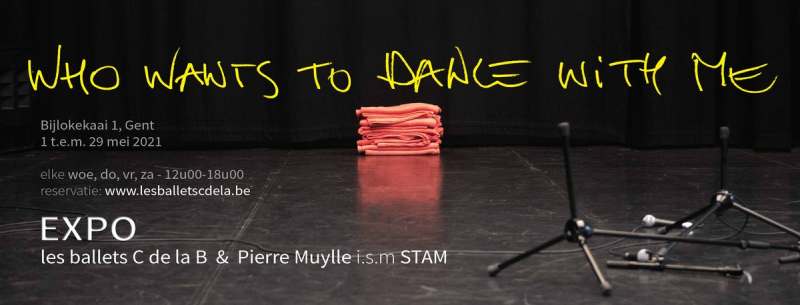
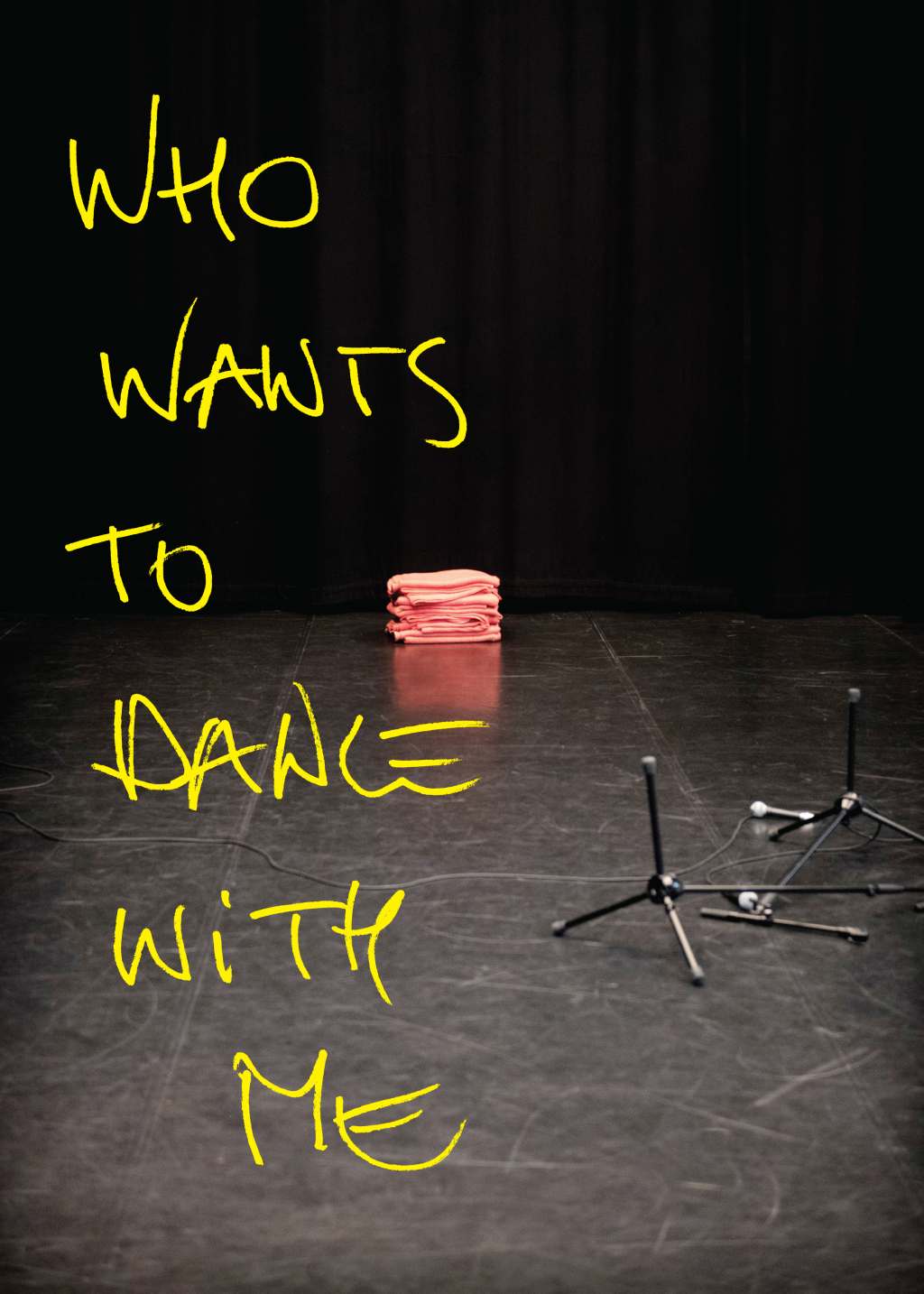
- WHAT: Exhibition les ballets C de la B 'WHO WANTS TO DANCE WITH ME' in collaboration with STAM
- INTERVIEW: Pierre Muylle
- WHERE & WHEN: Gent – from 1 to 29 May
- PHOTOS: Portrait Pierre Muylle © Sofie De Backere; artwork 'Nachtlicht' by Bendt Eyckermans © Courtesy Gallery Sofie Van de Velde; Promotional image 1 for the exhibition 'Who wants to dance with © Kurt Van der Elst; Promotional image 2 for the exhibition 'Who wants to dance with me' © Tessa Daluwein
[embed]https://vimeo.com/530706274[/embed]