
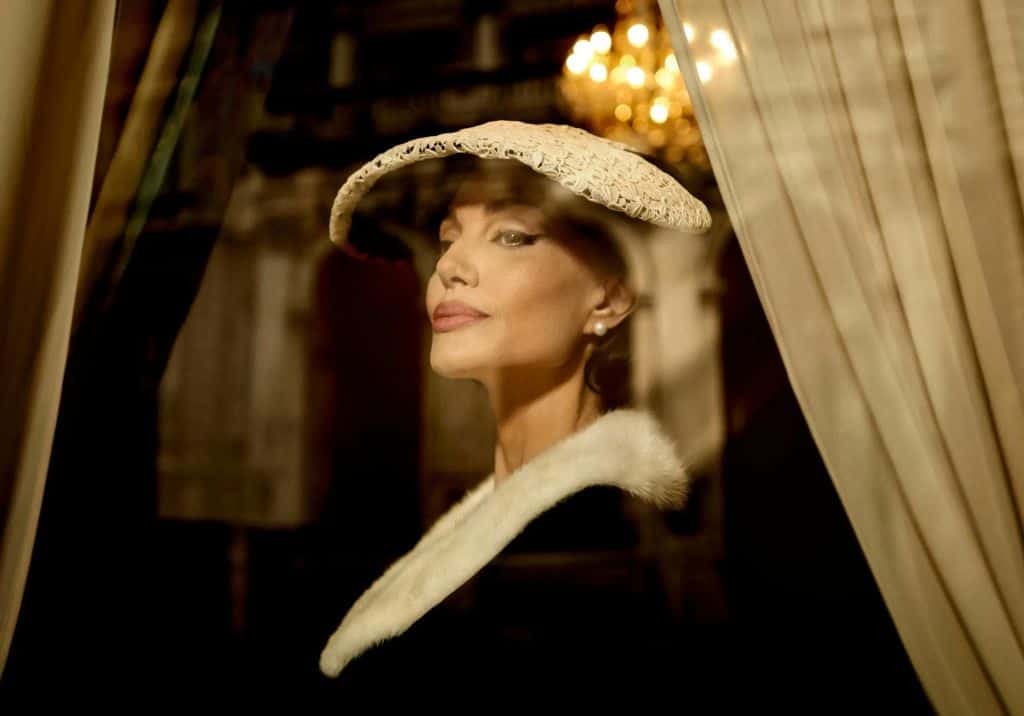
You don't reveal the plot of a film, but when it comes to the last week of someone's life, you know that their death has something to do with it. The film about Maria Callas, 'Maria' is therefore not so much about that death, but rather about how it perhaps happened so quickly…
She continues to inspire, the diva of divas, according to admirers the only true diva. She once inspired cartoonist Hergé (Tintin) who brought the opera singer Bianca Castafiore into his stories, because he couldn't stand Callas' singing. Castafiore has, just like La Callas, a butler/pianist and a maid in the stories. These two figures play an important supporting role in the film Maria, especially the butler who thereby actually plays a leading role. You can assume that especially his story fills the film, although that's somewhat of a guess as to whether that's really the case.
 The first image of the film is that of the deceased singer lying on the floor in her apartment, surrounded by emergency responders and by her maid and butler. Subsequently, the film proceeds in several acts, like acts in an opera libretto – act one, act two and so on – into phases in both her last week and memories of better times in Callas' passionate life as an artist and as a private person. Callas captures your attention through an imagined TV interview about then, now and later…
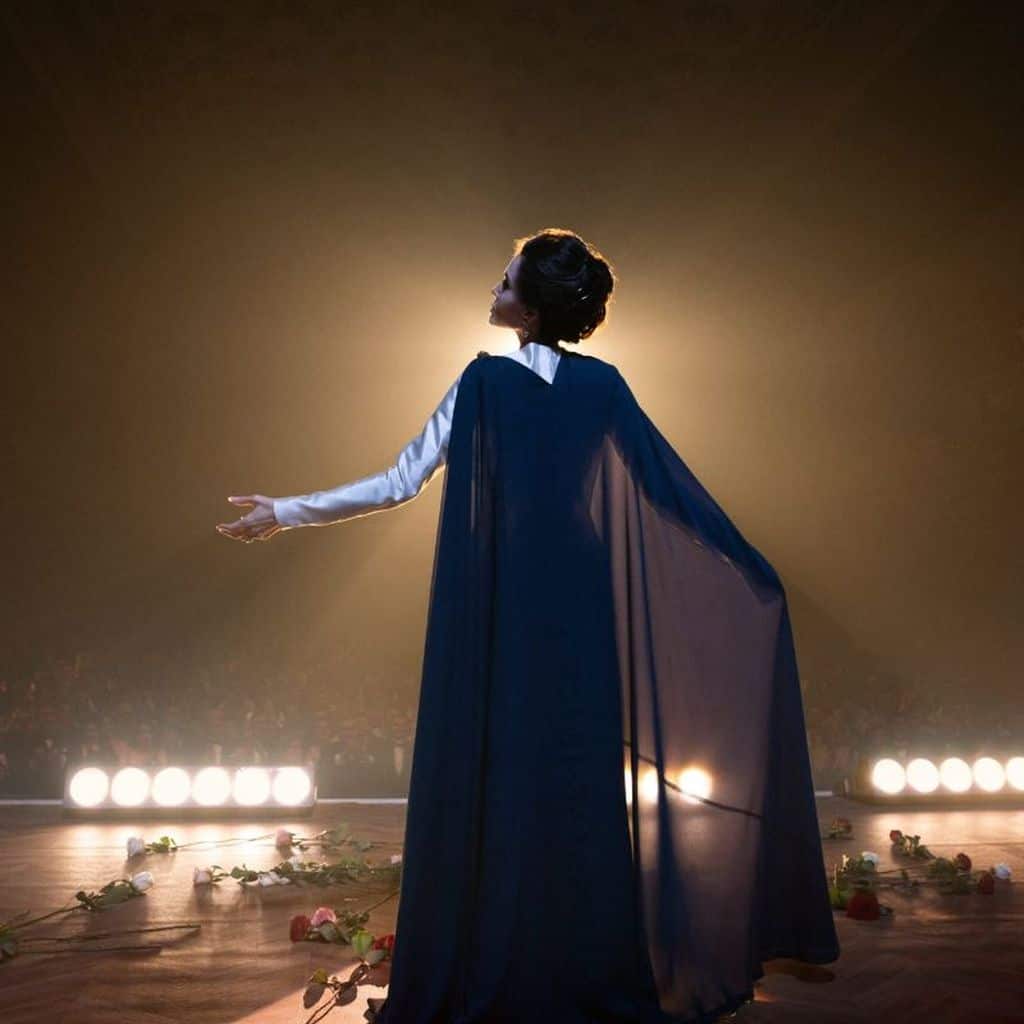
Her relationship with the dubious powerful billionaire Onasis is fairly central. Less than you might expect comes her stage life to attention, despite there being multiple images that strongly allude to it and one of the red threads running through the story. The decline of her unique voice becomes more than clear and how she suffered under it, as well as the more or less suppressed desire to ever stand on the stages again.
The miserable relationship with her mother is emphasized without going into details. That trauma, especially from her childhood and adolescent years, will long dominate her life, which you can infer from certain scenes in the film. This and so much more, including her bullying behavior towards her butler – how did that man endure it? – her thirst for honor and quite a few other elements make it clear that Maria Callas was no pushover.
 Angelina Jolie – the more beautiful version of Callas – has deeply immersed herself in the character, so much so that you sometimes begin to wonder who is on screen: Callas or the actress portraying her. Powerful! Not only powerful in 'singing' the many passages from well-known arias is the actress. Try doing it yourself? Those who know nothing or little or even more than enough about music can barely see and hear that something can't be right, because yes, Jolie naturally doesn't have the voice of Callas.
The images are beautiful, you see how Callas lived like a (forgotten?) queen in her apartment in Paris, you breathe in the luxury, you are part of the cheering audience, you suffer with her. All good points and yet there is something that restrains me somewhere from being fully enthusiastic about this film. It is at times drawn out and well, actually, there is so incredibly much image and sound material of this diva of divas that you could have expected more musical and theatrical substance. On the other hand, if you want to portray the life of the last week of a fallen queen on screen… It is complex, as complex as Maria, La Callas, was…
[embed]https://youtu.be/JqQexePnZvs[/embed]