
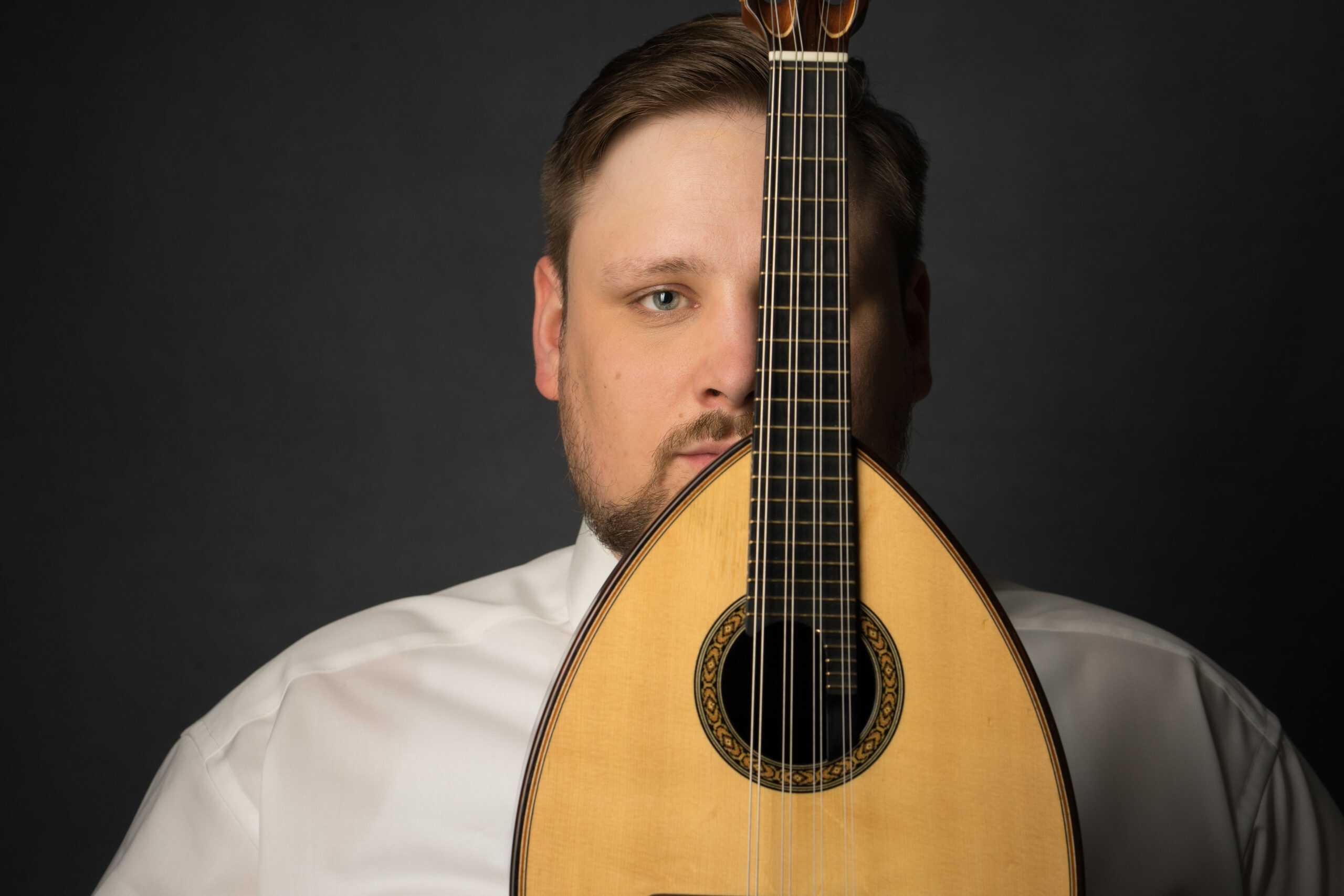
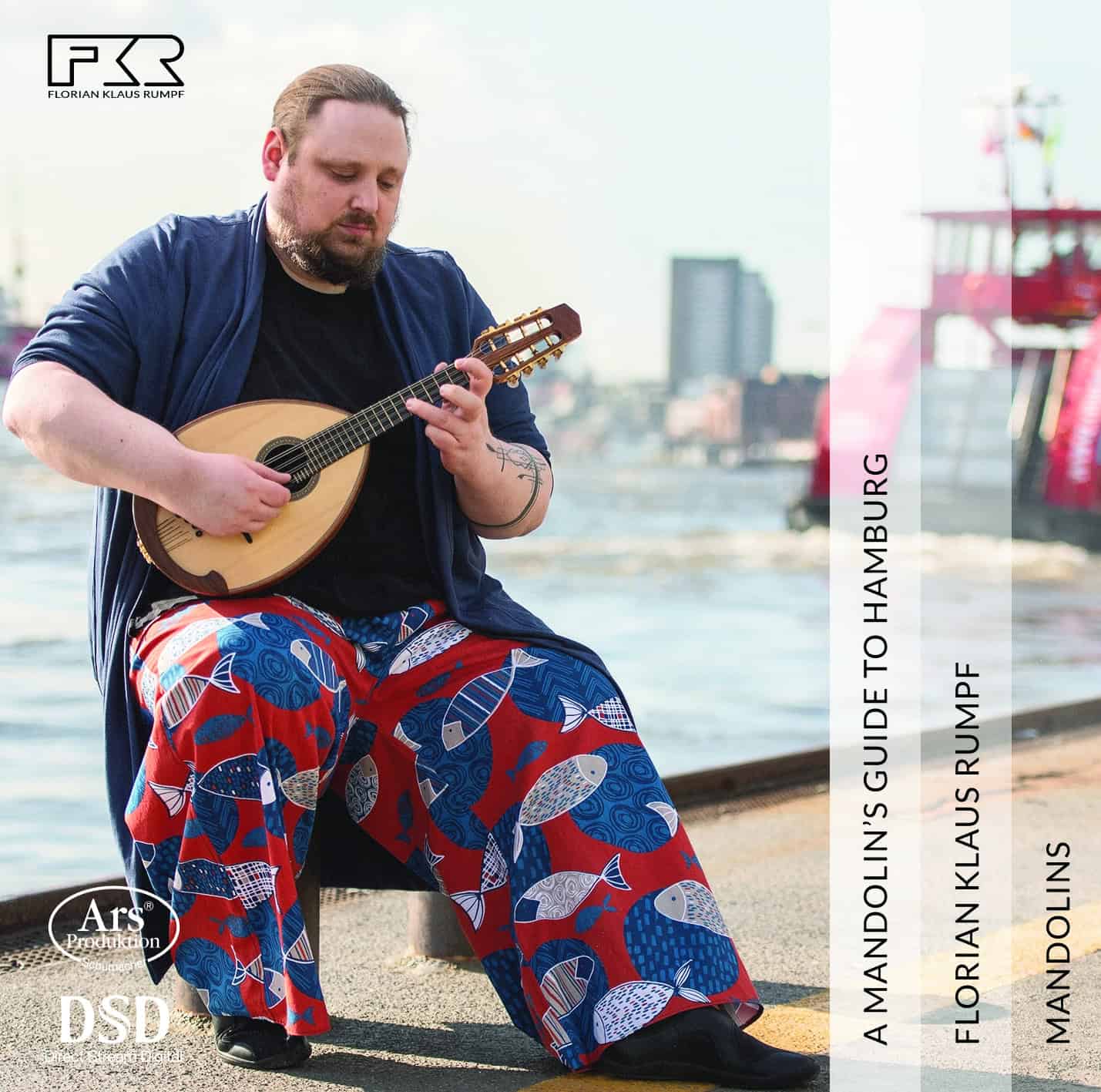
Using the mandoline, Florian Klaus Rumpf shows the musical diversity of his native city Hamburg. After three years of tinkering, Rumpf decided on the definitive form of the program. Via crowdfunding on Kickstarter he was able to realize his project. The result is surprising and explores the boundaries of what is possible on a mandoline.
Florian Klaus Rumpf chose to give Hamburg a musical voice. He did not do this by playing music by composers from his native city. Instead, he selected music that he associated with specific scenes or places in the city. He explained his choices in the program booklet. With this cd as a guide you can walk through the city…
The album opens cheerfully with morning coffee at Binnenalster, a lake in central Hamburg. With the lively chords of Sazanami Gazelle [track 01], the bustling city comes to life. This first work is by Japanese mandoline player and composer Keizo Ishibashi (°1983). With this, Rumpf highlights his international choices right from the first track.
After a walk along the lake, a soft allegro gives voice to the Hamburger Rathaus, an imposing neo-Renaissance building. For this Rumpf made his own arrangement of Allegro in D Major, WK 198 [track 02] by German composer Carl Friedrich Abel (1723-1787). This work was originally written for viola da gamba but on this cd it sounds on baroque mandoline. In addition to a stylistic contrast between Ishibashi and Abel, Rumpf creates a contrast in timbre by switching instruments. With just two pieces, he manages to display the versatile character of the mandoline family and the journey has barely begun…


Previous
Next
In Julie-O [track 03] by contemporary composer Mark Summer (°1958) we explore the fish market and then follows the romantic Preludio No. 16, Op. 152 [track 04] by Raffaele Calace (1863-1934). Alongside the colorful works, Rumpf also reflects the dark history of Hamburg in his musical choices. With the three-part Remembrance, (op.12, 25 & 26) by Masataka Hori (°1985) Rumpf looks back on the Nazi past.
Rumpf also integrates two of his own compositions: the humorous Irish Stew [track 09] and the dreamy Schlaflied [track 12] which he originally wrote for his grandfather. The musical tour concludes in the Reeperbahn with My Lady Jazz [track 12] by Albert John Weidt (1866-1945). With the swinging notes of this work, nightlife comes alive and the day is complete.
The idea of this musical travel guide is a refreshing concept. Through a diverse music selection with different timbres, rhythms and emotions, Hamburg comes to life. Moreover, Rumpf's musical associations are unique and surprising. For example, he explores the D string of his octave mandoline in Diferencias [track 07] by Victor Kioulaphides (°1961) and this exploration reminds him of a walk through the Sint-Pauli-Elbtunnel. In the accompanying booklet, he enriches his musical choices with his historical knowledge of the city. The result is a successful idea and a successful execution.
3.6/5
- WHO: Florian Klaus Rumpf [mandoline]
- WHAT: A Mandolin's Guide to Hamburg
- LABEL: Ars Produktion ARS38346
- ORDER: JPC