
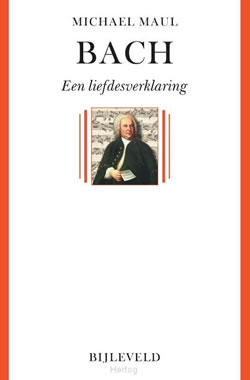
The newest book on Johann Sebastian Bach is a remarkable book, if only for its treatment of the most discussed works: the cantatas that Bach composed in his early years in Leipzig (1723-1727). One of Bach's duties in Leipzig was to write music weekly for Sunday worship services, which resulted in more than 100 cantatas. Michael Maul, a German Bach expert whose work includes, among other things, an extensive pictorial biography published earlier, addresses these works briefly and clearly, touching on the theological and liturgical backgrounds, the librettists, the practical issues involved in their creation, and the relationship between text and music. He understands the importance of all these aspects: although the order of phases in the compositional process is fixed, he fortunately recognizes that each phase can place the preceding one in a new light. Librettists can interpret crucial biblical texts with a certain freedom, a composer can do so with the text, a musician can do so with the score, and we in 2024 can do so with material three centuries old. Maul does this on a small scale (as an extensive discussion of all cantatas in this manner would make the book five times thicker), but he acknowledges the importance of interplay and permanent interpretation of existing material and has a nose for telling details. Music is both illustration and intensification of the text as well as interpretation and entry into a new spiritual realm - and especially the interplay between them.
If one must nonetheless place Maul despite that pleasant breadth, he is presumably more a man of words than of music, although he does address extensively the fact that Bach, after some years in Leipzig, became somewhat tired of his position and looked for employment elsewhere. Instrumental works are certainly not forgotten, but Maul is more elaborate on the great vocal works such as the Matthäus-Passion and the Hohe Messe. On one hand, he discusses extensively the religious aspects of both works, on the other hand he acknowledges that Bach applies the same compositional techniques in them that are also characteristic of his instrumental compositions. Without saying so in so many words, Maul answers the much-asked question of what Bach was more: believer or craftsman. The sympathetic answer: both, one cannot exist without the other, the question of priority is irrelevant. That Bach does not fit into the pigeonhole of one-sided admirers, Maul illustrates also with his discussion of the influences on Bach.
Very little is known about Bach. Personal documents are virtually non-existent, the known portraits are questioned, and various compositions are lost. Attempts to better understand his work or person by bringing context into play are understandable (Christoph Wolff in his great biography likes to make use of this method), but they distract from the fact that Bach was also a stubborn being who did what he wanted regardless of context, at least within his art, otherwise one does not understand why his superiors were sometimes very critical of his work, even called him to account, and some did not regret his death at all. Maul too has questions about various compositions and situations and poses them to Bach, in passages with unusual typography. Of course, he receives no answer, but his suspicions set us to thinking about Bach's motives and invite further research through which those questions might one day be answered, although I suspect those answers will come sooner from documents still unknown than from a new perspective on now-known documents, although of course in this matter one never knows. Maul knows Bach documentation inside and out and can explain it well. He does not write entirely for beginners and thus does not explain everything, but he knows how to captivate lay readers and enthusiasts. The many illustrations enliven the text, the chronology and list of works are very useful, the discussed pieces can be listened to via a QR code, and Clemens Romijn's translation makes the argument a pleasure to read. The whole fits perfectly with the subtitle: A declaration of love. After reading the book, one especially wants to listen and admire. Mystery or not, love grows.
© Emanuel Overbeeke
____________
Michael Maul also published Bach - Eine Bildbiographie/Pictorial Biography (click here for the review).