
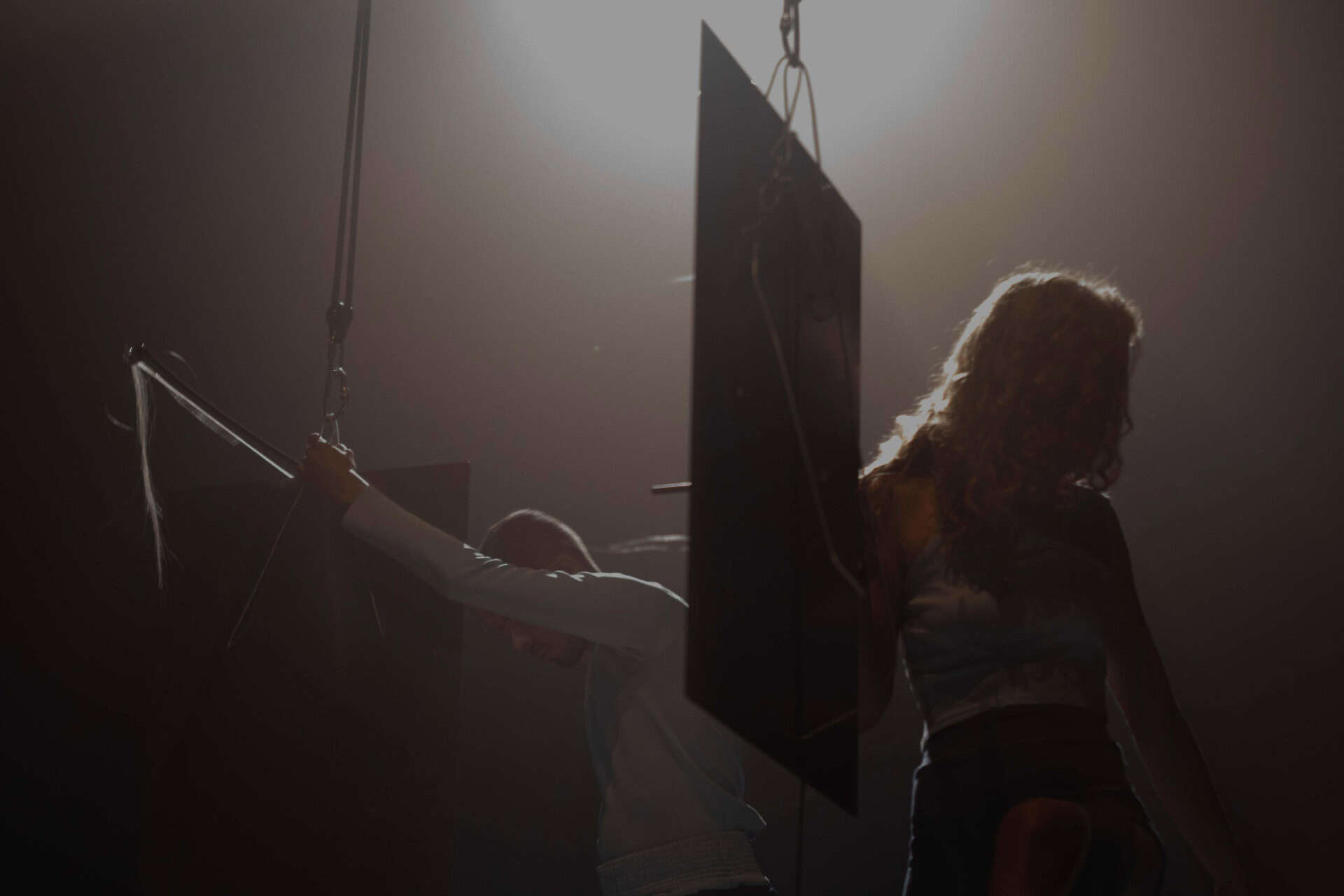
DE SINGEL has opened its season in style with a phenomenal theatrical production: Pilgrimage. A contemporary investigative pilgrimage staged by composer Siebe Thijs and director Ferenc Balcaen in collaboration with four fantastic performers/musicians: Junior Akwety (performer/singer), Arturo den Hartog (countertenor), Suzan Peeters (accordion) and Nathalie Van Meirvenne (flute) and a diverse artistic team.
The four bodies, Akwety, den Hartog, Peeters and Van Meirvenne travel through an ever-changing landscape. They play instruments, but also bodies and sculptures. They are constantly on the move, searching for a place that is still unfamiliar to them. In their steps they lose themselves, merge with something unknown and meet again, in different forms, what they thought they had left behind.
With this contemporary pilgrimage, the tension between self-interest and the shared is explored, between individual and collective. There is reflection and communication about and with the other. Encounters and farewells take place in a magical sequence of intimate, playful, chaotic, surprising and hysterical fragments.
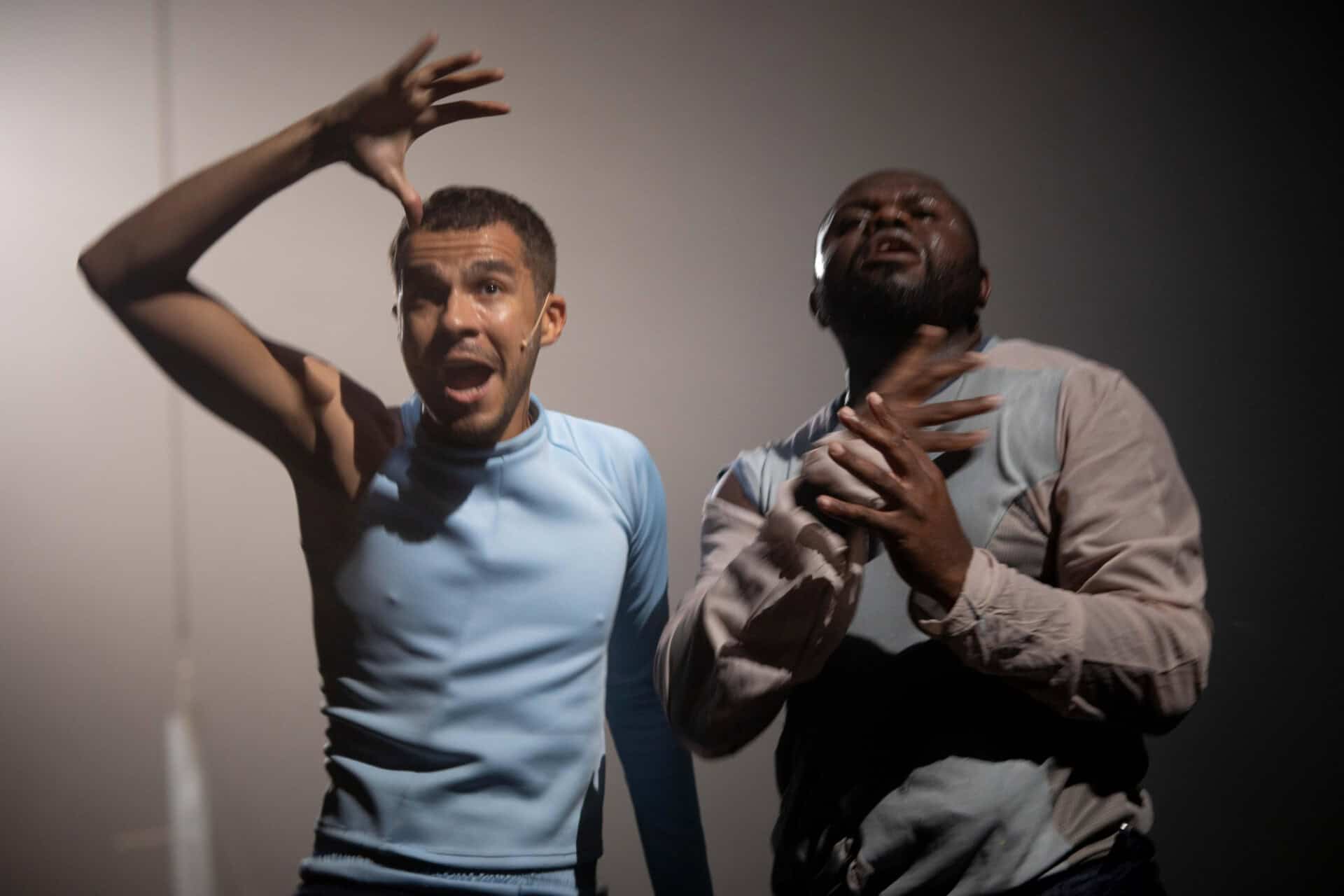
The starting point of this multidisciplinary production is the last song cycle "A Pilgrimes Solace" (1612) by Renaissance composer, lutenist and singer John Dowland. In the most lyrical passages of the production we can hear an echo of Dowland's music that seems to become more concrete towards the end. Especially when Akwety and den Hartog perform a beautiful moving duet. But nevertheless, the work is above all very contemporary with an idiosyncratic vision of what being on the way can and may mean today.
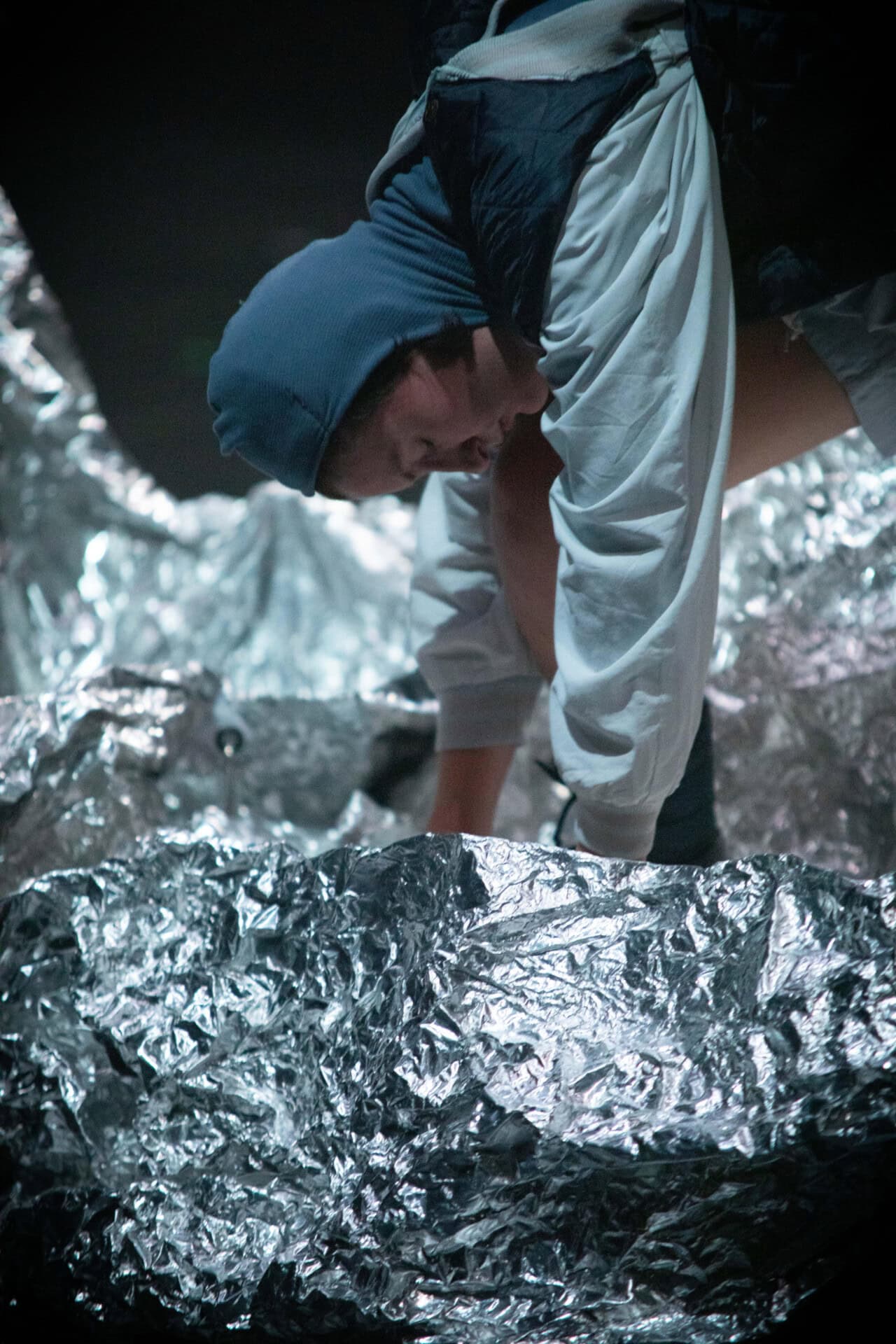
Initially the four bodies seem to be in harmony on their shared island, the beginning of their pilgrimage? Yet quite quickly, they each go their own way. The islands disperse across the space, just as the individuals, who occasionally encounter each other and resonate together. The vocal, instrumental and visual elements are complemented by auditive fragments from field recordings. These recordings were made at the beginning of the creative process during the joint walk of the artistic team.
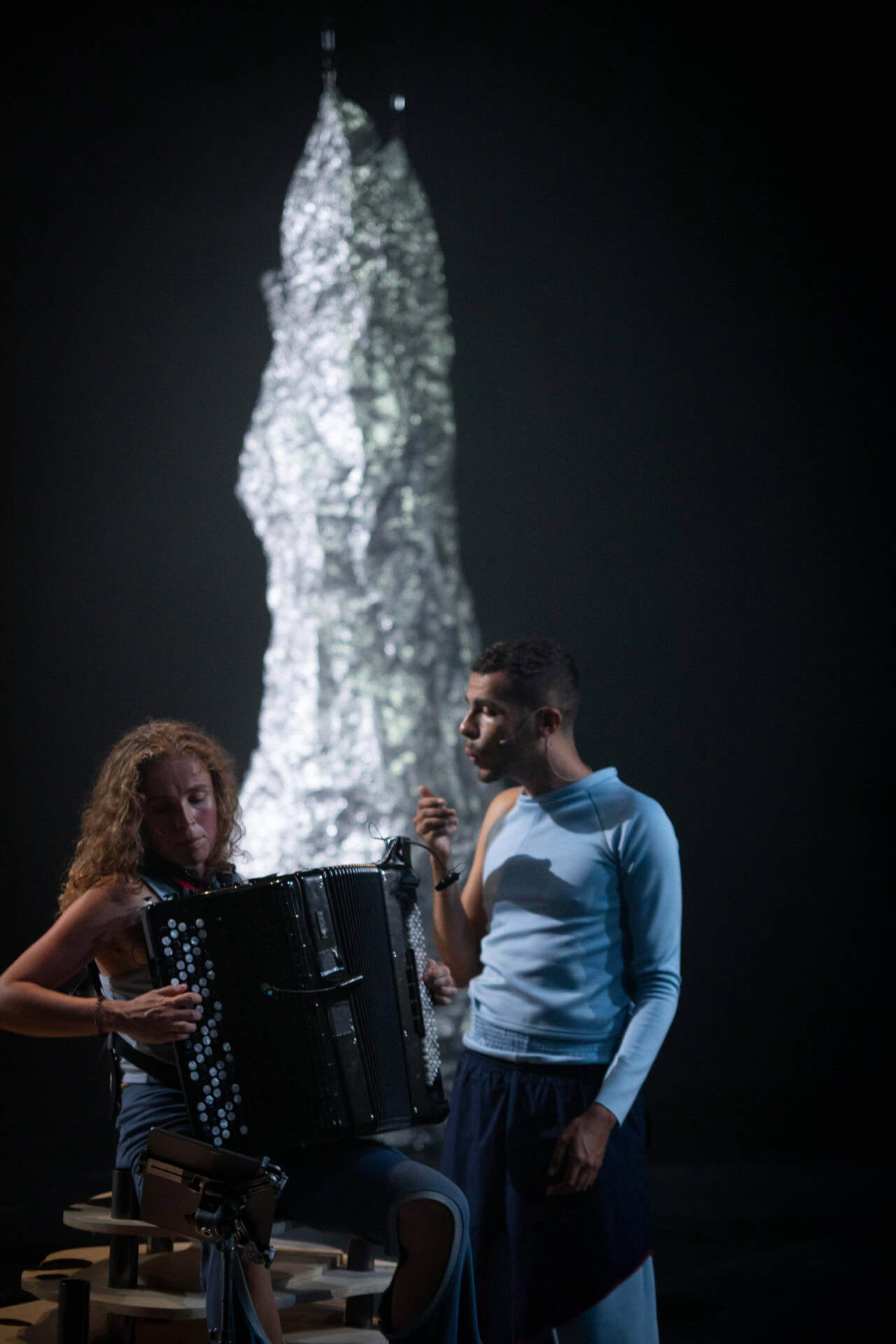
In the music we find several recurring motifs such as bodily expression coupled with playing an instrument. This unique coupling creates beautiful and very specific timbres. At times it is even as if two bodies seem to play the same instrument, be it the accordion, bass flute, or even the voice! This unique coupling contributes to the magical experience and adventure of the travelers and also forms an intriguing musical-visual element for the audience. In the music itself, breathing seems to play a crucial theme, both in vocal and instrumental interludes. Breathing often transforms into panting and vice versa, as if the bodies are exhausted from the physical exertion of their journey. The bodies as well as the music are sometimes closed, seeking, and at times very intimate, they continually transform through thoughtful choreographic elements. The space and setting in which they find themselves evolves organically in a surprising and sometimes playful manner.
The composer wishes to draw attention to the in-between space that unfolds from point A to B. For many people that in-between space may seem useless. However, according to him, that in-between space offers the possibility for reflection or even encounters with another pilgrim. The walking from point A to B can happen in different ways such as walking, stumbling, fleeing or even a joint protest or celebration march (cf. auf die Straße... I).
The story that unfolds, with virtually no spoken dialogue, initially appears quite abstract, but becomes tangible as it progresses through the logical sequence of events. Just as in established classical works we find moments of recognition and support. It is up to the audience to embark on a pilgrimage of their own and thus partly fill in the story themselves.
Analyzing and reviewing a work that, especially to the audience, will be experienced differently by each individual seems rather inappropriate. That is why I, as an exception, will write briefly in the first person after all 😉.
At times I was moved, confused or even startled, but I was also able to laugh and grin. A true rollercoaster of emotions, but above all I must say that I enjoyed a unique contemporary and idiosyncratic investigative, beautiful audiovisual work. Bravo to everyone involved and who contributed to its creation!
Couldn't make it this weekend? Don't worry, the next performances are in Brussels, KVS Box on February 18, 2026 and in The Hague, Amare on March 8, 2026.
Theater transparant
concept, musical direction, music: Siebe Thijs
final direction
performance
countertenor
accordion
flute
lighting, scenography
costume design
scenography, set design
choreography
sound, technical coordination
Outside eye
production
Siebe Thijs Muziektheater Transparant
co-production
DE SINGELKVS (Brussel) Platform 0090 (Antwerpen)C-TAKT (Pelt)Perpodium (Antwerpen)
with the support of
Needcompany MusicaBijloke Summer Academy (Gent) Les Théâtres de la Ville de Luxembourg Tax Shelter van de Belgische Federale Overheid Vlaamse Overheid