
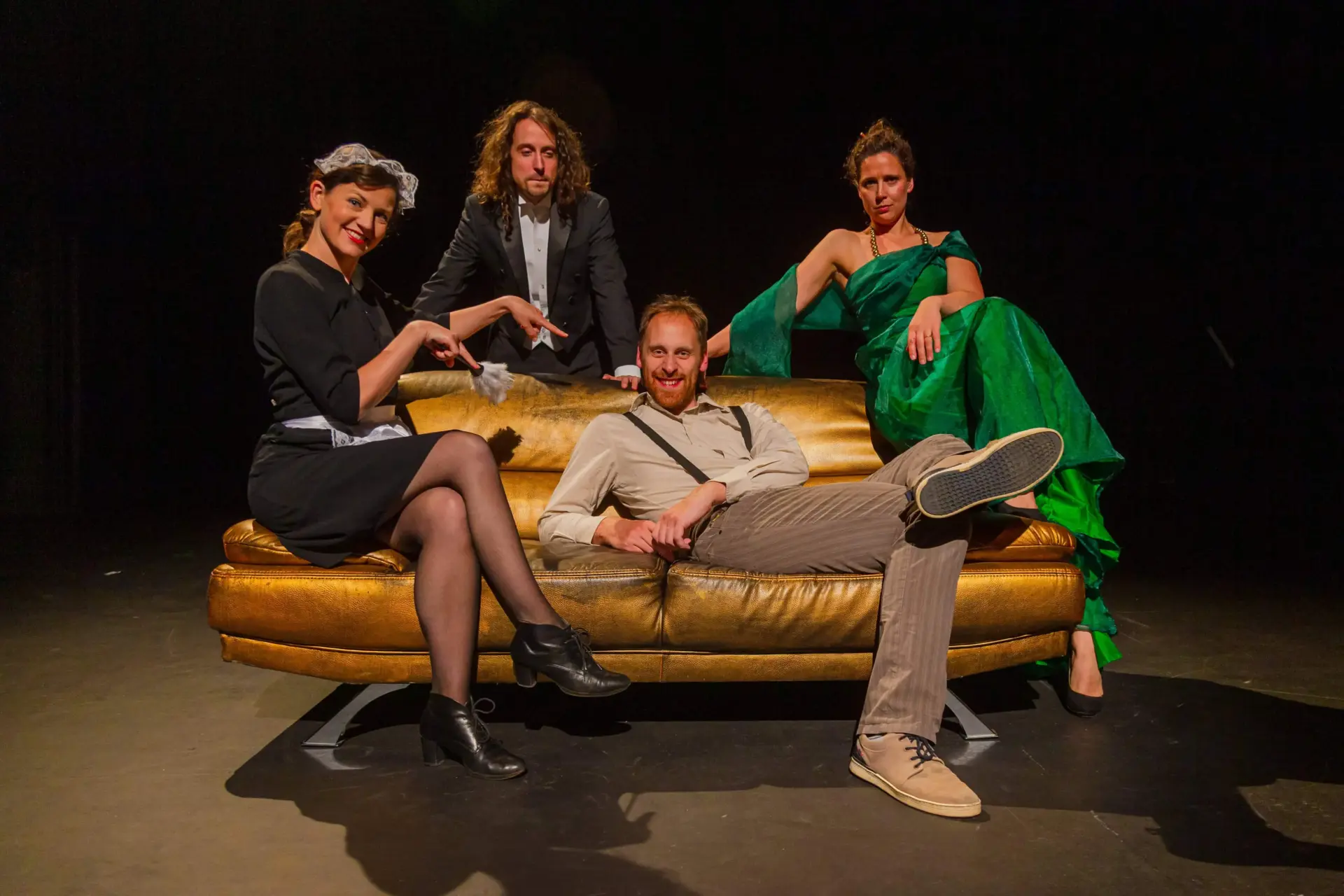
Ode an die Freunde loves to break set patterns. They joined forces for a special piece of work. For three days, the four musical companions: Lester Van Loock, Alexandra Franck, Jokke Martens and Lissa Meyvis poured their hearts and souls into their Soap Opera. A performance around the intimate pleasure of singing and acting together with kindred spirits. An improbably brilliant piece of bricolage. A story about love, betrayal, intrigue, revenge. They know the hocus pocus of theater, building a narrative, putting the audience off the scent, creating and puncturing expectations. The entire bag of dramaturgy tricks is brought into play and deployed. Large solos and duets from musicals, arias and duets from operas were translated into Dutch, a successful and time-consuming endeavor, and here and there also slightly adapted to the situational sketch so that it formed a coherent whole. They build an entire story with and around the chosen numbers. A collage with work by among others W.A. Mozart, Gian Carlo Menotti, Rodgers & Hammerstein, Jason Robert Brown, Leonard Bernstein, Stephan Sondheim, Giacomo Puccini, Cole Porter, etc.. The two sopranos and baritone bring the story to life with expressiveness, passion and seduction. Pianist Lester makes music with sophistication and inspiration. Timeless sounds that blend with the spirit of four talented playbirds. Sublime and often hilarious. A confident musical extravaganza. Pure showbiz magic.
Did you know?
Never too old to learn. The term 'soap opera' finds its origin in radio series sponsored by soap manufacturers? In the 1930s, melodramatic radio series were mainly broadcast during the day, intended for housewives. Major soap brands such as Proctor & Gamble sponsored these programs to promote their products – hence the nickname 'soap opera'. Later the term was used for similar television series, which were characterized by emotional storylines and a daily or weekly episode.
A cross-pollination
The scene is furnished simply, a cosy setting: a nice sofa, a side table, a door, a small safe and a grand piano. The protagonists introduce themselves in a playful manner. Lester Van Loock appears in grand tenue a classy character, white bow tie. Lissa is the chambermaid in a little black dress, white apron and lace tiara in her hair. Alexandra as countess in a beautiful emerald green evening gown and fur coat. Joppe in rubber boots and trenchcoat. With some imagination and an exaggerated playing style, a fresh, dramatic tension unfolds. Both Alexandra, Lissa and Jokke each give every song its own dimension with their unique and powerful vocal sound. They can not only sing, but also do a decent bit of acting. Their playful improvisations work contagiously.
Soap Opera
Nothing is left undone. The performance begins with a running gag: a sung soap commercial! This commercial is a nice find and is used in just the right measure. As an audience member, you sit close to their skin. Intimate theater that doesn't shy away from big emotions. They also challenge the viewer: for example with instrumental intros, so that you start making connections with the original work and the dramatic impact. Lester Van Loock once again impresses with his two solo moments 'Ah, vous dirai-je maman', twelve versions of W.A. Mozart on the song 'Always is little coat sick'. That simple tune gets a sparkling glow with Mozart. Play of the highest order, playful and explosive, refined and virtuosic. And in the second part with 'the 13th Hungarian Rhapsody' by Franz Liszt'. His expressive way of playing is a feast for the eyes, but if you close your eyes, the music gains even more meaning. He sweeps you along into a trance. With his technical fireworks and empathy, he manages to move the audience emotionally.
This Soap Opera is the seventh creation of four driven and accomplished conservatory masters. With which they once again demonstrated another facet of their abilities with verve. Their goal: to work the audience and draw a laugh and a tear. Mission accomplished. As an encore for the enthusiastic audience, once again their commercial and then of course 'Ode an die Freude' from which they once derived their name.