
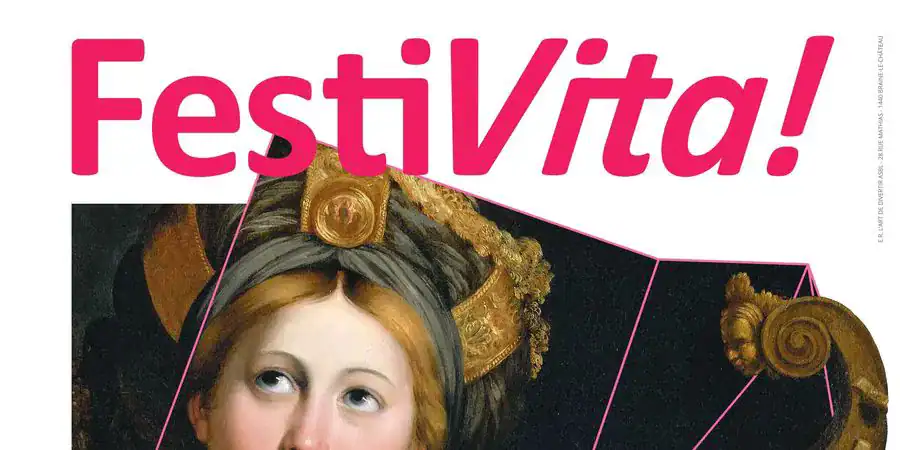
Whoever reduces German Baroque music to Johann Sebastian Bach alone overlooks a rich and multifaceted musical landscape. Precisely that broader perspective takes center stage during the fifth edition of FestiVita! Brussels Early Music Festival, which takes place from February 11-15, 2026 at the Cercle Royal Gaulois in Brussels. This time, the festival focuses on Dresden and Saxony, which in the 17th and 18th centuries was one of Europe's most influential musical power centers, where music formed an essential part of court ceremony, religion and international representation.
Dresden as a musical crossroads
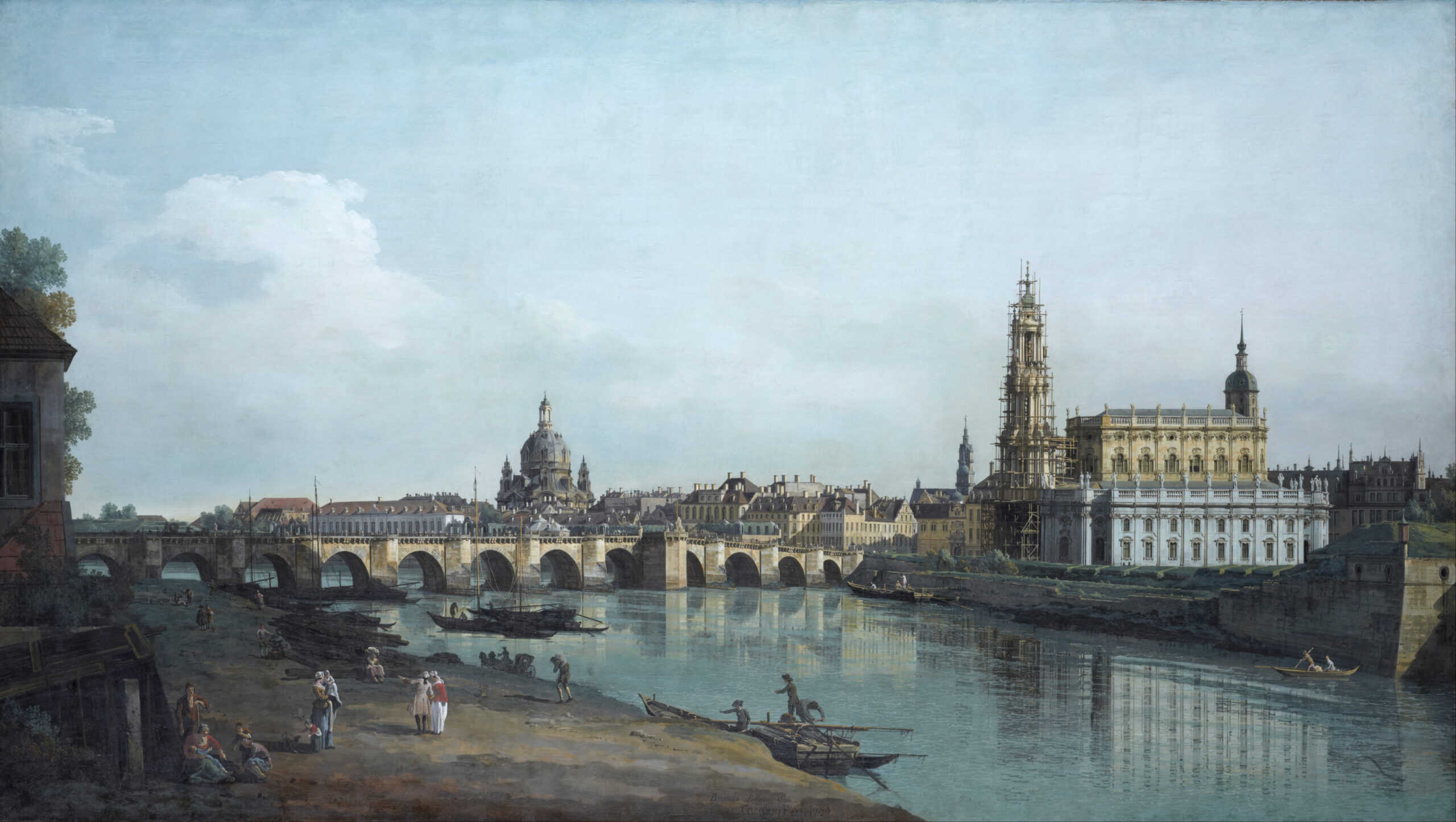 The court of the Saxon Electors – and later Kings of Poland – was a melting pot of styles and ambitions. Italian operatic traditions, French court culture and German contrapuntal rigor met in an environment where music functioned both devotionally and representatively. Composers such as Heinrich Schütz (1585-1672), Johann Hermann Schein (1586-1630), Johann David Heinichen (1683-1729), Jan Dismas Zelenka (1679-1745) and other contemporaries of Johann Sebastian Bach (1685-1750) benefited from an exceptional musical ecosystem that earned Dresden the reputation of 'Florence on the Elbe'. FestiVita! seizes this context to illuminate German Baroque not as a style, but as a culture.
The chosen setting reinforces this approach. The Cercle Royal Gaulois, with its salons and historic halls, offers an intimacy that aligns with the original performance practice of much Baroque music. Not a large-scale concert experience, but a listening experience in which proximity and space balance each other, and in which the audience temporarily finds itself in an 18th-century musical salon.
From concert practice to cultural experience
The artistic direction of this festival is in the hands of Peter Van Heyghen and Kris Verhelst, both familiar names within historically informed performance practice. With ensembles such as Ricercar Consort, BachPlus and the Sweelinck Barokorkest, the festival presents a core program in which the Saxon repertoire is approached from different angles. A performance of the Kyrie and Gloria from Bach's Hohe Messe stands alongside sacred music by Schütz and Schein, and orchestral splendor by Zelenka and Heinichen – composers who have only received renewed attention in recent decades, partly thanks to the revived interest in Dresden court music.
As has become characteristic of FestiVita!, the festival does not limit itself to the typical concert format. Music is approached as part of a broader cultural history. The historic Bal 1820 on Valentine's Day brings early 19th-century social dance practice to life, with live music and choreographies based on historical dance manuals, while the Banquet-qu'on-sert combines a Baroque banquet with musical interludes, in the spirit of the court culture in which art and gastronomy were closely intertwined. In addition, there are candlelit nocturnes, a storytelling concert for young listeners and attention to instrument making and craftsmanship, where historical sound and craftsmanship take center stage.
The future of early music also receives attention. With the Première competition, FestiVita! offers young ensembles a platform around the central theme of this edition. The subsequent Première Rencontre creates space for reflection and exchange, and underscores the festival's commitment to talent development and artistic dialogue, a rare but valuable addition to the festival landscape.
After five editions, FestiVita! has grown into a festival with a clear identity: historically grounded, but not museological; small-scale, but ambitious. By placing Dresden and Saxony center stage, the festival reminds us how international, layered and surprising German Baroque music was – and can still be. For those willing to listen beyond the familiar canon, FestiVita! offers more than a convincing invitation, in which music is once again experienced as a living art form, embedded in its historical context.
Klassiek Centraal will report further on this festival.
For more information, see here: https://festivita.be/nl/festivita-2026/programma-festivita-2026/