
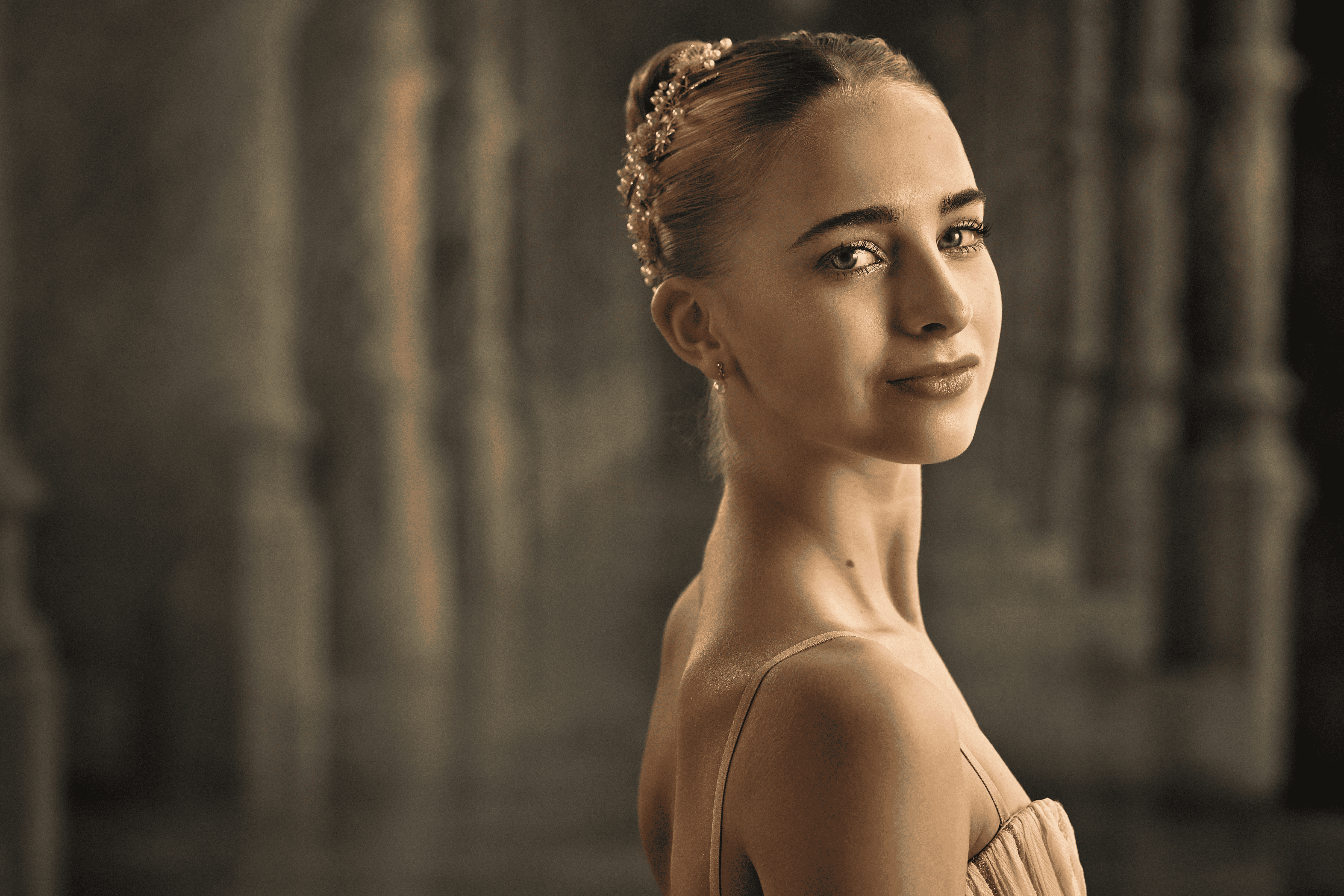
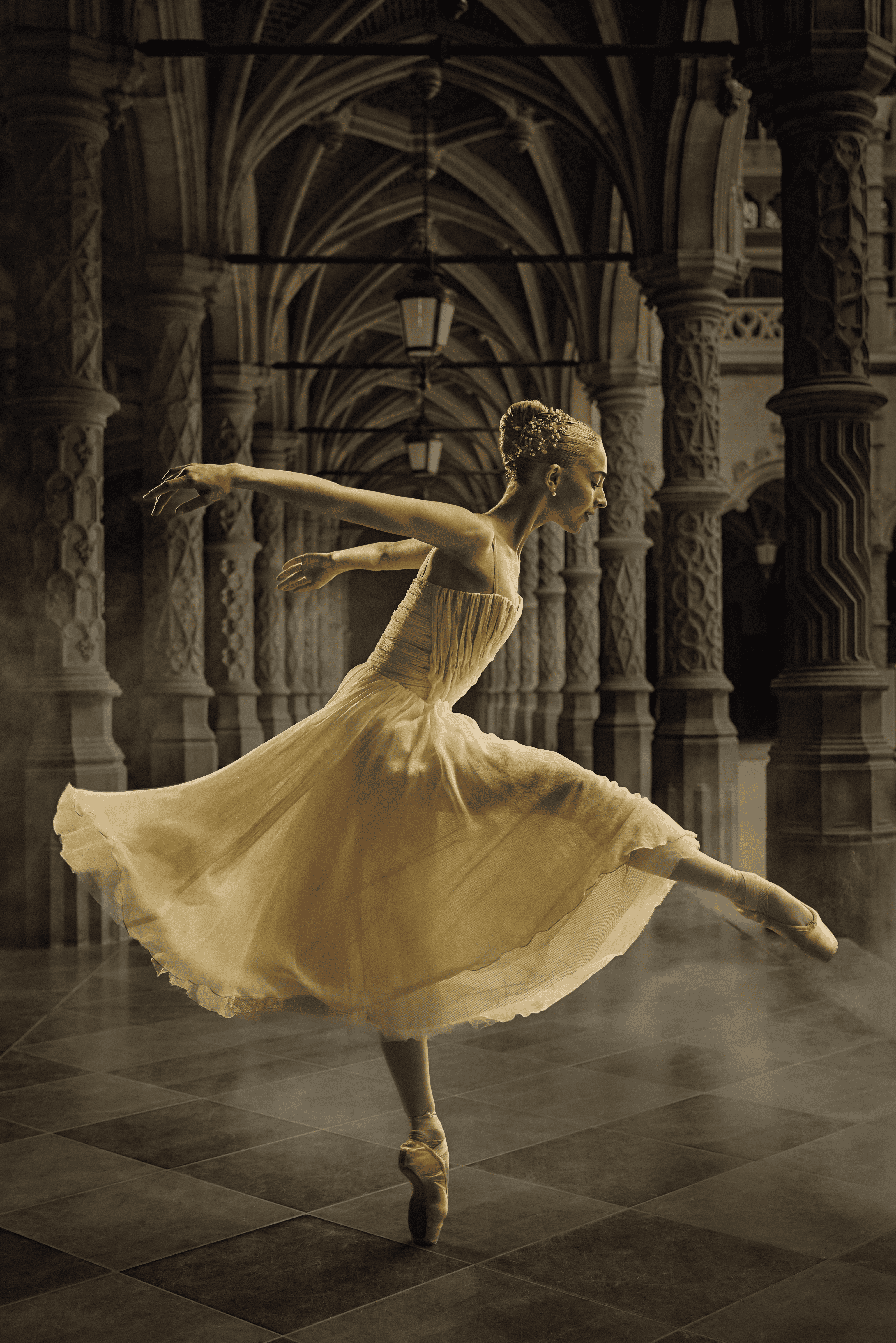
Junior Ballet Antwerp, the pre-professional program in the form of a 'junior company' is currently pulling out all the stops. In the studio, intensive rehearsals are taking place for a contemporary version of the classical ballet 'Cinderella' choreographed by Altea Nuñez and artistic director Alain Honorez. With this, he rigorously builds further on the classical heritage and attaches a broad range of innovative elements to it, with even the smallest cogs precisely coordinated. This enchanting family spectacle will be performed in the magnificent Handelsbeurs. Klassiek-Centraal finds out more about the making of.
-Junior Ballet Antwerp has already been seen in various contemporary styles and choreographies. With this production you return to basics.
Alain Honorez: We started the fourth season full of energy and this year we're coming up with something very special. One of the great classics that we bring to new life. The story is built in a very creative way like a Lego house, block by block. We chose to construct a storyline that is somewhat closer to our current society.
-That requires some explanation.
A.H.: We're moving away from the fairy tale premise somewhat. The good fairy that appears on stage… We asked ourselves: how can we make the story more relevant? We started working more personally and chose to have Cinderella's mother, who dies at the beginning of the story, return as a ghost, as a 'spirit'. She watches over her daughter's well-being and will guide her to the ball. That is an enormous shift to dim the fairy tale aspect somewhat. A fresh and original perspective that makes the story more realistic and brings out the family bond strongly. It is a fusion of reality and imagination and between tradition and modernity.

-Young people are growing up in a difficult time period.
A.H.: Not only that, we wanted to make it all more relevant and closer to reality. Everyone will eventually experience the loss of family or friends. How can we weave that aspect into the story in a visual way? It's about motifs and variations, love in many shades.
-You also have to take into account the number of dancers you have available. Is that a limitation or does it sharpen your imagination?
A.H.: JBA is a fairly small group. We're 15 this year: 12 girls and 3 boys. When a company dances this ballet, we're talking about 50 to 60 dancers on stage directly. Some companies tackle it even bigger! For us it becomes something very intimate, although the cast is expanded with students from the fifth grade of the Koninklijke Balletschool and some children from Prins Dries. That way we double our group and we also have more than 30 dancers on stage.
-All the young people studying further here are talented. Choosing someone for a leading role is a delicate task!
A.H.: We naturally have different casts. We'll dance at least eight performances at the Handelsbeurs with three different casts. JBA has three boys. We're giving all three of them the opportunity to dance the role of the prince. Each of them gets a Cinderella at their side. The three boys also have other roles in the production; they will alternate. For the girls, besides Cinderella, there are many beautiful roles, including the stepsisters. Those roles are often portrayed very caricaturally. We won't be going down that path.
-A family performance, and especially for the very young, calls for some humor.
A.H.: In the development of the characters, humor will be present, especially regarding the stepsisters: we try to bring out the character traits of the dancers in question. One is hyperactive, the other is someone who couldn't care less. I still remember the words of Kathryn Bennetts when she rehearsed the choreography of 'Impressing the Czar' by William Forsythe at Ballet Vlaanderen: "Don't play a character, become the character".
-It's an appeal to their empathy and creativity.
A.H.: If the girls bring their role convincingly, they become particularly amusing acts.
-Method acting!
A.H.: With the necessary acting but without it becoming overacting. Our slogan for this production: "It is a family show for everyone who wants to keep dreaming of a better tomorrow." I am sometimes asked: "Why Cinderella? Isn't there a new story?" I am certainly in favour of forward-thinking and introducing new things. But I am also in favour of cherishing our heritage and building upon it. We must honour the foundations of classical ballet: the precision, elegance, the bravura. These achievements must be passed on to future generations. We shouldn't throw the baby out with the bathwater. I see it as my task to develop it further so that the audience can appreciate and understand this ballet form. No one benefits from dragging an old dragon out of the closet. That no longer fits in our society. You can still create something based on it and put it in a new, accessible package for today's audience. The glass slipper becomes a pointe in our version. All the young ladies go beautifully dressed to the ball on pointes.
-JBA positions itself as never before!
A.H.: What is very special is that we have been able to secure a live orchestra for this production. CASCO PHIL, the Belgian Chamber Philharmonic, under the direction of Michiel Delanghe, will be present. Besides that, something very special will happen on the set in the visualisation of the production. The architecture of the Handelsbeurs is very specific, very present. The space is gigantic. Set pieces disappear into nothing. That's why we use the space itself as a set. It will be projected in 3D. The entire architecture is actually drawn out in 3D-mapping to then add the necessary colours, atmospheres and sometimes even moving images. It will be breathtaking, even groundbreaking. Such a mapping has never been done in the Handelsbeurs before. The creators are building a 3D platform of the entire space, which is integrated into the computer. Through animation, it is all drawn out. Each decorative element in the space can be given extra depth, a different colour, alignment, etc… The combination of dance, music, lighting and 3D-mapping will undoubtedly be magical.


-Where will the audience be seated?
A.H.: We are also working on developing a seating plan. There is a lot involved. The Handelsbeurs is not an opera or concert hall. We will build a whole construction where each row will be higher than the row in front of it. This gives you the feeling of a grandstand. We perform eight shows from 17 February during the Crocus holidays. Performances are at 8pm on weekdays and at 5pm on Sundays. Ticket sales started on 1 October.
-You work full-time with your wife on the choreography and organisation. Being constantly on each other's case, doesn't that ever cause tensions?
A.H.: It does happen, I'm very honest about that. Sharing my life with Altea is a gift, we complement each other. Her strength is of course her talent for devising choreographies: working out patterns and figures. Thinking up new alliances between music and dance, mainly consisting of group movements. My contribution is telling the story and deepening the characters. Something I also loved doing during my dance career. Besides that, I'm attempting to choreograph for the first time. Those are mainly solos and duets, which we create together.
-Are you allowed to reshape an original ballet like this?
A.H.: Everything is new. There is nothing we have borrowed from another version. We simply started from scratch. The only thing we base ourselves on is Prokofjev's music, the musical alchemy of it. We have been working on this project for almost two years now. Ideas kept bubbling up. What works is kept and the rest was discarded as ballast. It is work in progress. We also had to make the necessary contacts. Who designs and makes the costumes? A young talent from our own soil, Jolien De Weerdt, who works in the costume workshop of Ballet Vlaanderen, came on board. This is her very first production that she is designing herself. Ria Van Looveren, who led the costume workshop of Opera Ballet Vlaanderen for many years, is retired but has a fondness for classical costumes and immediately offered her services. She coordinates everything. For one cast, 94 costumes are made and so we have three for various roles!
-All in all, this production must come with a gigantic price tag!
A.H.: That's why we are looking for sponsors! A risk is being taken. I am certainly not impulsive about this and I approach it very intuitively. That was already the case when I was a dancer. I feel that all the cards are in the right place. We are taking a very big step. The time is ripe to put classical ballet back on the map in Belgium. In recent years it has hardly been performed. We need to make sure we take care of it.
-Are you positioning yourself as an advocate?
A.H.: Belgium is known worldwide for innovation, social relevance, inclusivity. Agreed, that is all important. These are things an average audience can relate to because they do and experience these things themselves. But the less we bring and show pieces of history to the public, the more the public will no longer know and appreciate that history. My vision: there is a place for all forms of dance art. If we want to continue offering a rich cultural landscape, we must be able to present everything. What is innovative today will be passé in five years. Imagine if the KMSKA had discarded all works by Rubens for contemporary work! The paintings are surrounded with the greatest care for future generations. Meticulous work is done on restoration.
In the ballet world, that care and pride are equally necessary. It is up to us to continue nurturing it. Our generation must do it. Let us hope it continues to grow. The children who start at the Royal Ballet School here and have the ambition to one day stand on stage as ballet dancers must be able to dream and have role models to look up to. That is so important.
-What happens next at JBA after Cinderella?
A.H.: With 'Cinderella' the season does not end, of course. As compensation, an evening exclusively featuring modern work is scheduled in April at the Opera. This allows our dancers to switch from one dance style to another. On the programme is a version of Ravel's 'Bolero', a contemporary choreography by Ihsan Rustem. We also present a creation by young British choreographer Andrew McNicol who will work with our dancers in November, and a choreography by Altea. We end the season with a new version of our 'Miniatures.' Each one new choreographies, again a diverse palette of emotions, colours and styles.
Now it is first looking forward to the sparkling 'Cinderella' by JBA, a feast for eyes and ears. A performance that will captivate young hearts.
WHO: Junior Ballet Antwerp
WHAT: Cinderella
WHERE: Handelsbeurs, Antwerpen
WHEN: 17 February 2023 (première) to 26 February 2023.