Dell’amore e del mare
Duo van Alessandra Stallone, Antonio Dambra
Bringing together pieces from three centuries into one recital – and thus separated by profound historical and aesthetic differences – is far from simple. Schubert (1797-1828), Reinecke (1824-1910) and the young Apulian composers Massimo De Lillo (b. 1974) and Luigi Capuano (b. 1984) each reflect their own musical era and compositional mentality. Yet they are brought together here into a coherent listening experience – one that demands sharp attention rather than superficial absorption, for all four composers ultimately pursue the same goal: embodying in music the enduring bond between Love and the Sea.
The chosen works belong to the genre of the instrumental duo, wherein the piano accompanies a soloist who in this case is the flautist. Thanks to the flute's characteristic 'fluid' tone, it lends itself excellently to evocations of the sea, while the piano, particularly in Carl Reinecke's Undine Sonata, becomes a fully-fledged protagonist in its own right.
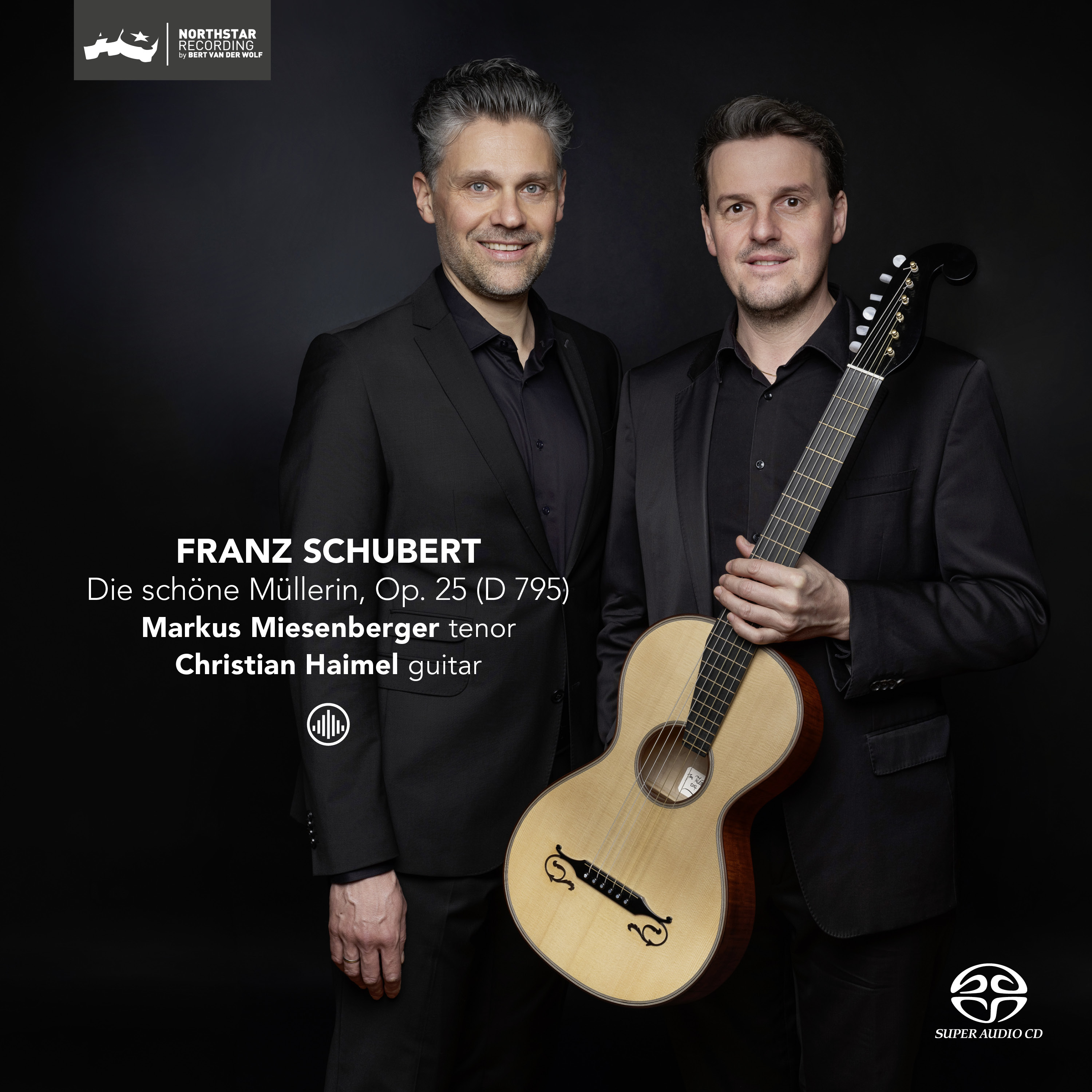
Central to this programme is Schubert's Introduction and Variations on "Trockne Blumen" for piano and flute, D.802, based on the eighteenth Lied from his celebrated cycle Die Schöne Müllerin, composed in 1823. The melody, introduced by the flute in a murmur with sparse piano chords, depicts the miller, driven to despair, as he reflects on the flowers he once received from his beloved – flowers that would follow him to the grave. The second section takes on a march-like rhythm, tinged with an eerie sound, which Schubert associates with the miller's vision of his beloved walking past his grave as the flowers revive with the coming of spring.
Schubert's deep affinity with the Lied – he wrote more than six hundred songs and studied under Antonio Salieri (the so-called 'rival' of Mozart) – permeates every note of this work. The lyrical line of the flute evokes the miller's longing for his beloved, for friends and for the comfort of home, and poignantly captures the depth of human suffering. Schubert composed the Lied in January 1824 for a befriended flautist, but no record has survived of a public performance of the Variations during his lifetime. Nevertheless, it was soon recognised as a 'popular song', which in its introduction and gently propulsive rhythms sketches the many ways in which music can capture the weight and mystery of the poetic text.
The tradition of Lisztian programme music forms the foundation of Reinecke's Undine Sonata, which received its premiere in January 1884 at the Gewandhaus in Leipzig, with the composer at the piano and the celebrated flautist Amédée de Vroye. Reinecke's fascination with the flute persisted throughout his career; like the violin among string instruments, the flute is capable of both lyrical warmth and brilliant virtuosity. Moreover, Reinecke's lifelong passion for the fairy tales and legends of his native land made Undine a logical choice for his imagination. In the early nineteenth century, various successful dramatic and epic works appealed to the romantic sensibilities of the era, and Friedrich de la Motte-Fouqué's Undine (1811) was widely regarded as the epitome of a fairy tale.
The Undine Sonata, Op. 167, appeared in 1882. It differs considerably from Reinecke's other flute compositions: it is a true unique work in his oeuvre. The subtitle signals an authentic programme, reflecting the mode for narrative music advocated by Liszt. The flute and piano fulfil a completely cooperative role, requiring both technical skill and refined stylistic balance. Through irregular structural forms, the cyclical repetition of themes and rich Romantic language – particularly evident in the suggestive piano writing – Reinecke brings the myth of Undine vividly to life. The textures of the work are complex yet always clear, and the flautist must combine considerable virtuosity with expressive subtlety, supported by a pianist who ensures that the flute line is not overwhelmed by the full sonority of the piano.
Structurally, the sonata follows the four-part design typical of the late-Romantic tradition, with the final movement proving to be the most ambitious and engaging. Therein it occupies a small but remarkable corner of the chamber music repertoire. The legend behind Undine (1811) spread quickly beyond German borders and tells the story of a water spirit who acquires a human soul by marrying a mortal man. That soul, however, comes with the burden of human suffering, and when her husband's infidelity breaks her heart, she is, by the laws of her kind, compelled to end his life, despite her own newly acquired humanity.
This theme of myth-making continues in the contemporary arena with Massimo De Lillo's Madonnina del mare (2023) for flute and piano. De Lillo hails from Bari and is the son of Ottavio De Lillo, a respected Apulian composer and teacher who was praised by Nino Rota himself. The younger De Lillo ranks among the most promising composers of his generation, as evidenced by his success in the Atlanta Philharmonic Orchestra composition competition, which gives emerging artists the opportunity to perform on that orchestra's stage. Madonnina del mare is based on a Marian hymn of the same name and on a popular devotion in the Salentine town of Castro, where the 'Little Madonna' was believed to protect seafarers and their families.
Luigi Capuano's eclectic fantasy Zancle, finally, is based on folklore from Messina – the Ancient Greek name means "sickle" and refers to the curved coastline connecting the Ionian and Tyrrhenian Seas amid the whirlpools of Scylla and Charybdis. Capuano skilfully manoeuvres the flute-piano duo through passages of dazzling brilliance and moments of emotional repose.